
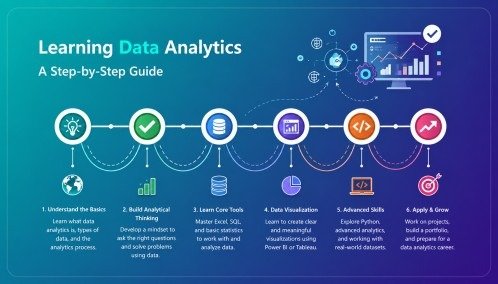
Data is everywhere. Every click, purchase, search, and online activity creates valuable information. However, raw data alone has no value until someone can understand it and turn it into useful insights. That is why companies around the world are looking for professionals who can Learn DataAnalytics and use data to solve real business problems. If you want a future-proof career with high demand and excellent growth opportunities, now is the perfect time to start.
The good news is that you do not need a computer science degree or years of experience to Learn Data Analytics. With the right roadmap, consistent practice, and the right tools, anyone can build job-ready skills. This beginner-friendly guide explains every step in simple language, from understanding the basics to creating projects and preparing for your first data analyst job in 2026.
What Is Data Analytics?
Data analytics is the process of collecting, cleaning, organizing, and studying data to find useful information. Businesses use this information to improve products, understand customers, reduce costs, and make better decisions.
For example, an online store can study customer purchases to discover which products sell the most. A hospital can analyze patient records to improve healthcare services. A marketing company can measure campaign results to increase sales.
When you Learn Data Analytics, you learn how to transform numbers into meaningful business insights.
Why Should You Learn Data Analytics in 2026?
Data analytics continues to grow every year. Almost every industry now depends on data to make important decisions. As technology improves, organizations need skilled analysts more than ever before.
Here are some important reasons to Learn Data Analytics in 2026.
- High demand across industries
- Excellent salary potential
- Remote and hybrid job opportunities
- Career growth into senior roles
- Opportunities to work with Artificial Intelligence
- Valuable problem-solving skills
- Ability to make data-driven decisions
Whether you want to work in healthcare, banking, retail, education, finance, or technology, data analytics can open many career opportunities.
Types of Data Analytics
Before learning tools, it is important to understand the four main types of data analytics. Each type answers a different business question.
Descriptive Analytics
Descriptive analytics explains what happened in the past. It summarizes historical data using reports, charts, and dashboards.
For example, a company can see last month’s sales performance.
Diagnostic Analytics
Diagnostic analytics explains why something happened.
It helps businesses identify reasons behind a sudden increase or decrease in sales, customer traffic, or revenue.
Predictive Analytics
Predictive analytics estimates what may happen in the future.
It uses historical data, trends, and statistical models to predict future outcomes.
Prescriptive Analytics
Prescriptive analytics recommends the best action to take.
It combines historical data with predictions to help businesses make better decisions.
Understanding these concepts will help you Learn Data Analytics with greater confidence.
Skills You Need to Learn Data Analytics
Many beginners think data analytics only requires coding. In reality, successful analysts combine technical skills with business thinking.
Analytical Thinking
The most important skill is analytical thinking.
Instead of accepting information as it is, analysts ask questions, identify patterns, and solve problems using logic.
Basic Statistics
Statistics helps you understand data correctly.
You should learn concepts such as:
- Mean
- Median
- Mode
- Percentage
- Correlation
- Probability
- Distribution
Do not worry about advanced mathematics in the beginning. Focus on understanding the meaning behind each concept.
Excel
Excel remains one of the most widely used data analysis tools.
It helps you:
- Clean data
- Create Pivot Tables
- Build charts
- Use formulas
- Analyze business reports
Many companies still expect analysts to have strong Excel skills.
SQL
SQL is the language used to communicate with databases.
If you want to Learn Data Analytics, SQL should become one of your strongest skills.
Some important SQL concepts include:
- SELECT
- WHERE
- ORDER BY
- GROUP BY
- JOIN
- HAVING
SQL allows you to retrieve exactly the information you need from large datasets.
Data Visualization
Good analysis is useless if people cannot understand it.
Data visualization helps present findings through:
- Charts
- Dashboards
- Graphs
- Reports
Tools like Power BI and Tableau make complex information easy to understand.
Step-by-Step Roadmap to Learn Data Analytics
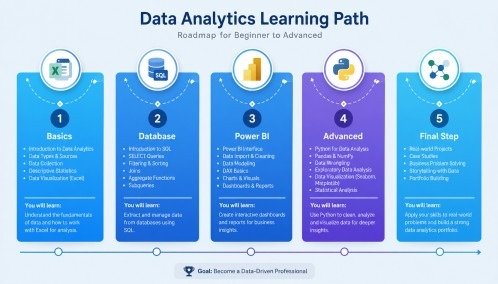
Many beginners feel overwhelmed because there are so many tools available. Instead of learning everything at once, follow a structured roadmap.
Step 1: Understand the Basics
Start by learning what data analytics actually is.
Understand:
- Types of data
- Data lifecycle
- Data collection
- Data cleaning
- Data analysis
- Data visualization
Building a strong foundation will make advanced topics much easier.
Why This Step Matters
Many beginners skip the basics and jump directly into Python or Power BI. Later, they struggle because they do not understand why they are performing certain tasks.
Spend enough time understanding the fundamentals before moving forward.
Step 2: Learn Microsoft Excel
Excel is still one of the most valuable tools for beginners.
Practice:
- Sorting data
- Filtering
- Conditional Formatting
- Pivot Tables
- Charts
- Lookup functions
- Data validation
These skills will help you complete many real-world business tasks.
Practice with Real Data
Download free datasets from websites like Kaggle and practice creating reports every day.
The more you practice, the faster you will improve.
Step 3: Master SQL
After Excel, begin learning SQL.
SQL allows you to work with company databases instead of spreadsheets.
Start with simple queries before moving to advanced joins and aggregations.
Practice writing queries daily.
Even 30 minutes of SQL practice can make a huge difference over time.
Step 4: Learn Power BI or Tableau
Once you know Excel and SQL, start learning a visualization tool.
Power BI is an excellent choice for beginners because it is widely used in businesses.
Focus on learning how to:
- Import data
- Clean data
- Build dashboards
- Create interactive reports
- Share insights
Build Your First Dashboard
Create a dashboard using sales data or customer data.
A complete dashboard project can become one of the strongest pieces in your portfolio.
Step 5: Start Learning Python
Python is not the first thing you should learn.
Instead, learn it after building confidence with Excel, SQL, and dashboards.
Python helps automate repetitive work and analyze larger datasets more efficiently.
Some useful libraries include:
- Pandas
- NumPy
- Matplotlib
- Plotly
You do not need to master every library immediately. Learn one concept at a time and practice consistently.
Practice with Real Projects
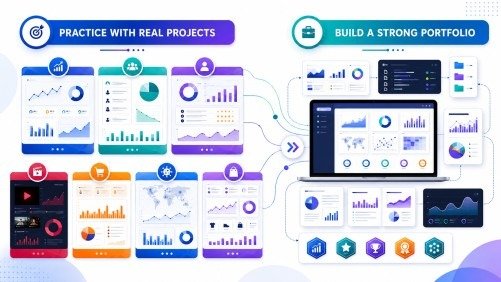
Learning theory is important, but practice makes you job-ready.
Employers want proof that you can solve problems using data. That is why projects are one of the most important parts of your learning journey.
You can build projects such as:
- Sales Performance Dashboard
- Customer Churn Analysis
- Employee Performance Report
- Netflix Data Analysis
- Superstore Sales Dashboard
- COVID-19 Data Analysis
- E-commerce Customer Analysis
Build a Strong Portfolio
A portfolio helps recruiters see your skills before they interview you.
Upload your projects to GitHub and explain:
- The business problem
- The dataset
- The tools you used
- Your analysis process
- The final insights
- Business recommendations
A well-documented portfolio often creates a better impression than multiple certificates.
Common Mistakes Beginners Should Avoid

Many beginners make the same mistakes while trying to Learn Data Analytics. Avoiding these mistakes will help you progress faster.
Trying to Learn Everything at Once
Do not learn Excel, SQL, Python, Power BI, Tableau, and Machine Learning together.
Instead, master one skill before moving to the next.
Copying Projects
Many beginners simply copy YouTube projects.
Instead, build your own projects using different datasets.
Employers value original work much more than copied assignments.
Not Practicing Enough
Watching tutorials alone will never make you a data analyst.
Practice every day, even if it is only for one hour.
Consistency is more valuable than studying for long hours once a week.
Career Opportunities After Learning Data Analytics
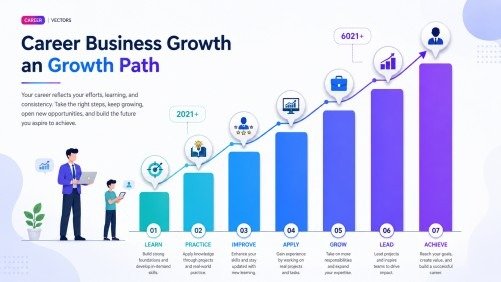
Data analytics is one of the fastest-growing career fields in the world. Companies in every industry need professionals who can analyze data and support better decision-making.
Popular career options include:
- Data Analyst
- Business Analyst
- Product Analyst
- Marketing Analyst
- Financial Analyst
- Healthcare Analyst
- Operations Analyst
- Business Intelligence Analyst
- Data Scientist
- Data Engineer
As your experience grows, you can move into senior and leadership positions.
How to Get Your First Data Analyst Job
Landing your first job requires more than technical skills.
Follow these practical steps:
Create a Professional Resume
Highlight:
- Technical skills
- Projects
- Certifications
- Achievements
- Portfolio links
Keep your resume clear and easy to read.
Optimize Your LinkedIn Profile
Recruiters often search LinkedIn before contacting candidates.
Use a professional photo, write a strong headline, and showcase your projects.
Build an Online Portfolio
Upload your work to GitHub or a personal website.
Explain each project clearly so recruiters understand your thinking process.
Apply Consistently
Do not wait until you feel completely ready.
Apply for jobs regularly while continuing to improve your skills.
Every interview teaches something valuable.
Conclusion
Learning data analytics in 2026 is one of the smartest career decisions you can make. Businesses continue to rely on data for every major decision, creating excellent opportunities for skilled professionals. The journey may seem challenging at first, but steady progress will help you achieve your goals.
Remember, you do not need to master every tool overnight. Start with the fundamentals, practice consistently, work on real projects, and keep improving your portfolio. As you continue to Learn Data Analytics, your confidence, technical skills, and career opportunities will grow together.
Whether you are a student, career changer, or working professional, today is the best time to begin. Stay curious, keep practicing, and take one step at a time. Your future as a successful data analyst starts with the first lesson you learn today.
Frequently Asked Questions
Is Data Analytics difficult to learn?
No. With consistent practice and the right roadmap, beginners can Learn Data Analytics successfully. Starting with the basics and practicing regularly makes the learning process much easier.
Do I need coding to become a Data Analyst?
Coding is helpful, especially Python, but beginners can start with Excel and SQL before learning programming. You can build a strong foundation before moving on to advanced coding skills.
Which programming language is best for Data Analytics?
Python is the most popular because it is easy to learn and offers powerful libraries for data analysis. It is widely used for data cleaning, automation, visualization, and machine learning projects.
Can I become a Data Analyst without a degree?
Yes. Many employers value practical skills, projects, and portfolios more than formal degrees. Building a strong portfolio and gaining hands-on experience can improve your job opportunities.
Which tool should I learn first?
Start with Excel, then SQL, followed by Power BI or Tableau, and finally Python. Learning these tools step by step helps you build confidence and master data analytics more effectively.
Meta Description
Learn Data Analytics in 2026 with this beginner-friendly step-by-step guide. Master Excel, SQL, Python, Power BI, and start your data analyst career.