
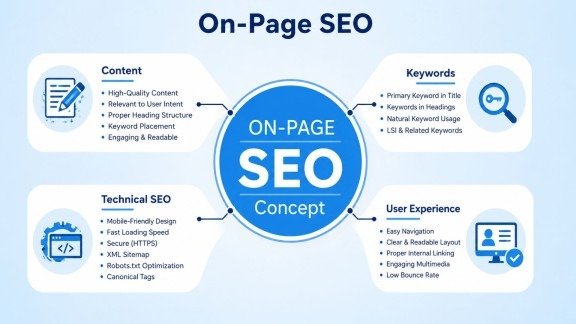
Have you ever spent hours writing a blog post only to find that it receives little or no traffic from Google? This is a common problem for many website owners. They publish valuable content, but their pages struggle to appear in search results. In most cases, the issue is not the content itself. The problem is that the page is not properly optimized for search engines and users. This is where an On-Page SEO Checklist becomes important. On-page SEO helps search engines understand your content while making your website easier to navigate and use.
When all important SEO elements are optimized correctly, your chances of ranking higher increase significantly. A well-optimized page can attract more visitors, improve engagement, and generate better results over time. In this guide, you will learn a complete On-Page SEO Checklist that covers everything from keyword research to technical optimization. Whether you are a beginner or an experienced website owner, these strategies can help improve your search visibility and long-term SEO performance.
What Is On-Page SEO?
On-page SEO refers to all the optimization techniques applied directly to a webpage. These optimizations help search engines understand the content and determine whether it matches a user’s search query.
Unlike off-page SEO, which focuses on backlinks and external signals, on-page SEO is completely under your control. Every page on your website should follow a structured On-Page SEO Checklist to maximize its potential in search results.
A strong on-page SEO strategy focuses on content quality, keyword placement, user experience, page speed, internal linking, and technical optimization. When these elements work together, they create a better experience for both users and search engines.
Start with Smart Keyword Research
Keyword research is the foundation of every successful SEO strategy. Before creating content, you need to understand what your audience is searching for.
The first step is identifying search intent. Users may be looking for information, comparing options, searching for a specific website, or preparing to make a purchase. Your content should match their intent as closely as possible.
Choose one primary keyword for each page and support it with several related keywords. This approach helps search engines understand the overall topic without making the content feel repetitive.
A successful On-Page SEO Checklist always begins with thorough keyword research because every other optimization depends on it.
Create Powerful Title Tags
The title tag is often the first thing users see in search results. It plays a major role in attracting clicks and helping search engines understand the topic of your page.
Your title should include the primary keyword naturally while remaining clear and engaging. It should accurately describe the content and encourage users to click.
Short and focused titles generally perform better than overly long ones. Ideally, keep your title under 60 characters so it displays properly in search results.
A well-written title is one of the most important parts of any On-Page SEO Checklist because it directly affects visibility and click-through rates.
Write Compelling Meta Descriptions
Meta descriptions provide a short summary of your page content. While they are not a direct ranking factor, they can influence whether users choose your page over competitors.
An effective meta description should clearly explain what the page offers and include the primary keyword naturally. It should also encourage action by giving users a reason to click.
Think of your meta description as a small advertisement for your content. If it is interesting and relevant, users are more likely to visit your website.
Use a Proper Heading Structure
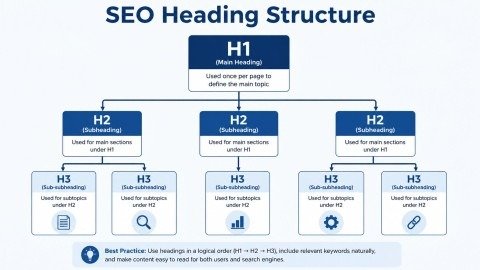
Headings improve both readability and SEO. They help organize information and make content easier to scan.
Every page should have one H1 heading that clearly describes the main topic. Supporting sections should use H2 headings, while additional details can be organized with H3 headings.
A logical structure helps search engines understand how information is connected throughout the page. It also improves the reading experience by breaking content into manageable sections.
A complete On-Page SEO Checklist always includes proper heading optimization because structure plays a key role in content quality.
Focus on High-Quality Content
Content remains one of the strongest ranking factors in SEO. Search engines reward pages that provide useful, accurate, and trustworthy information.
Instead of writing for algorithms, focus on solving real problems for your audience. Explain concepts clearly, answer common questions, and provide actionable advice whenever possible.
Long-form content often performs well because it allows you to cover topics in greater depth. However, quality is more important than length. Every paragraph should add value to the reader.
When following an On-Page SEO Checklist, content quality should always be the top priority because it influences nearly every SEO metric.
Optimize Your URLs
URLs should be simple, descriptive, and easy to understand. A clean URL helps both users and search engines identify the page topic.
Avoid unnecessary numbers, symbols, or long strings of text. Instead, use meaningful words that describe the content accurately.
For example, a URL like:
yourwebsite.com/on-page-seo-checklist
is much better than:
yourwebsite.com/page?id=12345
A clean URL structure supports a stronger On-Page SEO Checklist and contributes to better overall optimization.
Improve Image Optimization
Images make content more engaging and easier to understand. However, they should be optimized properly to avoid slowing down your website.
Use descriptive file names before uploading images. Add alt text that accurately describes the image and provides context for search engines.
Image compression is equally important. Large image files can slow page speed and negatively affect user experience.
Image optimization is an important part of an effective On-Page SEO Checklist because it improves accessibility, speed, and visibility.
Strengthen Internal Linking
Internal links connect pages within your website. They help users discover related content while allowing search engines to crawl your website more efficiently.
When adding internal links, use descriptive anchor text that clearly explains what users will find after clicking.
Strong internal linking can distribute authority across your website and improve the visibility of important pages.
Many website owners overlook this step, but it remains a valuable part of any On-Page SEO Checklist.
Improve Mobile User Experience
Today, most searches happen on mobile devices. Because of this, Google uses mobile-first indexing when evaluating websites.
Your website should adapt smoothly to different screen sizes and provide a consistent experience across all devices.
Users should be able to read content comfortably, navigate easily, and interact with buttons without difficulty. A poor mobile experience can increase bounce rates and hurt rankings.
Mobile optimization is no longer optional. It is a critical part of every modern On-Page SEO Checklist.
Increase Page Speed
Page speed has a direct impact on user experience and search rankings. Slow websites often lose visitors before pages even finish loading.
Several factors influence page speed, including image sizes, server performance, unnecessary code, and excessive plugins.
Improving loading times creates a better experience for users and can lead to stronger SEO performance. Faster websites also tend to have higher engagement and conversion rates.
A reliable On-Page SEO Checklist always includes page speed optimization because performance matters to both users and search engines.
Implement Technical SEO Best Practices
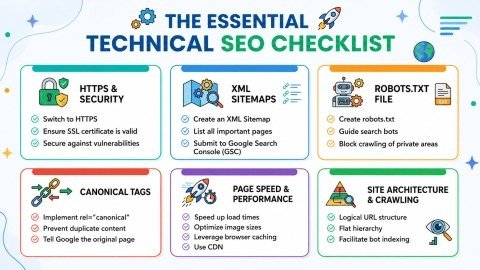
Technical SEO supports all other optimization efforts. Without a strong technical foundation, even great content may struggle to rank.
Important technical elements include HTTPS security, XML sitemaps, canonical tags, robots.txt files, and error-free indexing.
Regular technical audits help identify issues before they affect rankings. Fixing broken links, duplicate content, and crawl errors can improve overall website health.
Technical optimization remains an essential component of a successful On-Page SEO Checklist.
Common On-Page SEO Mistakes to Avoid
Many websites lose valuable traffic because of avoidable mistakes. Some of the most common issues include keyword stuffing, duplicate content, poor page speed, weak internal linking, and missing metadata.
Another common mistake is focusing only on search engines while ignoring user experience. Modern SEO requires balancing optimization with usability.
Following a detailed On-Page SEO Checklist can help you identify and fix these problems before they impact performance.
Conclusion
A well-structured On-Page SEO Checklist is one of the most effective tools for improving website visibility. From keyword research and content creation to technical SEO and page speed optimization, every element plays an important role in helping your pages rank higher.
Success in SEO does not happen overnight. It requires consistency, attention to detail, and a commitment to providing value to users. By applying the strategies discussed in this guide, you can create pages that are easier for search engines to understand and more useful for your audience.
As search algorithms continue to evolve, websites that prioritize quality, relevance, and user experience will remain competitive. Following this On-Page SEO Checklist consistently can help increase organic traffic, improve rankings, and achieve maximum visibility in search results.
FAQs
What is an On-Page SEO Checklist?
An On-Page SEO Checklist is a set of optimization practices that help improve a webpage’s visibility in search engines by focusing on content quality, keywords, headings, page speed, and user experience.
Why is On-Page SEO important for website rankings?
On-page SEO helps search engines understand your content more effectively, making it easier for your pages to rank higher and attract relevant organic traffic.
How often should I update my On-Page SEO strategy?
It is a good practice to review and update your on-page SEO every few months to keep up with algorithm changes and maintain strong search performance.
Does page speed affect On-Page SEO?
Yes, page speed plays an important role in both user experience and search rankings because faster websites keep visitors engaged and reduce bounce rates.
What are the most important elements of an On-Page SEO Checklist?
The most important elements include keyword research, title tags, meta descriptions, heading structure, content quality, internal linking, image optimization, and technical SEO.
Meta Description
Learn the ultimate On-Page SEO Checklist to improve rankings, boost organic traffic, optimize content, enhance user experience, and achieve maximum visibility in search results.