

Advanced keyword research is one of the most important parts of SEO in 2026. If you want your website to appear on Google, you need to understand what people are searching for and how they search. Without proper keyword planning, even good content can stay invisible.
Many beginners think keyword research is just finding popular words. But in reality, it is much deeper than that. It is about understanding user behavior, search intent, and competition level. When you do advanced keyword research, you are not guessing. You are using real data to choose topics that can bring traffic.
In this guide, you will learn how advanced keyword research works in a simple way. You will see how to find strong keywords, how to check competition, and how to use keywords in your content naturally. This method will help you create content that ranks better and gets steady traffic over time.
What is Advanced Keyword Research?
Advanced keyword research means finding and analyzing keywords in a smart, data-driven way. Instead of picking random topics, you study search volume, difficulty, and user intent before choosing keywords.
In simple words, advanced keyword research helps you find keywords that are easy to rank and useful for your audience. It also helps you avoid highly competitive keywords that waste your time.
When done correctly, advanced keyword research becomes the base of your entire SEO strategy.
Why Advanced Keyword Research Matters in 2026
SEO has changed a lot in recent years. Google now focuses more on content quality and user satisfaction. This means keyword choice is more important than ever.
Advanced keyword research helps you understand what users really want. It also shows you which topics are worth targeting and which ones are too hard for your website.
If you skip advanced keyword research, you may write many articles but get very little traffic. But if you do it properly, even a small website can grow quickly by targeting the right keywords.
Step 1: Start with Simple Ideas
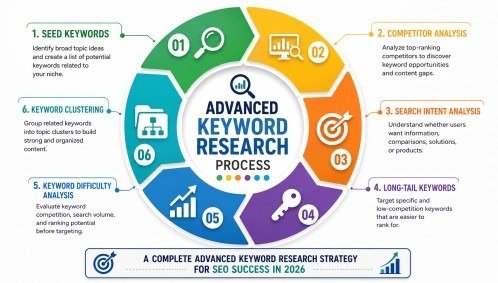
Every keyword strategy starts with basic ideas. These are called seed keywords. They are simple words related to your topic.
For example, if your website is about SEO, your seed ideas can be SEO tips, keyword research, or Google ranking.
At this stage, do not think too much about difficulty or traffic. Just focus on writing all possible ideas that come to your mind.
This step builds the base of your advanced keyword research process.
Step 2: Study What Your Competitors Are Doing
One of the smartest parts of advanced keyword research is competitor analysis. Instead of guessing, you learn from websites that are already ranking.
When you check competitor pages, you can see what topics they target and which keywords bring them traffic. You can also find gaps where they are not active.
This helps you discover new keyword opportunities without extra effort. It saves time and increases your chances of ranking faster.
Step 3: Understand Search Intent
Search intent means the reason behind a search. It is a key part of advanced keyword research.
Every keyword has a purpose. Some users want information, some want to compare products, and some want to buy something.
If your content does not match user intent, it will not rank well.
For example, if someone searches “best SEO tools,” they want comparisons and reviews, not basic definitions. So your content must match what users expect.
Step 4: Use Keyword Tools for Data
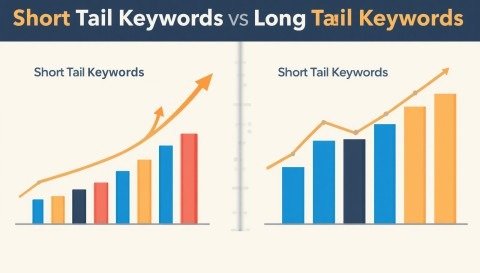
Tools are very important in advanced keyword research because they give real numbers and insights.
These tools show search volume, competition level, and keyword difficulty. This helps you make better decisions instead of guessing.
When you enter a seed keyword, tools give you many related ideas. You can then select the ones that are easier to rank and more useful for your content.
Even free tools can give strong results if you use them properly.
Step 5: Find Easy-to-Rank Keywords
Not all keywords are equal. Some are very hard to rank because big websites already dominate them. Others are easier and perfect for new websites.
Advanced keyword research focuses on finding these easier keywords. These are usually long-tail keywords.
For example, instead of targeting “SEO,” you can target “how to do advanced keyword research for beginners.” These keywords are more specific and easier to rank.
Choosing the right difficulty level is very important for success.
Step 6: Group Keywords by Topic
After collecting keywords, you should organize them into groups. This is called keyword clustering.
In advanced keyword research, clustering helps you build strong content structure. Instead of writing random articles, you create topic-based pages.
Each group represents one main topic with related keywords inside it. This improves your website structure and helps Google understand your content better.
It also increases your chances of ranking for multiple keywords with one article.
Step 7: Focus on Long-Term Traffic
Advanced keyword research is not just about quick traffic. It is also about long-term growth.
Some keywords bring fast results, but others bring steady traffic for months or years. You should focus on both types.
Long-tail keywords are especially powerful because they bring targeted visitors who are more likely to engage with your content.
A balanced keyword strategy always includes both short and long keywords.
Step 8: Avoid Common Keyword Mistakes
Many beginners fail in SEO because they make simple mistakes in keyword research.
One common mistake is choosing only high-traffic keywords. These are very hard to rank and often waste time.
Another mistake is ignoring search intent. If your content does not match what users want, Google will not rank it.
A third mistake is not updating keyword research. Trends change, and old keywords may lose value over time.
Avoiding these mistakes makes your advanced keyword research more effective.
The Role of Content Quality in Keyword Success
Advanced keyword research is not limited to just collecting keywords; creating high-quality content for those keywords is equally important. In 2026, Google prefers pages that clearly solve the user’s problem. That’s why once you select your keywords, you must focus on the depth, clarity, and usefulness of your content.
If you only use keywords but your content is weak, it becomes difficult to rank. However, if you provide detailed and helpful information, even a small website can appear in top search results.
Using Semantic Keywords for Better Ranking
In today’s SEO, simply repeating the exact keyword is not enough. Google also understands semantic keywords, which are related terms connected to your main keyword. In advanced keyword research, you should find related words and phrases that fully cover the topic.
For example, if your main keyword is “advanced keyword research,” related keywords could include “SEO strategy,” “search intent,” “Google ranking factors,” and “keyword clustering.” Naturally including these in your content makes your article stronger and more relevant.
Continuous Keyword Optimization
Keyword research is not a one-time process. To succeed in SEO, you need to regularly update your keywords over time. Search trends keep changing, and new keywords become popular.
That’s why the best practice is to review your content and keywords every few months. This helps you maintain rankings and also capture new traffic opportunities.
Step 9: Create a Simple Keyword Plan
After research, you need a plan. This is the final stage of advanced keyword research.
You should organize your keywords in a simple structure. Each page should focus on one main keyword with a few related keywords.
This helps you create focused and clean content. It also prevents keyword overlap between pages.
A good plan makes your SEO strategy strong and easy to manage.
Conclusion
Advanced keyword research is the foundation of SEO success in 2026. Without it, your content may not reach the right audience. With it, even small websites can grow and compete with big brands.
The main idea is simple. Understand what people search, choose low-competition keywords, and create content that matches their intent.
If you follow this process consistently, advanced keyword research will become your strongest SEO skill. It will help you build traffic, improve rankings, and grow your website step by step.
FAQs
1. What is advanced keyword research in SEO?
Advanced keyword research is the process of finding and analyzing keywords using data like search volume, competition, and search intent to improve Google rankings.
2. Why is keyword research important in 2026?
In 2026, Google focuses more on user intent and content quality. Keyword research helps you target the right audience and create content that ranks higher.
3. What are long-tail keywords?
Long-tail keywords are longer and more specific search phrases that are easier to rank for and usually bring more targeted traffic.
4. How do I find low-competition keywords?
You can find low-competition keywords by using SEO tools, analyzing competitors, and focusing on long-tail and specific search terms.
5. What is search intent in keyword research?
Search intent is the reason behind a search query, such as learning something, buying a product, or comparing options.
META DISCRIPTION
Master advanced keyword research in 2026 with easy steps to find powerful low-competition keywords, understand search intent, and grow your website traffic fast.