
How can a parent sleep in peace when danger can reach a child at home, at school, on the road, or through a phone?
Every parent wants Children Safe in Pakistan. Yet, recent events show that hope alone is not enough. We need daily action. In 2026, Pakistan saw painful cases of child abuse, missing children, violence, and unsafe places. These cases should not only make us sad. They should make us act. Children Safe in Pakistan starts with small steps at home. It starts when parents listen, teach, check, and act.
But one question still hurts: Are we doing enough before danger reaches our own children? A child may not know when a person, place, or message is unsafe. That is why parents must teach safety before a child faces a dangerous moment. Every small lesson today can become a shield tomorrow. Children Safe in Pakistan is not only about protecting children after something happens. It is about preparing them before it happens.
1. Teach Your Child How to Get Help
Children Safe in Pakistan depends on a child knowing what to do when fear starts.
A child may get lost. A stranger may offer a ride. Someone may ask the child to keep a secret. In that moment, the child needs a clear plan.
Teach your child your full name, one trusted phone number, and a safe place to go. Teach a family safety word. If someone says, “Your mother sent me,” the child should ask for the safety word before going anywhere.
Teach one more rule: if a child feels unsafe, get help at once.
The child can go to a trusted teacher, police officer, known shopkeeper, security worker, or another safe adult.
A child should never feel shame for asking for help.
2. Recent Child Abuse Cases Must Wake Every Parent
Sahil reported 1,914 child-related cases in Pakistan in the first six months of 2026. The cases included sexual abuse, abduction, missing children, child marriage, and other serious forms of harm. The data also showed that children can be at risk from people they know.
This should make every parent ask:
“Do I really know who has access to my child?”
Do not teach children only to fear strangers. Teach them to notice unsafe behavior from anyone.
That can include relatives, family friends, neighbors, teachers, drivers, older children, or online contacts.
Parents should know who picks up the child. They should know who spends time alone with the child. They should know where the child goes after school.
Children Safe in Pakistan needs safe adults around children, not just locked doors.
The lesson is simple: do not wait for a warning sign. Know your child’s daily routine. Know the people around them. Keep communication open.
3. Teach Body Safety Without Fear
A child must know that their body belongs to them.
Teach simple body safety rules. Tell your child that private parts are private. No one should touch them in a way that feels wrong.
Also teach this:
A harmful secret must be told.
If someone says, “Do not tell your mother,” the child should know that this is not a rule they must follow.
Tell your child:
“You will not be in trouble for telling me.”
This matters because fear can keep a child silent.
If your child suddenly becomes very quiet, fearful, angry, withdrawn, or scared of a certain person, do not ignore the change. Ask gently. Listen. Do not blame the child.
A safe home is one where a child can speak before a small warning becomes a serious crisis.
4. The PIMS Fire Shows That Safety Is More Than Abuse
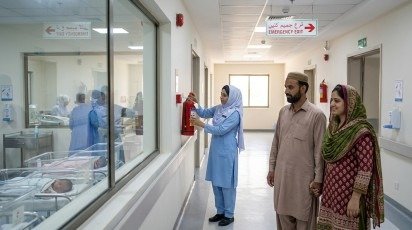
On August 26, 2026, a fire at PIMS in Islamabad killed 14 newborns. An investigation later found serious gaps in fire safety and emergency preparation. Eight officials were suspended, and criminal proceedings were started.
This tragedy raises a hard question:
“When we leave our child in a hospital, school, or daycare, do we know if the place is truly safe?”
Children Safe in Pakistan also means safe buildings.
Before leaving your child somewhere, look for clear exits. Ask about fire alarms. Notice blocked doors, unsafe wires, or other clear risks.
At school or daycare, ask who will help children during a fire or other emergency.
Parents should not wait for a tragedy to ask these questions.
One painful event can teach us a lasting lesson: safety checks must happen before danger arrives.
5. School Safety Must Be Checked, Not Assumed
A school is not safe only because it has a gate and guards.
Children Safe in Pakistan needs strong school rules and trained staff.
Parents should ask:
- Who can enter the school?
- Are visitors checked?
- Are staff screened before hiring?
- How does the school report abuse?
- Are children left alone with adults?
- What happens if a child says they are afraid?
Schools should also watch for changes in children. A sudden drop in school work, fear, isolation, or unusual behavior may mean a child needs help.
In 2026, attacks on schools in Khyber Pakhtunkhwa also showed why physical safety matters. UNICEF reported continued attacks on schools, disrupting education for more than 1,000 students.
The message for parents is clear: ask about the emergency plan before an emergency happens. Ask about safe routes, drills, communication, and who will contact families. A child cannot learn well when they feel unsafe.
6. Online Safety Is Now Child Safety
A phone can help a child learn. It can also open a door to danger.
Children may face bullying, blackmail, sexual extortion, fake accounts, or harmful AI-made images. UNICEF’s 2026 work on online harm in Pakistan has also highlighted risks linked to sexual extortion, blackmail, and AI-generated abuse.
So, Children Safe in Pakistan must include digital safety.
Teach your child:
- Never share private photos.
- Never share your home address or school details online.
- Never meet an online contact alone.
- Block and report threats.
- Tell a parent if someone asks for a private photo.
- Save evidence if someone sends a threat.
Do not make your child afraid to tell you.
If a child thinks, “My parents will only shout,” the child may hide the problem.
Instead, say:
“If something happens online, come to me first. We will solve it together.”
That one sentence can make a child feel safe enough to speak.
7. Build a Home Where Children Can Speak
The strongest safety tool is trust.
Children Safe in Pakistan cannot be built by rules alone. A child must believe:
“My parents will listen to me.”
Give your child time every day. Ask, “How was your day?” Then listen.
Do not rush to judge.
Make it normal to talk about school, friends, teachers, games, phones, and fears.
If a child tells you something serious, stay calm. Let the child speak. Do not ask many repeated questions. Do not promise to keep abuse secret. Get proper help and report the concern through the right channel.
Pakistan has legal tools for missing and abducted children. The Zainab Alert, Response and Recovery Act provides for a national response system. The Ministry of Human Rights also provides the 1099 helpline for legal advice on human rights issues.
Parents should save important emergency numbers now, not after a child goes missing.
What Recent Events Teach Us
The painful events of 2026 carry one clear lesson:
Parents cannot protect children through fear alone.
A child can face danger from a stranger. A child can face danger from someone they know. A child can face danger at home, at school, in a hospital, on the street, or online.
This does not mean we should raise children in fear. It means we should raise them with skills. Teach them how to say no. Teach them where to go. Teach them who to call. Teach them that harmful secrets must be told.
Check the places where they spend time. Check their online world. Most of all, keep communication open. Children Safe in Pakistan is not only a government duty. It is a shared duty. Parents, schools, hospitals, police, communities, and online platforms all have a role.
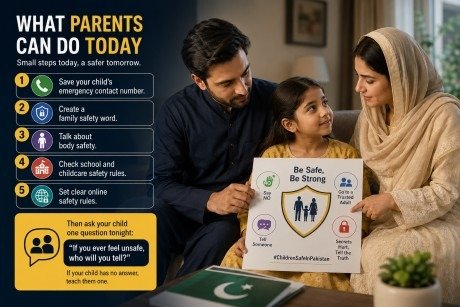
What Parents Can Do Today

Do not wait for tomorrow.
Start with these simple actions:
- Save your child’s emergency contact number.
- Create a family safety word.
- Talk about body safety.
- Check school and childcare safety rules.
- Set clear online safety rules.
Then ask your child one question tonight:
“If you ever feel unsafe, who will you tell?”
If your child has no answer, teach them one.
This is one small step toward Children Safe in Pakistan.
Final Thoughts
Every child deserves safety, care, and dignity. The goal is not to make children afraid of the world. The goal is to prepare them for it. Children Safe in Pakistan becomes possible when adults stop saying, “It will never happen to us,” and start saying:
“What can I do today to make my child safer?”
That question can change a home. It can change a school. And sometimes, it can save a child.
Frequently Asked Questions
1. How can parents keep children safe in Pakistan?
Parents can teach basic safety rules, stay involved in their child’s life, check school safety, and keep communication open.
2. How can children stay safe from strangers?
Teach children not to go anywhere with strangers and to seek help from a trusted adult if they feel unsafe.
3. How can parents protect children online?
Parents should teach children not to share private information or photos and encourage them to report threats or unsafe messages.
4. What should a child do if they feel unsafe?
A child should move to a safe place, contact a trusted adult, and tell their parents without fear or shame.
Meta Description:
Learn how to keep Children Safe in Pakistan with 7 critical steps for parents, including home, school, road, body, and online safety.
- 1. Teach Your Child How to Get Help
- 2. Recent Child Abuse Cases Must Wake Every Parent
- 3. Teach Body Safety Without Fear
- 4. The PIMS Fire Shows That Safety Is More Than Abuse
- 5. School Safety Must Be Checked, Not Assumed
- 6. Online Safety Is Now Child Safety
- 7. Build a Home Where Children Can Speak
- What Recent Events Teach Us
- Final Thoughts
- Frequently Asked Questions
- Meta Description: