
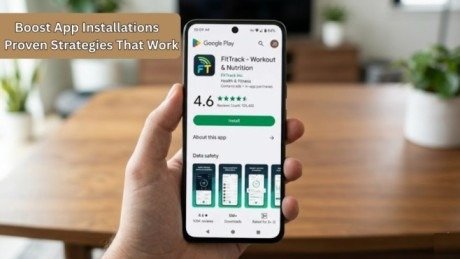
Why Most Apps Fail to Gain Traction After Launch
You’ve invested months perfecting your app—the interface flows seamlessly, features solve real problems, and user experience exceeds expectations. Yet after launch, downloads barely reach triple digits and user engagement remains disappointing. This frustrating scenario affects 90% of published apps, with most failing to surpass 1,000 installations despite substantial development investments.
The brutal truth: Building a great product no longer guarantees success. With over 5 million apps competing for attention across Google Play and the App Store, visibility determines survival more than functionality alone.
The apps that thrive don’t just work well—they’re strategically marketed, optimized for discovery, and engineered for engagement. Success requires mastering three critical pillars: visibility, value proposition, and user trust. This comprehensive 2026 guide reveals exactly how to boost app installations through proven strategies that transform obscure apps into download leaders.
What Does “Boost App Installations” Mean?
Boosting app installations means increasing the number of users who download and install your mobile application through strategies like app store optimization (ASO), social media marketing, paid ads, and referral programs.
Understanding What Drives Installation Success
Before implementing promotion tactics, understand the fundamental factors separating successful apps from failures:
Discovery: 70% of users find apps through app store searches. Without optimization, your app remains invisible regardless of quality.
First Impression: Users spend 3-5 seconds evaluating app listings before deciding. Compelling visuals and clear value propositions convert browsers into installers.
Trust Signals: 88% of users trust app ratings when deciding whether to install. Apps rated 4.5 stars or higher attract exponentially more downloads than lower-rated competitors.
Performance: 50% of users abandon apps that take longer than 3 seconds to load. Speed and reliability directly impact retention and word-of-mouth promotion.
Strategy 1: Master App Store Optimization (ASO)
App Store Optimization functions as SEO for mobile applications, making your app discoverable when users search relevant keywords.
Keyword Research and Implementation
Research terms your target audience uses when searching for solutions your app provides. Integrate primary keywords naturally into your app title, subtitle, and description without keyword stuffing.
Example: A meditation app targeting “stress relief” should optimize for terms like “anxiety relief app,” “meditation timer,” and “relaxation techniques” rather than generic “meditation app.”
Visual Excellence That Converts
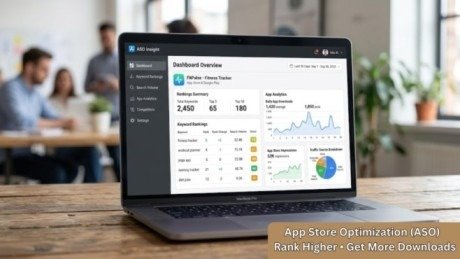
Your app icon serves as the first visual impression—make it memorable, professional, and instantly communicating your app’s core function. Screenshots should showcase your most compelling features through clean, annotated visuals highlighting user benefits rather than just listing features.
Pro tip: Use the first 2-3 screenshots to demonstrate your app solving specific user problems. Users scroll quickly; immediate value communication determines conversion.
Compelling App Description
Write descriptions that sell the experience, not just features. Focus on user benefits and outcomes rather than technical specifications. Structure descriptions with short paragraphs, bullet points highlighting key features, and clear calls-to-action.
Strategy 2: Leverage Social Media Marketing
Social platforms provide powerful channels for building pre-launch buzz and sustaining post-launch momentum.
Platform-Specific Content Strategy
Create engaging content tailored to each platform’s format and audience behavior. Instagram and TikTok excel with short video demonstrations showcasing app features visually. LinkedIn works best for B2B apps targeting professionals. Twitter facilitates conversations and quick updates about new features.
Video Content That Demonstrates Value
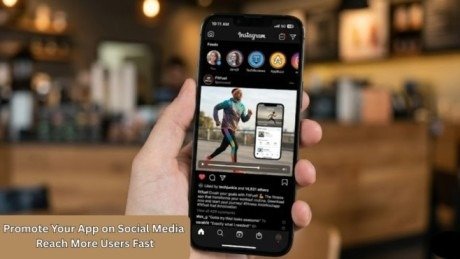
Produce 15-30 second videos demonstrating your app solving specific problems. Show real use cases rather than generic feature tours. Video content generates 1200% more shares than text and image content combined.
Strategy 3: Implement Referral Programs
Referral programs transform satisfied users into growth engines by incentivizing recommendations to friends and contacts.
Proven referral structures that work:
Dual-sided rewards: Benefit both the referrer and new user. Uber’s model offering ride credits to both parties generated explosive early growth.
Tiered incentives: Increase rewards for multiple successful referrals, creating motivation for sustained promotion efforts.
Progress tracking: Show users their referral success visually, triggering completion psychology that drives continued sharing.
Apps implementing referral programs see average 3x higher download rates within the first month compared to apps without referral mechanisms.
Strategy 4: Paid Advertising for Immediate Visibility
While organic growth builds sustainable foundations, paid advertising delivers immediate visibility and user acquisition.
App Install Campaigns
Google App Campaigns: Automatically optimize ads across Google Search, YouTube, Google Play, and the Display Network. These campaigns use machine learning to find users most likely to install and engage.
Apple Search Ads: Place your app at the top of relevant App Store searches. Highly effective for capturing high-intent users actively searching for solutions.
Social Media Ads: Facebook, Instagram, and TikTok offer sophisticated targeting allowing you to reach users based on demographics, interests, and behaviors matching your ideal user profile.
Budget allocation: Test multiple channels with small budgets initially, then scale investment in highest-performing platforms showing best cost-per-install metrics.
Strategy 5: Encourage Ratings and Reviews
Positive reviews function as social proof that dramatically influences installation decisions.
Strategic Review Requests
Timing matters: Prompt users for reviews after positive experiences—completing a task, achieving a milestone, or successfully using a key feature. Never interrupt negative experiences with review requests.
Simplify the process: Use in-app review prompts requiring minimal clicks. The easier you make leaving reviews, the higher your response rate.
Respond to all feedback: Acknowledge positive reviews with gratitude and address negative reviews constructively. Public responsiveness demonstrates commitment to user satisfaction.
Strategy 6: Build In-App Community
Creating community within your app transforms passive users into engaged advocates.
Implementation strategies:
User forums: Enable peer-to-peer support and experience sharing.
Live Q&A sessions: Host regular sessions addressing questions and gathering feedback .
Social features: Allow achievement sharing, friend invitations, and collaborative challenges.
User-generated content: Encourage content creation that showcases app usage.
Communities increase retention by 40% as users develop relationships beyond the app’s functional utility.
Strategy 7: Push Notification Optimization
Strategic push notifications re-engage users and drive installations through existing user actions.
Best practices for effective notifications:
Personalization: Tailor messages based on user behavior, preferences, and usage patterns.
Optimal timing: Send notifications when users are most likely to engage, avoiding disruptive hours.
Value-focused: Every notification should provide genuine value—exclusive content, relevant updates, or meaningful reminders.
Incentive integration: Offer rewards, discounts, or exclusive access for responding to notifications or referring others.
Advanced Tactics: AI and Localization
AI-Powered Personalization
Implement artificial intelligence to analyze user behavior to deliver personalized recommendations, content, and experiences. Apps using AI-driven personalization see 25% higher engagement rates and 30% better retention compared to generic experiences.
Geographic Localization
Adapt your app for different markets through language translation, cultural customization, and region-specific pricing. Localized apps show 128% higher download rates in targeted regions compared to English-only versions.
Critical localization elements:
Translate all text accurately, adjust imagery for cultural relevance, price in local currencies, and incorporate region-specific features or content.
Measuring Success: Key Metrics to Track
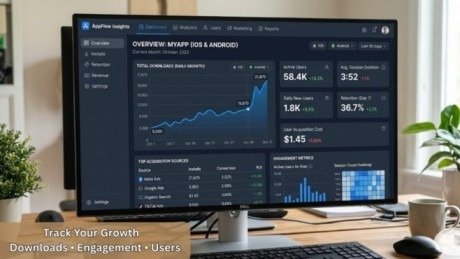
Monitor these essential metrics to evaluate promotion effectiveness:
Install Rate: Total downloads from all sources
Cost Per Install (CPI): Advertising spend divided by new installations.
Retention Rate: Percentage of users remaining active after 1, 7, and 30 days.
Lifetime Value (LTV): Total revenue generated per user over their entire engagement.
App Store Ranking: Position for target keywords in search results Continuously optimize strategies based on data insights, focusing resources on highest-performing channels and tactics.
Final Implementation Checklist
Before launching your promotion campaign, verify completion of these critical elements:
✅ App Store Optimization complete with keyword research, compelling visuals, and benefit-focused descriptions
✅ Social media presence established across 2-3 relevant platforms
✅ Referral program implemented with clear incentives
✅ Paid advertising campaigns configured on at least two platforms
✅ Review request system integrated with optimal timing
✅ Community features or social elements incorporated
✅ Push notification strategy defined with a personalization framework
✅ Analytics tracking configured for all key performance metrics
Conclusion: Success Requires Strategy, Not Just Quality
A brilliant app without strategic promotion remains undiscovered. The apps dominating their categories combine exceptional user experience with sophisticated, multi-channel promotion strategies that maximize visibility, build trust, and create viral growth loops.
Implement these strategies systematically—starting with ASO foundations, layering social media presence, activating referral mechanics, and supplementing with targeted paid advertising. Monitor performance continuously, doubling down on successful tactics while eliminating ineffective approaches.
The app market rewards strategic execution as much as product quality. Your success depends on committing to ongoing optimization, staying current with platform changes, and maintaining relentless focus on user acquisition and retention metrics that drive sustainable growth. Start this week with ASO optimization and social media setup. Layer additional strategies progressively, measuring impact at each stage. Within 90 days of systematic implementation, you’ll transform download numbers from disappointing to dominant.
FAQs
Q1: How can I boost app installations quickly in 2026?
To boost app installations quickly, combine App Store Optimization (ASO), social media marketing, and paid advertising. ASO improves visibility, while ads and social platforms bring instant traffic and downloads.
Q2: What is the most effective way to increase app downloads organically?
The best organic method to boost app installations is optimizing your app title, keywords, screenshots, and description (ASO). Additionally, creating engaging content on platforms like Instagram and TikTok helps drive free traffic.
Q3: Why is App Store Optimization (ASO) important for app growth?
ASO is important because most users discover apps through search. Proper keyword usage and attractive visuals help your app rank higher, making it easier to boost app installations without paid ads.
Q4: Do ratings and reviews help increase app installs?
Yes, apps with higher ratings (4.5+) and positive reviews gain more trust and visibility. Strong social proof directly helps boost app installations by improving conversion rates.
Q5: How long does it take to see results from app promotion strategies?
Results vary depending on the method. Paid ads can boost app installations within days, while ASO and organic marketing typically take a few weeks to show consistent growth.
Meta Description:
Boost app installations with proven promotion strategies! Complete 2026 guide to increase mobile app downloads through ASO, marketing, engagement, and retention tactics.
- Why Most Apps Fail to Gain Traction After Launch
- What Does “Boost App Installations” Mean?
- Understanding What Drives Installation Success
- Strategy 1: Master App Store Optimization (ASO)
- Strategy 2: Leverage Social Media Marketing
- Strategy 3: Implement Referral Programs
- Strategy 4: Paid Advertising for Immediate Visibility
- Strategy 5: Encourage Ratings and Reviews
- Strategy 6: Build In-App Community
- Strategy 7: Push Notification Optimization
- Advanced Tactics: AI and Localization
- Measuring Success: Key Metrics to Track
- Final Implementation Checklist
- Conclusion: Success Requires Strategy, Not Just Quality
- FAQs
- Q1: How can I boost app installations quickly in 2026?
- Q2: What is the most effective way to increase app downloads organically?
- Q3: Why is App Store Optimization (ASO) important for app growth?
- Q4: Do ratings and reviews help increase app installs?
- Q5: How long does it take to see results from app promotion strategies?
- Meta Description: