
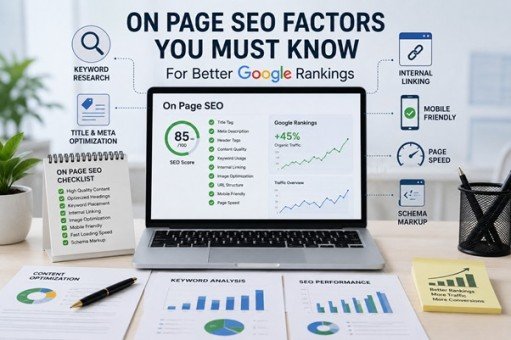
What if the right on-page SEO Factors could help your website rank higher on Google?
Ranking on Google is becoming more difficult. More websites compete for the same keywords every day. Publishing quality content alone is no longer enough. To improve your rankings, you need to optimize every page using the right On-Page SEO Factors. These techniques help search engines understand your content. They also make it easier for visitors to find useful information.
The most important on-page SEO factors include helpful content and clear headings. They also include optimized titles, page speed, and proper image usage. In addition, these improvements create a better user experience. They keep visitors on your website longer and help improve Google rankings.
In this guide, you will learn essential on-page SEO factors. These factors can improve your website’s visibility. By following these proven strategies, you can attract more organic traffic. You can also build trust with search engines and achieve better long-term SEO results.
What Are On-Page SEO Factors?
On-page SEO factors are elements you optimize on your website. They help improve visibility in search engine results. These factors help Google understand your content. They also decide its relevance and ranking for search queries.
Unlike off-page SEO, on-page SEO focuses on your website. It gives you full control over optimization. Every page can be optimized by improving its structure and content quality. It also includes HTML elements, images, internal links, and user experience.
When all these elements work together, your content becomes easier to crawl. It also becomes easier to understand and more valuable for your audience. As a result, your chances of achieving higher Google rankings increase significantly.
Why Are On-Page SEO Factors Important?
Many website owners believe that publishing more articles automatically leads to better rankings. However, quantity alone does not guarantee success. Google wants to recommend pages that provide useful, organized, and trustworthy information.
That is why on-page SEO Factors have become one of the strongest foundations of successful SEO. They help search engines understand your content. They also ensure visitors enjoy a smooth browsing experience.
Some of the biggest benefits include:
· Higher Google rankings
· Better user experience
· Improved organic traffic
· Lower bounce rates
· Higher click-through rates
· Easier website crawling
· Increased trust and authority
· Better conversion opportunities
When you consistently optimize every page, your website becomes stronger over time. It also performs better across multiple keywords.
1. Write Titles That Clearly Describe Your Content
Your page title is one of the first things both users and Google notice. A clear, descriptive title tells search engines what your content covers. It also encourages users to click on your page.
Instead of creating confusing or overly creative titles, focus on accuracy and relevance. Your title should naturally include your primary keyword while remaining easy to read.
If your article is about On-Page SEO Factors, your title should be clear. Avoid vague wording and clearly communicate the topic.
Best Practices
· Include your primary keyword naturally.
· Keep titles between 50–60 characters.
· Make every page title unique.
· Focus on solving the user’s problem.
· Avoid keyword stuffing.
A strong title increases your chances of attracting search engines. It also helps bring in more potential visitors.
2. Create Helpful Content That Answers Real Questions
Google rewards content that genuinely helps people. Instead of writing only for search engines, create articles for your audience. Make sure they fully answer their questions.
Before writing, think about what your readers want to learn. Then organize your content in a logical order so every section builds upon the previous one.
Helpful content should:
· Solve a specific problem.
· Answer common questions.
· Provide practical advice.
· Include real examples.
· Remain easy to understand.
Updating your content regularly keeps it accurate and relevant. It can also improve long-term rankings.
3. Use Headings to Improve Content Structure
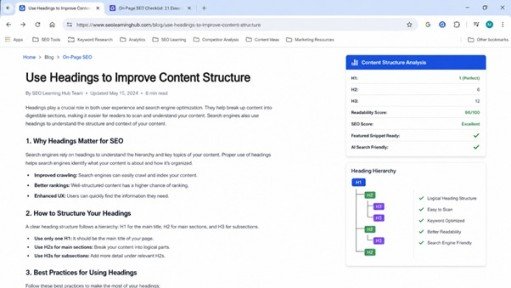
A well-organized article is easier for both readers and search engines to understand. Breaking content into sections improves readability. It also helps users quickly find the information they need.
Start with one H1 heading, followed by logical H2 and H3 headings throughout the article. Every heading should clearly explain what the following section discusses.
Instead of generic headings like “Information” or “Details,” use descriptive headings. They should clearly explain the topic.
A good heading structure should:
· Follow a logical order.
· Describe the section clearly.
· Include keywords naturally where appropriate.
· Improve readability.
· Make long articles easier to scan.
Structured content increases your chances of appearing in featured snippets. It also improves visibility in AI-generated search results.
4. Optimize Your URL for Better Understanding
Your page URL should be short, descriptive, and easy to read. A clean URL helps both users and search engines understand what the page is about before they even visit it. A well-optimized URL is an important On-page SEO factor. It makes your content easier for search engines to crawl and understand.
Avoid unnecessary numbers, symbols, or random words. Instead, create URLs that closely match your article topic.
A simple and descriptive URL is more effective. It works better than URLs filled with dates or random characters.
URL optimization tips:
· Keep URLs short.
· Use lowercase letters.
· Separate words with hyphens.
· Remove unnecessary words.
· Include your target keyword naturally.
A clean URL looks more professional when shared. It also performs better on social media and other websites.
5. Improve Your Meta Description to Increase Clicks
A meta description is not a ranking factor. But it helps attract visitors from search results.
A compelling description gives users a reason to choose your page. It makes your page stand out from competitors.
Write concise descriptions that summarize your content while encouraging clicks. Additionally, include your primary keyword naturally without forcing it into every sentence.
A good meta description should:
· Explain the page clearly.
· Stay within the recommended length.
· Include a call to action.
· Match the page content.
· Encourage users to click.
A well-written description can significantly improve your click-through rate. Even if your ranking position stays the same.
6. Place Your Primary Keyword Naturally
Using your target keyword correctly is one of the most important On-Page SEO Factors. However, repeating the same keyword without purpose can hurt your rankings. It may reduce your SEO performance instead of improving it. Google now understands context. So, natural keyword placement is more important than keyword stuffing.
Start by placing your primary keyword in important areas of your page. These locations help search engines understand your topic. They also keep your content readable for visitors. Ensure every keyword fits naturally in the sentence. Do not force keywords where they do not belong.
Some of the best places to use your keyword include:
· The page title
· The introduction
· One or more H2 headings
· Image alt text
· Meta description
· URL
· Conclusion
Additionally, include related terms and synonyms throughout your content. This helps search engines understand your topic better. It also makes your writing sound more natural.
7. Build Strong Internal Links
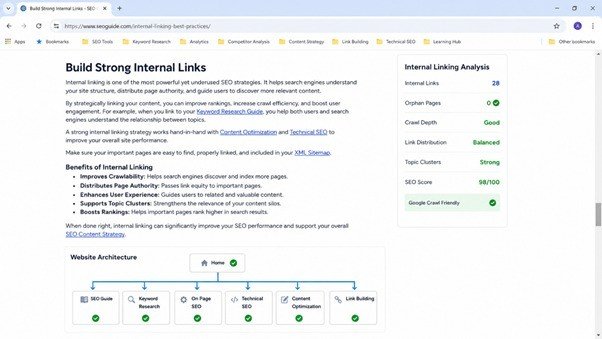
Internal links connect one page of your website to another. They help visitors find more useful information. They also guide search engines through your website’s structure. A strong internal linking strategy is one of the important On-Page SEO Factors. It helps Google understand the relationship between your pages.
For example, you can link a keyword research article to a content optimization guide. You can also connect it to a technical SEO article.
Effective internal linking offers several advantages:
· Helps Google discover pages faster.
· Improves website navigation.
· Keeps visitors on your website longer.
· Passes authority between pages.
· Creates clear topic clusters.
However, avoid adding links simply to increase the number of links. Every internal link should provide value to the reader. It should also support your overall SEO strategy.
8. Link to Trusted Sources When Necessary
Many website owners avoid using external links. They believe visitors will leave their website. In reality, linking to reliable sources can improve your content’s credibility.
Whenever you reference statistics, research, or expert information, link to trusted websites. This shows readers that your content is reliable. It also helps search engines trust your information.
Good external links should be:
· Relevant to the topic
· From trustworthy websites
· Helpful for readers
· Added naturally within the content
Quality always matters more than quantity.
9. Optimize Images for Better SEO
Images make articles more engaging and easier to understand. However, they should also be optimized properly. Image optimization is one of the essential On-Page SEO Factors. It helps search engines understand your content and improves your website’s performance.
Large image files can slow down your website. Missing alt text also makes it harder for search engines to understand your images.
To improve image SEO:
· Compress images before uploading.
· Use descriptive file names.
· Add meaningful alt text.
· Choose modern image formats.
· Keep image sizes optimized.
Optimized images improve page speed and accessibility. They also help create a better user experience and support higher search rankings.
10. Improve Your Website Speed
A slow website can frustrate visitors within seconds. Even if your content is excellent, users may leave before reading it if your pages take too long to load.
Google also considers page experience when evaluating websites. Therefore, improving speed should always be part of your SEO strategy.
You can improve loading speed by:
· Compressing images
· Reducing unnecessary plugins
· Using browser caching
· Choosing reliable hosting
· Minimizing unnecessary scripts
Faster websites often enjoy lower bounce rates, better engagement, and improved rankings.
11. Match User Search Intent
Search intent means understanding what users want. It helps you create content that matches their needs.
Some people search for information. Others want to compare products or buy something. If your content does not match that intent, it becomes much harder to rank.
Before writing, ask yourself:
· What problem is the reader trying to solve?
· What type of information do they need?
· What questions should this page answer?
When your content matches user intent, visitors stay longer. They are also more likely to explore your website.
12. Make Your Website Mobile-Friendly
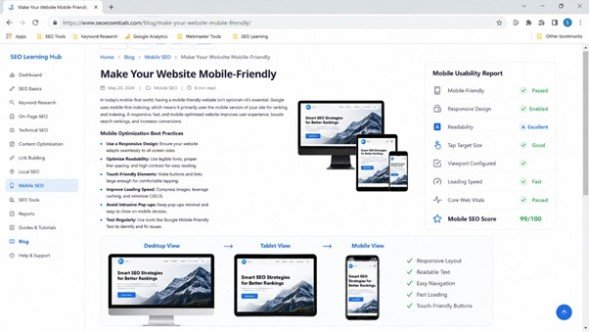
Today, most searches happen on smartphones. That is why Google mainly evaluates the mobile version of your website.
A responsive design ensures visitors can easily read your content on every device.
To improve mobile usability:
· Use responsive layouts.
· Keep text readable.
· Avoid intrusive pop-ups.
· Make buttons easy to tap.
· Improve loading speed.
A mobile-friendly website provides a better user experience and supports stronger search rankings.
13. Add Structured Data Where Appropriate
Structured data helps search engines understand your content more accurately. It also increases your chances of earning rich search results.
Depending on your page, you can use structured data for:
· Articles
· FAQs
· Reviews
· Products
· Organizations
Structured data improves how your pages appear in search results. It can also help attract more clicks from users.
14. Keep Your Content Fresh and Updated
SEO is not a one-time task. Search engines prefer content that remains accurate and up to date.
Review your articles regularly to:
· Add new information.
· Remove outdated details.
· Update screenshots.
· Improve readability.
· Include recent examples.
Regular updates show Google that your content continues to provide value.
Common On-Page SEO Mistakes to Avoid
Even high-quality websites sometimes make optimization mistakes that reduce their rankings.
Avoid these common errors:
· Keyword stuffing
· Duplicate content
· Missing title tags
· Weak meta descriptions
· Broken internal links
· Slow page speed
· Poor heading structure
· Ignoring mobile users
· Missing image alt text
· Publishing thin content
Fixing these issues can significantly improve your website’s overall performance.
Final Thoughts
Achieving higher Google rankings requires much more than publishing articles regularly. Optimize every page carefully. This helps both users and search engines understand its value. Clear titles and helpful content improve your SEO. Fast page speed and internal links also boost website performance.
Instead of chasing shortcuts, focus on building pages that genuinely help your audience. Search algorithms change regularly. Quality content and a good user experience help you achieve lasting SEO success.
Apply these On-Page SEO Factors consistently to improve your website’s visibility. This will help you attract more visitors and grow your online presence. Start using these strategies today and track your progress regularly. Keep improving your content to achieve better Google rankings.
FAQs
1. What are on page and off page SEO factors?
On-page SEO improves your website’s content and structure. Off-page SEO builds your site’s authority through backlinks.
2. What are the important factors of on-page SEO?
Content quality and keywords are essential for better SEO. Titles, headings, page speed, and internal links also improve rankings.
3. What are on page SEO factors?
On-page SEO factors improve your website for search engines. They help increase your Google rankings.
4. What are on page SEO ranking factors?
They include content quality, keyword placement, page speed, mobile-friendliness, and user experience.
5. What are all on page SEO factors?
On-page SEO factors include titles, headings, URLs, and quality content. They also cover meta descriptions, images, links, and technical optimization.
Mata description
Discover essential on-page SEO Factors to boost Google rankings, improve traffic, and optimize your website. Learn more and start optimizing today!
- What Are On-Page SEO Factors?
- Why Are On-Page SEO Factors Important?
- 1. Write Titles That Clearly Describe Your Content
- 2. Create Helpful Content That Answers Real Questions
- 3. Use Headings to Improve Content Structure
- 4. Optimize Your URL for Better Understanding
- 5. Improve Your Meta Description to Increase Clicks
- 6. Place Your Primary Keyword Naturally
- 7. Build Strong Internal Links
- 8. Link to Trusted Sources When Necessary
- 9. Optimize Images for Better SEO
- 10. Improve Your Website Speed
- 11. Match User Search Intent
- 12. Make Your Website Mobile-Friendly
- 13. Add Structured Data Where Appropriate
- 14. Keep Your Content Fresh and Updated
- Common On-Page SEO Mistakes to Avoid
- Final Thoughts
- FAQs
- Mata description