

Travel planning has changed a lot in recent years. Today, people use the internet to search for destinations, compare travel options, read reviews, check prices, and book trips. Because of this, a travel website needs to offer more than attractive photos. It should provide useful information and make the entire travel-planning process simple.
A Modern Travel Website should be fast, clear, easy to navigate, and simple to use on phones, tablets, and computers. It should help visitors find destinations, explore travel packages, check availability, and complete bookings without confusion. Secure payment options, helpful content, clear calls to action, and strong SEO can also improve the user experience and help a travel business attract more customers.
In this guide, you will learn how to build a Modern Travel Website in 2026. We will cover important areas such as design, booking features, mobile UX, website speed, useful content, and SEO strategies.
What Makes a Modern Travel Website Successful in 2026?
Travelers today want more than beautiful pictures. They want a website that is fast, easy to use, simple to navigate, and makes booking a trip quick and safe. A successful travel website brings design, booking features, mobile usability, useful content, and SEO together.
1. Start With a Clear Travel Website Plan
Before you choose a theme or builder, decide what your site will do. This step gives your project a clear path.
Define Your Audience
You may target families, solo travelers, luxury travelers, budget travelers, or adventure lovers. Then decide what you will offer. It could be tours, hotels, flights, travel packages, or destination guides.
Your Modern Travel Website should solve a clear problem for this audience. For example, a tour site can help users find trips, check dates, read details, and book in a few steps.
Keep your plan simple:
- Define your target traveler.
- Choose your main service.
- List key pages and features.
- Set a realistic budget.
This helps you avoid features visitors do not need.
2. Choose the Right Domain, Hosting, and Platform
Next, build a strong technical base. Choose a domain that is short, easy to spell, and easy to remember. Avoid confusing numbers and long names.
Hosting also matters. A travel site may have many images, users, and booking requests. So, choose hosting with good speed, security, uptime, and room to grow.
WordPress is a flexible option. It supports SEO, booking, forms, reviews, and travel content. Website builders can also work well for small projects.
Your Modern Travel Website needs a platform that supports future plans. If you expect complex bookings or live data, plan the technology early.
3. Create a Clean and Useful Homepage
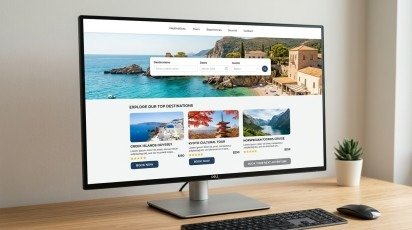
Your homepage is often the first page a visitor sees. It should explain what you offer within seconds.
Build a Strong Hero Section
Start with one clear travel image, a short message, and a useful call to action. A search box can also help users find a destination or trip quickly.
Then show popular destinations, packages, reviews, and helpful guides. Avoid too many banners. Give each section a clear purpose.
A good Modern Travel Website homepage can include:
- A simple navigation menu
- A clear hero section
- Destination search
- Featured trips
- Reviews and ratings
- Popular travel guides
- Clear booking buttons
This structure helps visitors move from discovery to action without confusion.
4. Add the Right Travel Pages
A strong site needs more than a homepage. Create destination pages with things to do, travel tips, best times to visit, and booking options. Tour pages should show the itinerary, price, inclusions, dates, and FAQs.
You should also have About, Contact, Privacy Policy, Terms, and support pages.
Add a Useful Travel Blog
For a Modern Travel Website, a blog can attract people before they book. Write guides about destinations, travel times, budgets, and trip planning.
5. Make Booking Simple and Secure
Booking is a key part of a travel site. A visitor should not have to complete a long or confusing process.
Add Core Booking Features
Show availability, dates, prices, and booking details clearly. Then use a short form and a secure payment method. After payment, send a confirmation email with the trip details.
A Modern Travel Website can also support real-time availability, booking calendars, secure payments, instant confirmation, multi-currency support, and booking history.
Test the full journey before launch. Search, select a date, complete the form, make a test payment, and check the confirmation email.
6. Design for Mobile Users First
Travelers often use phones to search and book. So, your website must work well on small screens. Use readable text, large buttons, simple menus, and short forms. Keep important actions easy to find.
A Modern Travel Website should also load fast on mobile. Large images can slow a page, so compress images and use modern formats when possible. Lazy loading can also help.
Before launch, test phones and tablets. Check menus, forms, images, maps, and booking steps.
7. Build SEO Into the Website

Start SEO during website planning, not after launch. Search engines need clear pages, useful content, good site structure, and easy navigation.
Focus on Search Intent
Start with keyword research. Use terms that match what travelers search for. Then create focused pages around destinations, tours, travel questions, and services.
Each page should have a clear title, useful headings, a short URL, and a helpful meta description. Add descriptive image alt text too.
A Modern Travel Website can use topic clusters to build stronger content. For example, one main destination page can connect to pages about things to do, where to stay, travel costs, and the best time to visit.
Internal links are also important. Link related pages naturally so users and search engines can discover more content.
8. Improve Speed and Technical SEO
Fast pages give users a better experience. They can also support better search performance. Compress images before uploading them. Remove unused plugins and scripts. Use caching and a content delivery network when suitable. Keep your website software updated. Technical SEO also includes clean URLs, mobile usability, secure HTTPS, an XML sitemap, and proper indexing settings.
For a Modern Travel Website, structured data can also help search engines understand your content. Use relevant schema types where they fit your pages. Do not add markup that does not match the visible content. After changes, test your pages with PageSpeed Insights and Google Search Console.
9. Use Content to Attract Travelers
Travel content can bring visitors before they are ready to book. Write answers to real questions about destinations, budgets, routes, activities, seasons, and local tips.
Keep each article focused on one search intent. Use simple language and useful images. Update old information when prices, routes, or policies change. Your Modern Travel Website can connect blog guides with related tours, hotels, and activities.
10. Track Visitors and Improve the Site
After launch, use analytics to track page views, searches, booking starts, completed bookings, and form submissions.
Look for pages that get traffic but few actions. Improve their content or calls to action. Also watch mobile behavior, page speed, and search traffic. A Modern Travel Website should change as user needs, prices, and travel trends change.
11. Test Everything Before Launch
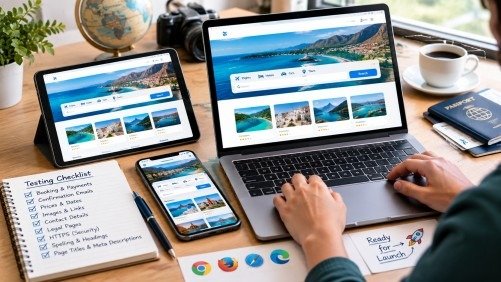
A final test can prevent problems. Check the site on different browsers and screen sizes. Test every important button and form.
Make sure booking, payments, confirmation emails, prices, dates, images, links, contact details, legal pages, and HTTPS all work. Also check spelling, headings, page titles, and meta descriptions.
Conclusion
Building a Modern Travel Website in 2026 is not only about modern design. It is about creating a smooth journey from search to booking. Start with a clear audience and business goal. Then build a fast site with useful pages, simple booking, mobile-first design, and strong SEO. Add helpful tools only when they improve the travel experience.
Finally, keep testing, measuring, and updating your site. When design, content, booking, and SEO work together, your website can become a useful travel resource and a strong channel for online bookings.
FAQs
1. What is a Modern Travel Website?
A Modern Travel Website is fast, easy to use, mobile-friendly, and designed to make travel planning and booking simple.
2. What should a travel website include?
A travel website should include destinations, travel packages, booking options, reviews, contact details, and useful travel guides.
3. How can I make my travel website SEO-friendly?
Use relevant keywords, helpful content, clear headings, fast pages, optimized images, internal links, and mobile-friendly design.
4. How can I improve travel website bookings?
Use clear booking buttons, simple forms, secure payments, visible prices, and an easy booking process to reduce user confusion.
5. Why is mobile design important for a travel website?
Many travelers search and book on phones, so a mobile-friendly website provides a better experience and supports more bookings.
Meta Description
Learn how to build a Modern Travel Website in 2026 with better design, booking features, mobile UX, speed, content, and SEO.
- What Makes a Modern Travel Website Successful in 2026?
- 1. Start With a Clear Travel Website Plan
- 2. Choose the Right Domain, Hosting, and Platform
- 3. Create a Clean and Useful Homepage
- 4. Add the Right Travel Pages
- 5. Make Booking Simple and Secure
- 6. Design for Mobile Users First
- 7. Build SEO Into the Website
- 8. Improve Speed and Technical SEO
- 9. Use Content to Attract Travelers
- 10. Track Visitors and Improve the Site
- 11. Test Everything Before Launch
- Conclusion
- FAQs
- Meta Description