
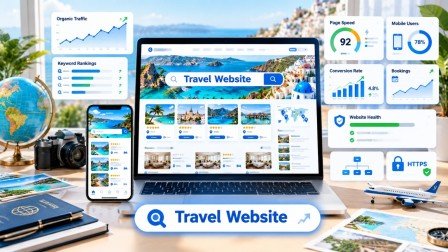
Travelers increasingly use search engines, maps, social platforms, and online booking tools to research destinations, compare accommodations, discover activities, and plan complete trips. For travel businesses, having an attractive online presence is no longer enough. A successful travel website needs to combine helpful content, search engine optimization, fast performance, strong design, and useful booking features.
In 2026, competition in the travel industry is especially strong because travelers can choose from hotels, travel agencies, online travel agencies, destination publishers, blogs, and booking platforms. This makes it important to understand what users are searching for and create pages that answer their questions at every stage of the travel journey.
A well-planned travel website can help a business attract organic traffic, build trust, generate inquiries, and turn visitors into customers. This guide explains the key SEO, design, content, technical, and user-experience strategies needed to build a successful travel website in 2026.
Why a Travel Website Needs More Than Good Design
A visually attractive website can create a strong first impression, but design alone does not guarantee traffic or bookings. Search engines need to understand the purpose and structure of your pages, while travelers need clear information that helps them make decisions.
Travel searches can range from broad informational queries such as “best places to visit in Europe” to highly specific searches such as “family hotels near Disneyland.” Because travel purchases are often carefully considered, users may visit several pages before making a final decision.
Your travel website should therefore support the complete customer journey. It should inspire the dreaming stage, provide useful information during planning, clear options during booking, and provide helpful resources before and after the trip.
1. Start With Travel Keyword Research
Keyword research should be one of the first steps when creating your website. It helps you understand what potential customers are searching for and which topics deserve dedicated pages.
Start by creating a list of keywords related to your destinations, services, accommodations, tours, activities, and travel experiences. Then analyze search volume, competition, relevance, and search intent.
Instead of focusing only on very broad keywords, look for specific long-tail opportunities. For example:
- Hotels in Lahore
- Family hotels in Lahore
- Best places to visit in northern Pakistan
- Things to do in Hunza
- Luxury hotels in Islamabad
- Budget hotels near Lahore airport
- Best time to visit Skardu
- Things to do in Murree with kids
A travel website can target these different searches through dedicated destination pages, hotel pages, travel guides, activity pages, and blog content.
Understand Search Intent
Search intent explains what a person wants when entering a query into Google. Travel keywords generally fall into four major categories:
Informational intent:
Users want information, such as “best time to visit Turkey.”
Navigational intent:
Users are looking for a particular brand, website, or destination.
Commercial investigation:
Users are comparing options, such as “best hotels in Dubai.”
Transactional intent:
Users are ready to book, purchase, or make an inquiry.
Understanding intent prevents you from creating the wrong type of page for a keyword. If Google mostly shows destination guides for a query, creating a booking page may not satisfy the searcher’s needs.
2. Build a Clear Website Structure
A successful website needs a logical structure that both users and search engines can understand.
For travel businesses, a useful hierarchy can look like:
Home → Destinations → Country → Region → City → Hotels/Activities
For example:
- /destinations/
- /destinations/pakistan/
- /destinations/pakistan/gilgit-baltistan/
- /destinations/pakistan/gilgit-baltistan/hunza/
- /destinations/pakistan/gilgit-baltistan/hunza/hotels/
This structure creates clear relationships between pages and makes internal linking easier. Your travel website should also have simple navigation so visitors can quickly find destinations, tours, hotels, travel guides, contact information, and booking options. Avoid creating dozens of pages that target almost identical keywords. This can create keyword cannibalization, where multiple pages compete for the same search intent.
3. Create High-Quality Destination Pages
Destination pages are among the most important content types for travel businesses.
A strong destination page should provide genuinely useful information rather than simply repeating generic descriptions. Depending on the destination, include:
- Overview of the destination
- Best time to visit
- Popular attractions
- Things to do
- Accommodation options
- Local transportation
- Food and restaurants
- Estimated travel costs
- Family-friendly activities
- Safety and practical information
- Frequently asked questions
- Booking or inquiry options
For example, a page about Hunza could include information about major attractions, local experiences, recommended travel seasons, accommodation choices, transportation, and nearby destinations.
A travel website becomes more useful when destination pages are connected to related hotels, tours, activities, and guides through contextual internal links.
Use Experience-Based Content
Travel content should demonstrate real knowledge and experience whenever possible. Add original photographs, first-hand observations, practical tips, local recommendations, and accurate information.
Generic content created only to target keywords can provide little value. Travelers want information that helps them make real decisions.
4. Focus on Technical SEO
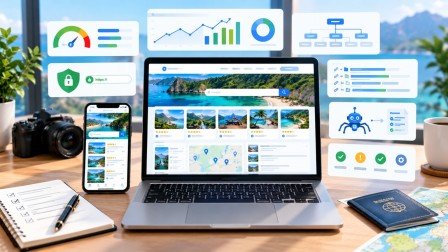
Technical SEO ensures that search engines can crawl, understand, and index your pages properly.
Important technical areas include:
- Fast page loading
- Mobile responsiveness
- Secure HTTPS
- Clean URL structure
- XML sitemap
- Robots.txt
- Canonical URLs
- Internal linking
- Proper redirects
- Structured data
- Fixing broken links
- Eliminating duplicate content
Page performance is particularly important because travelers frequently browse websites from mobile devices while researching trips.
Google Search Console can help identify indexing issues, search performance, and technical problems that may affect organic visibility.
A technically optimized travel website gives search engines a cleaner structure to crawl while providing visitors with a smoother browsing experience.
5. Make Mobile Design a Priority
Many travelers research destinations and bookings using smartphones. Your website should therefore work smoothly on small screens.
A mobile-friendly design should include:
- Easy-to-read text
- Large enough buttons
- Simple menus
- Fast-loading images
- Short and clear forms
- Easy booking controls
- Responsive layouts
- Minimal intrusive pop-ups
Do not simply shrink the desktop version for mobile. Design the experience around the way mobile users actually browse.
For example, a traveler should be able to open a destination page, view accommodation options, check important details, and contact or book a service without struggling with tiny buttons or complicated navigation.
6. Create an Attractive Travel Website Design
Travel is highly visual, so design plays an important role in capturing attention.
Use high-quality images that represent real destinations, accommodations, activities, landscapes, and experiences. Whenever possible, use original photography rather than generic stock images.
Your homepage can include:
- A strong hero image
- Search or destination functionality
- Popular destinations
- Featured tours
- Recommended accommodations
- Travel guides
- Customer reviews
- Clear calls to action
The goal is not to fill every section with images and animations. Good design should help visitors understand what the business offers and guide them toward the next useful action.
7. Add Essential Booking Features
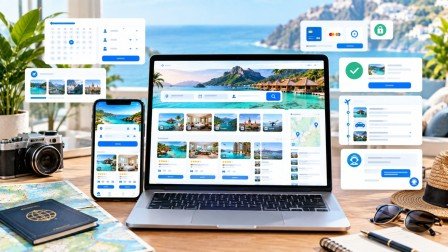
A modern tourism website should make the booking process simple.
Depending on the business model, useful features may include:
- Hotel booking
- Tour booking
- Flight search
- Activity reservations
- Availability calendars
- Date selection
- Guest selection
- Online payments
- Contact forms
- WhatsApp or live chat
- Booking confirmation
- Cancellation information
Not every business needs every feature. A small tour operator may only need inquiry and booking forms, while a large online travel agency may require a complete booking engine.
Your travel website should include only the features that genuinely support your business model and customer journey.
8. Improve User Experience and Navigation
User experience affects how easily visitors can find information and complete important actions.
A good travel website should answer basic questions quickly:
Where can I go?
What can I do there?
Where can I stay?
How much will it cost?
When should I visit?
How can I book?
Keep navigation consistent across the website. Use descriptive menu labels and create logical internal links between related pages.
For example, a destination guide can link to hotel pages, hotel pages can link to nearby attractions, and attraction pages can link back to the relevant destination guide.
This creates a connected content ecosystem rather than a collection of isolated pages.
9. Optimize Images for SEO and Speed
Images are essential for travel websites, but large image files can slow down pages.
Before uploading images:
- Compress large files
- Use modern image formats where appropriate
- Choose suitable dimensions
- Add descriptive file names
- Use meaningful alt text
- Implement lazy loading when appropriate
For example, instead of naming an image IMG1234.jpg, use a descriptive filename such as hunza-valley-pakistan.jpg.
Alt text should describe the image naturally and should not be filled with unnecessary keywords. A visually rich travel website can perform well when its images are optimized for both users and page performance.
10. Use Local SEO for Travel Businesses
Local SEO is particularly valuable for hotels, tour operators, travel agencies, restaurants, attractions, and other businesses serving specific locations. Create and maintain accurate business information across relevant platforms. Your business name, address, phone number, opening hours, website, and other important details should remain consistent.
Create location-specific pages when they genuinely serve a useful purpose. Include information about nearby attractions, transportation, local experiences, and services. Customer reviews can also help travelers understand what to expect from a business. Encourage genuine reviews and respond professionally to customer feedback.
11. Create a Strong Travel Content Strategy
Content marketing can help a travel brand attract visitors before they are ready to book. Build content around the complete travel journey.
Dreaming Content
These articles inspire travelers:
- Best places to visit in summer
- Beautiful destinations for couples
- Best family holiday destinations
- Underrated places to explore
Planning Content
These articles help travelers prepare:
- Best time to visit
- Travel costs
- Packing guides
- Transportation information
- Visa information
- Destination itineraries
Booking Content
These pages target users closer to conversion:
- Best hotels
- Family resorts
- Luxury accommodation
- Guided tours
- Airport transfers
- Travel packages
Experiencing Content
Help travelers during and after their trip with:
- Local restaurant guides
- Things to do
- Transportation tips
- Day-trip ideas
- Local activity recommendations
This approach helps a travel website remain visible across multiple stages of the customer journey.
12. Use Internal Links Strategically
Internal linking helps users discover related information and helps search engines understand your website structure.
For example, a “Things to Do in Hunza” article could link to:
- Hunza destination page
- Hunza hotel guide
- Best time to visit Hunza
- Hunza travel itinerary
- Nearby attractions
Use descriptive anchor text that tells readers what they will find after clicking.
Avoid adding links simply for the sake of increasing the number of internal links. Every link should provide a useful next step.
13. Build High-Quality Backlinks
Backlinks remain an important part of building website authority, but quality matters.
Travel businesses can earn relevant links through:
- Travel publications
- Tourism organizations
- Local business websites
- Destination resources
- Guest contributions
- Travel partnerships
- Digital PR
- Original research
- Useful travel guides
For example, a travel business could create an original study about tourism trends or publish a detailed destination guide that other websites find useful enough to reference.
Avoid relying on large numbers of low-quality or irrelevant backlinks.
14. Use Schema Markup and Structured Data
Structured data can help search engines better understand certain types of information on your pages.
Depending on your website, relevant structured data may include information related to:
- Hotels
- Local businesses
- Events
- Reviews
- FAQs
- Articles
- Breadcrumbs
- Products or offers
Use structured data accurately and only where the markup matches visible page content and applicable search-engine guidelines.
Schema markup does not guarantee rich results, but it can provide search engines with clearer information about your content.
15. Track SEO Performance With Analytics
SEO should be measured rather than treated as a one-time task.
Use tools such as Google Search Console and analytics platforms to monitor:
- Organic traffic
- Search impressions
- Click-through rate
- Keyword performance
- Landing pages
- Conversions
- Engagement
- Booking inquiries
- Technical issues
Look beyond traffic alone. A page receiving fewer visitors but generating more qualified booking inquiries may be more valuable than a high-traffic informational page.
Review performance regularly and update content when search trends, destination information, or customer needs change.
Travel SEO Challenges to Consider in 2026
Travel SEO is highly competitive. Large online travel agencies and established brands often have extensive content, strong authority, and significant resources. Travel search results can also contain special Google features, local results, hotel listings, flight tools, maps, images, and other search features. These elements can affect how much organic traffic traditional rankings receive.
Seasonality is another major factor. Searches for destinations, hotels, flights, and activities can change throughout the year. For this reason, businesses should plan content ahead of peak travel seasons rather than waiting until demand reaches its highest point.
Avoid Keyword Cannibalization
Keyword cannibalization happens when multiple pages on the same website target very similar keywords and search intent.
For example, a website might create separate pages for:
- Family hotels in Dubai
- Family resorts in Dubai
- Best family hotels in Dubai
These could potentially overlap depending on what Google currently shows for the queries. Before creating separate pages, examine the search results and determine whether users appear to have different needs. If the intent is substantially the same, combining information into one stronger page may be more useful.
Create Content That Demonstrates Experience
Travel is an area where first-hand experience can make content more useful.
If possible, include:
- Original photographs
- Personal observations
- Local recommendations
- Practical travel tips
- Updated pricing information
- Real itineraries
- First-hand activity descriptions
- Author information
Do not claim to have personally visited a destination if you have not. Instead, clearly explain the sources used to develop the information.
High-quality travel content should be useful, accurate, transparent, and created for travelers rather than solely for search engines.
A Simple 2026 Travel Website Checklist
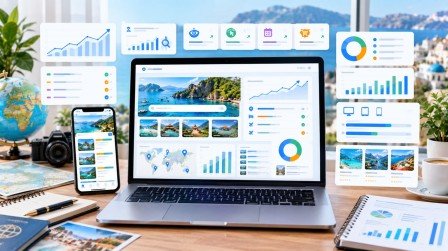
Before launching your website, review the following checklist:
SEO
- Conduct keyword research
- Understand search intent
- Optimize titles and meta descriptions
- Create useful destination pages
- Build internal links
- Earn relevant backlinks
- Add appropriate structured data
Design
- Use responsive design
- Choose clear navigation
- Use high-quality images
- Keep calls to action visible
- Make booking paths simple
Technical
- Improve page speed
- Use HTTPS
- Create an XML sitemap
- Check mobile usability
- Fix broken links
- Monitor indexing
- Use clean URLs
Content
- Publish destination guides
- Create travel planning resources
- Answer common questions
- Include original insights
- Update outdated information
Conversion
- Add booking or inquiry forms
- Display reviews
- Provide clear contact options
- Explain pricing and policies
- Make the next step obvious
Conclusion
Creating a successful travel website in 2026 requires much more than an attractive homepage. Travel businesses need a complete strategy that combines keyword research, helpful destination content, technical SEO, mobile-friendly design, fast performance, intuitive navigation, useful booking features, and a strong user experience. The most effective approach is to understand the traveler’s journey and create content that supports each stage, from discovering a destination to planning, booking, and experiencing the trip.
Businesses should also monitor their search performance, study user behavior, update content, and improve their website as customer needs change. When SEO and design work together, a travel website can become more than an online brochure. It can become a useful destination resource, a trusted source of information, and an effective channel for generating inquiries and bookings.
Frequently Asked Questions
1. What makes a successful travel website?
A successful travel website combines useful content, strong SEO, responsive design, fast loading speed, simple navigation, trustworthy information, and convenient booking or inquiry features.
2. How important is SEO for a travel website?
SEO can help travel businesses reach people who are actively searching for destinations, hotels, tours, activities, and travel information. A strong SEO strategy can increase organic visibility and bring relevant visitors to important pages.
3. What pages should a travel website have?
Common pages include a homepage, destination pages, accommodation or service pages, travel guides, activity pages, booking or inquiry pages, an About page, a Contact page, and frequently asked questions.
4. How can I improve my travel website design?
Focus on responsive layouts, high-quality images, simple navigation, readable content, fast loading, clear calls to action, and an easy booking journey. Design should help visitors find information rather than overwhelm them.
5. Why are destination pages important for travel SEO?
Destination pages allow businesses to organize information around specific countries, regions, cities, and attractions. Well-developed pages can address travelers’ questions while targeting relevant location-based searches.
Meta description:
Create a successful travel website in 2026 with SEO, responsive design, booking features, useful content, technical optimization, and a better user experience.
- Why a Travel Website Needs More Than Good Design
- 1. Start With Travel Keyword Research
- 2. Build a Clear Website Structure
- 3. Create High-Quality Destination Pages
- 4. Focus on Technical SEO
- 5. Make Mobile Design a Priority
- 6. Create an Attractive Travel Website Design
- 7. Add Essential Booking Features
- 8. Improve User Experience and Navigation
- 9. Optimize Images for SEO and Speed
- 10. Use Local SEO for Travel Businesses
- 11. Create a Strong Travel Content Strategy
- 12. Use Internal Links Strategically
- 13. Build High-Quality Backlinks
- 14. Use Schema Markup and Structured Data
- 15. Track SEO Performance With Analytics
- Travel SEO Challenges to Consider in 2026
- Avoid Keyword Cannibalization
- Create Content That Demonstrates Experience
- A Simple 2026 Travel Website Checklist
- Conclusion
- Frequently Asked Questions
- Meta description: