
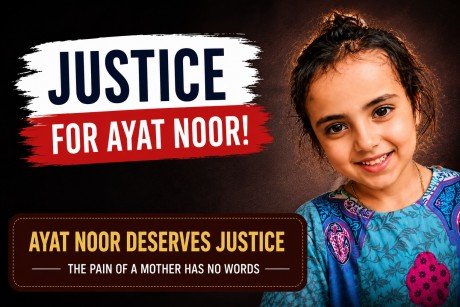
Why has so much fear entered parents’ hearts in today’s world? Why do parents worry every time their child steps outside, goes to school, or is away from their eyes for even a few moments?
One heartbreaking incident that has added to this fear is the Ayat Noor Case. The death of five-year-old Ayat Noor has left many people in Pakistan deeply heartbroken and has raised serious concerns about the safety of children.
A child should be able to grow up without fear. Children should be safe at home, on the streets, in schools, and in every place where they learn, play, and grow. Yet, when a tragedy like this happens, every parent is left asking the same painful question: Are our children truly safe?
And perhaps the most painful question is this: How can we protect our children before another innocent life is lost?
Why the Ayat Noor Case Has Shocked People
The Ayat Noor Case is painful because it involves a very young child. She had a full life ahead of her. Her family expected her to return home. Instead, they faced fear, waiting, grief, and a demand for justice.
The case also reminds us that danger does not always look like danger. Children may know or trust people around them. That is why safety lessons must be simple, regular, and age-appropriate.
What Happened in Haripur?
Ayat Noor was reported missing after leaving her home to play. Police later said CCTV footage from many cameras was reviewed during the investigation. News reports said useful footage helped investigators trace suspects. Her body was recovered from a well near University Road.
The police investigation and court process should now answer the key questions. Evidence must be checked. Statements must be tested. The law must be followed. Most of all, the family deserves a fair and timely process.
A Painful Question for Pakistan
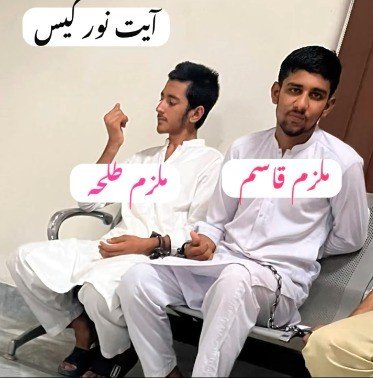
The Ayat Noor Case makes one question hard to ignore: how many more children must suffer before child safety becomes a daily priority?
We often react after a tragedy. People protest. Social media fills with posts. Officials make statements. Then, after some time, public attention moves on.
That cycle must change.
Justice is not only punishment after a crime. Justice also means prevention. It means finding risks early. It means taking a missing-child report seriously. It means safe schools, trained staff, working cameras, quick communication, and adults who listen when a child says something feels wrong.
Can Schools and Educational Institutes Protect Children?
Schools and educational institutes have a major role in child safety. A school is not only a place for books. It is also a place where children spend many hours each day.
The Ayat Noor Case should push every school to review its safety plan. In the Ayat Noor Case, the wider lesson is clear: child protection must be planned before an emergency, not only discussed after one.
Simple Safety Steps for Schools
Schools can start with basic steps:
- Check who enters and leaves the building.
- Keep visitor records.
- Use working CCTV cameras in suitable public areas.
- Do not allow unknown people to enter child areas without checks.
- Train teachers and support staff to notice warning signs.
- Keep emergency phone numbers easy to find.
- Teach children how to seek help.
- Create a clear system for reporting unsafe behavior.
- Make sure parents know who is responsible for child pickup.
- Review the safety plan more than once a year.
These steps do not create fear. They create awareness.
Why Is a Child Protection Policy Important in Schools?
Every school and educational institute should have a clear Child Protection Policy. Its purpose is to create simple rules that help keep children safe from different risks. Schools should keep visitor records, verify staff members, use working CCTV cameras, and check the identity of people who come to pick up children.
Teachers and staff should also know what to do if a child reports fear, harassment, or unsafe behavior. The Ayat Noor Case reminds us that child safety is not only the responsibility of parents. Schools and educational institutes also have an important role. A strong safety policy cannot remove every risk, but it can help reduce danger and ensure quick action during an emergency.
Child Safety Lessons Should Start Early

Children should learn that they can say “no” to unsafe touch or unsafe behavior. They should know that they can leave an uncomfortable situation and tell a trusted adult.
For younger children, lessons should use simple words. Teachers can use stories, role play, and classroom talks. Older students can learn about online risks, privacy, strangers, grooming, bullying, and safe communication.
Most importantly, schools should never shame a child for reporting a problem.
The Role of Teachers and School Staff
A teacher may be the first adult outside the home to notice a change in a child. A child may become quiet, fearful, absent, or unwilling to go to a certain place.
Teachers should not investigate serious allegations on their own. Instead, they should report concerns through the school’s child-protection process and involve parents or relevant authorities as required by law.
Schools should also have clear rules for staff conduct. Background checks, training, supervision, and safe boundaries can reduce risk.
Mobile Phones: A Tool, Not a Toy Without Rules
Mobile phones can help children learn, communicate, and stay connected. But they can also create new risks.
The Ayat Noor Case is not a mobile-phone case, and there is no basis to link her death to phone use. However, the wider lesson is important: technology should be used with care.
Parents and schools can teach children:
- Do not share private photos with strangers.
- Do not meet an online contact alone.
- Tell an adult about threats or strange messages.
- Use privacy settings.
- Do not share home, school, or live-location details publicly.
- Keep evidence of serious online threats and report them.
Parents should also know which apps their children use. This is not about spying on every message. It is about safety, trust, and age-appropriate digital supervision.
Social Media and Mobile Safety for Children
Today, mobile phones are an important part of children’s learning and communication. However, children should learn how to use them safely. They should not share their live location, home address, school details, or private photos with unknown people. If a child receives a strange message, threat, or uncomfortable request, they should tell a parent, teacher, or another trusted adult instead of keeping it secret. Parents should also provide age-appropriate guidance about mobile phones and social media. Technology itself is not the problem, but unsafe use can put children at risk. Therefore, schools can also teach basic digital safety so children can stay safer both online and in real life.
Why Justice Must Be Fast and Fair

The Ayat Noor Case has also brought the word “justice” back into public discussion.
Families should not have to spend days begging for attention after a child disappears. A missing child should trigger a fast response. Police, schools, hospitals, local communities, and digital systems should be able to share lawful information quickly.
At the same time, justice must be fair. Public anger is understandable, but punishment should come through evidence and the courts. Social media posts are not a substitute for a trial.
A strong justice system gives two clear messages: victims matter, and offenders cannot expect to escape accountability.
What Can Parents Do Every Day?
Parents do not need expensive tools to make children safer. Small habits can help.
Teach children their full name, a parent’s phone number, and how to seek help from safe adults. Know where younger children are playing. Build a habit of asking simple questions about their day.
Most importantly, listen.
If a child says, “I do not want to go there,” or “That person makes me scared,” do not laugh it off. Ask calm questions. Do not blame the child. Take the concern seriously.
What Should Educational Websites and Institutes Do?
An educational website should not only publish lessons and exam tips. It can also support awareness.
This is where an education-focused platform can make a real difference. Schools and learning websites can publish child-safety guides, digital safety lessons, parent checklists, teacher resources, and simple emergency steps.
Content can be made for different age groups. A short lesson for young children can teach safe adults and how to ask for help. A lesson for teenagers can cover online privacy and harmful contact. A guide for parents can explain what to do when a child goes missing.
Education cannot stop every crime. However, education can help children and adults recognize risk earlier.
Similar Cases Show That This Is Not a New Question
Pakistan has seen other cases that created national grief.
The murder of Zainab Ansari in Kasur in 2018 sparked nationwide protests and a major public debate about child protection. Her case also showed how CCTV, DNA, public pressure, and investigation can become important in a child-abuse case.
In August 2026, a one-and-a-half-year-old girl in Karachi also died after an alleged sexual assault, according to police reports. A suspect was arrested, while the investigation continued.
These cases are different, but the message is similar: child safety cannot depend on luck.
The Ayat Noor Case and the Need for Community Action
A safe community is one where adults do not ignore warning signs. Neighbours can watch out for children without invading family privacy. Shopkeepers, drivers, teachers, guards, and local leaders can learn basic child-protection steps.
When a child is missing, people should share verified information with police and trusted channels. They should avoid spreading rumors, fake locations, or unverified names on social media.
Technology can help too. CCTV, emergency communication, and digital investigation can support police work. But technology works best when people use it quickly and responsibly.
When Will This Stop?
The hardest part of the Ayat Noor Case is that many people are asking, “When will this end?”
There is no single date when such crimes will suddenly disappear. But the number of risks can be reduced when prevention becomes routine.
It starts with homes. It continues in schools. It reaches streets, transport, parks, and online spaces. It also depends on police, courts, lawmakers, health workers, media, and communities.
We should stop asking only what punishment will come after a child is harmed. We should also ask what warning was missed, what safety rule failed, and what can be fixed today.
A Promise We Must Make

The Ayat Noor Case should not become only another sad headline that disappears after a few days.
Her story should remind us that every child deserves a safe childhood. Every parent deserves the right to send a child outside without living in constant fear. Every school should have a safety plan. Every teacher should know how to report a concern. Every child should know that speaking up is not wrong.
Justice must be visible. Prevention must be practical. Education must be part of the answer.
For an educational website, this is more than a news topic. It is a chance to teach children, parents, and teachers how to build safer spaces.
Ayat Noor deserved to grow, learn, laugh, and dream. The best response to her loss is not only anger. It is action. Learning from the Ayat Noor Case means turning grief into safer systems.
Conclusion
The Ayat Noor Case is a painful reminder that children need protection not only after a tragedy but every day. Parents, teachers, schools, educational institutes, police, and communities all have a role to play. Simple safety rules, proper school policies, quick action, and responsible mobile use can help reduce risks.
We cannot change what happened to Ayat Noor, but we can learn from this tragedy and work for a safer future for every child. Education is not only about books and exams; it is also about teaching children how to stay safe, speak up, and ask for help. The real change will come when child safety becomes a daily responsibility instead of a topic we remember only after a heartbreaking incident.
FAQs
What is the Ayat Noor Case about?
It concerns the disappearance and death of five-year-old Ayat Noor in Haripur. Police have investigated the case and arrested suspects, while the legal process continues.
Why is child safety important in schools?
Children spend many hours in schools. Clear entry rules, staff checks, CCTV, reporting systems, and safety lessons can help reduce risks.
How can parents teach children about safety?
Use simple words. Teach children to identify trusted adults, say no to unsafe behavior, and report anything that makes them uncomfortable.
Should schools teach digital safety?
Yes. Children need age-appropriate lessons about privacy, online contacts, location sharing, harmful messages, and asking adults for help.
What should happen when a child goes missing?
Families should report the disappearance at once. Authorities should respond quickly, while communities share only verified information and avoid rumors.
How can an educational website help?
It can publish child-safety lessons, parent guides, teacher resources, and digital-safety material that schools and families can use.
Meta Description:
The Ayat Noor Case raises serious questions about child safety, school protection, mobile use, justice, and how parents and educational institutes can protect children.
- Why the Ayat Noor Case Has Shocked People
- What Happened in Haripur?
- A Painful Question for Pakistan
- Can Schools and Educational Institutes Protect Children?
- Child Safety Lessons Should Start Early
- Mobile Phones: A Tool, Not a Toy Without Rules
- Why Justice Must Be Fast and Fair
- What Can Parents Do Every Day?
- What Should Educational Websites and Institutes Do?
- Similar Cases Show That This Is Not a New Question
- The Ayat Noor Case and the Need for Community Action
- When Will This Stop?
- A Promise We Must Make
- Conclusion
- FAQs
- Meta Description: