
Trading can look hard when you are new to financial markets. Learning the types of trading is a good first step. Each type works in a different way. Some traders buy and sell in a few minutes. Others keep a trade for days, weeks, or months. Knowing these differences can help beginners choose a method that fits their time, goals, and risk level.
The types of trading also change how traders study the market. Day trading, swing trading, position trading, scalping, and algorithmic trading all have different rules. In this guide, you will learn about the main trading types, their features, and simple examples. You will also learn about trading and investing, risk control, common mistakes, and how to start.
What Is Trading?
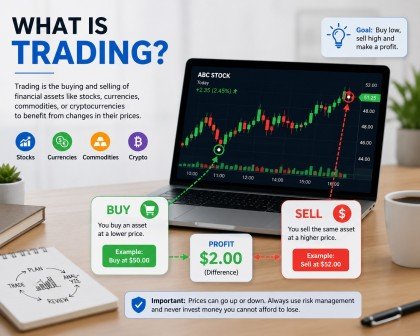
Trading means buying and selling financial assets. The goal is to make money from price changes. Traders may buy and sell stocks, currencies, gold, crypto, ETFs, and other assets.
Traders study the market before making a trade. They may look at charts, prices, news, and market trends. They may also study company reports and economic news.
The types of trading are different in many ways. They can have different trade times, risks, and levels of activity.
Why Understanding Different Trading Types Matters
There is no one trading method that is best for everyone. Each person has different needs.
Some people can watch the market for many hours. Others have a job or school and have less free time.
The types of trading can be chosen based on:
- Available time
- Trading money
- Risk level
- Financial goals
- Market knowledge
- Computer skills
- Personal nature
- Trade time
Choosing the right method can make trading easier to manage. It can also help beginners follow a clear plan.
Main Types of Trading
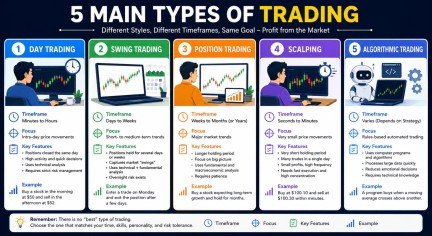
1. Day Trading
Day trading means buying and selling an asset on the same day. A day trader usually closes all trades before the day ends.
Day traders watch prices closely. They try to make money from small price changes.
Among the types of trading, day trading is one of the fastest methods. It needs focus, quick thinking, and good risk control.
Key Features of Day Trading
- Trades usually end on the same day.
- A trade may last for minutes or hours.
- Traders watch prices closely.
- Charts are often used.
- Live market data can be helpful.
- Risk control is very important.
Example of Day Trading
Suppose a trader buys a stock for $50.
The price goes up to $52 on the same day. The trader sells the stock.
The trader may make a $2 gain per share.
But the price could also fall. This could cause a loss.
2. Swing Trading
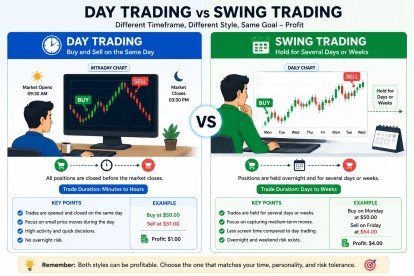
Swing trading means keeping a trade for a few days or weeks. Swing traders try to earn from price moves that take more time to happen.
They do not need to watch the market all day. This makes swing trading different from day trading.
Among the types of trading, swing trading can be a middle option. It is more active than long-term investing but slower than day trading.
Key Features of Swing Trading
- Trades can last for days or weeks.
- A trade may stay open overnight.
- Charts are often used.
- News can affect the trade.
- Traders do not need to watch prices all day.
- Overnight price changes can cause risk.
Example of Swing Trading
A trader sees a stock moving up and down in a small range.
One day, the stock moves above its old high. The trader thinks the price may continue to rise.
The trader buys the stock and keeps it for several days. If the price rises, the trader may sell it for a gain.
3. Position Trading
Position trading means keeping a trade for a long time. It may last for weeks, months, or even years.
Position traders focus on big market trends. They do not worry too much about small daily price changes.
The types of trading with longer trade times need patience. Prices can move up and down many times during a long trade.
Key Features of Position Trading
- Trades can last for weeks or months.
- Some trades may last for years.
- Traders focus on big market trends.
- Weekly and monthly charts can be useful.
- Company and economic news may be studied.
- Fewer trades are usually made.
- Patience is very important.
Example of Position Trading
A trader thinks that a certain industry will grow over the next year.
The trader buys an asset from that industry.
Instead of selling after a small price change, the trader keeps the asset for several months. The trader watches the main trend.
4. Scalping
Scalping is a very fast type of trading. Scalpers try to make money from very small price changes.
A trade may last for only a few seconds or minutes. Scalpers may make many trades in one day.
Because it is very fast, the types of trading that use scalping need strong focus and quick action.
Key Features of Scalping
- Trades last for a very short time.
- Many trades can happen in one day.
- Small price changes are targeted.
- Fast order placing is important.
- Trading costs can affect results.
- Strong focus is needed.
Example of Scalping
A trader buys an asset for $100.10.
The price quickly rises to $100.30.
The trader sells it and tries to earn from the small price move.
The gain from one trade may be small. But losses and trading costs can also add up.
5. Algorithmic Trading
Algorithmic trading uses computer programs to make trading decisions. The program follows rules set by the trader or programmer.
The program can study market data. It can also give trading signals. Some systems can place trades automatically.
Technology has added new types of trading for people who know programming and computer systems.
Key Features of Algorithmic Trading
- It uses computer programs.
- It follows set rules.
- It can study a lot of data.
- It can reduce emotional decisions.
- It can test a trading idea.
- It needs good computer skills.
- A bad system can still lose money.
Example of Algorithmic Trading
A programmer creates a simple trading program.
The program watches two moving averages. When one average moves above the other, the program gives a buy signal.
The program follows the rules. It does not make decisions based on fear or greed.
However, a program that worked well in the past may not work well in the future.
Other Common Trading Approaches
The types of trading above are some of the most common methods. Traders can also use other simple strategies.
Momentum Trading
Momentum trading focuses on assets that are moving strongly.
A trader may look at big price moves, high trading activity, news, or other signs.
Trend Trading
Trend trading focuses on the main direction of the market.
A trader may buy when prices are moving up. A trader may sell or avoid buying when prices are moving down.
Reversal Trading
Reversal trading looks for a change in price direction.
For example, a trader may look for signs that a falling price could start moving up.
This can be hard because a price may continue in the same direction.
Breakout Trading
Breakout trading looks for a price moving above or below an important level.
For example, a trader may watch a stock that has stayed below $50 for a long time. If it moves above $50 with strong activity, the trader may see it as a possible breakout.
Value Investing
Value investing is different from short-term trading.
It focuses on the value of a company. An investor may buy shares and keep them for many years.
The main goal is usually long-term growth rather than quick price changes.
Trading vs. Investing
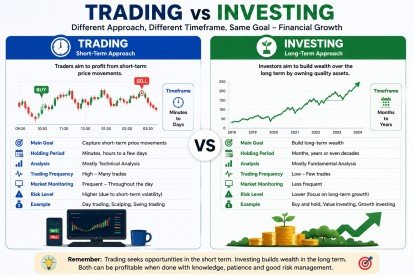
Trading and investing are not the same.
Trading often focuses on short-term price changes. Investing usually focuses on long-term growth.
The types of trading should not be confused with long-term investing. The goals, trade times, and methods can be very different.
| Factor | Trading | Investing |
| Main goal | Earn from price changes | Build long-term wealth |
| Holding time | Minutes to months | Usually years |
| Analysis | Charts and company data | Mostly company data |
| Number of trades | Usually higher | Usually lower |
| Market watching | Often frequent | Usually less frequent |
How to Choose the Right Trading Type
There is no perfect method for everyone.
Your choice depends on your time, goals, knowledge, and comfort with risk.
When comparing the types of trading, ask yourself a few simple questions.
How Much Time Do You Have?
Think about how much time you can give to trading.
If you can watch the market for many hours, day trading may be possible.
If you have a full-time job, swing or position trading may be easier to manage.
How Much Risk Can You Accept?
Every trading method has risk.
Some methods involve many trades and quick price changes.
Other methods keep trades open for a longer time.
You should understand the risk before choosing a method.
What Is Your Experience Level?
Beginners should start with the basics.
Learn how markets work. Learn about charts, prices, company information, and risk control.
Do not start with a complex system just because it looks exciting.
What Is Your Personality Like?
Your personality can also affect your choice.
Some people like quick decisions. They may enjoy active trading.
Other people like to take their time. They may prefer swing or position trading.
Risk Management in Trading
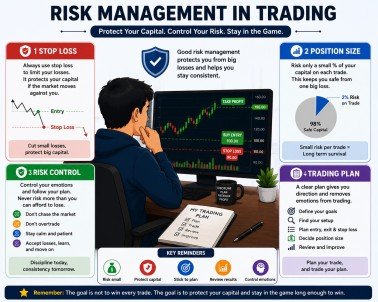
Risk management is important for all types of trading.
It means taking steps to control possible losses.
Good risk control can help protect your trading money.
Important practices include:
- Never use money you need for daily life.
- Keep your trade size under control.
- Use stop-loss orders when suitable.
- Be careful with borrowed money.
- Spread risk when possible.
- Make a clear trading plan.
- Keep a trading journal.
- Do not trade because of anger or fear.
- Check your results often.
- Know your trading costs.
Risk management cannot stop every loss.
But it can help reduce the damage from a bad trade.
Common Mistakes Beginners Should Avoid
Beginners can make many mistakes. Learning about these mistakes can help you avoid them.
Trading Without a Plan
Do not enter a trade without a reason.
Know when you want to buy. Know when you want to sell. Also know how much you are willing to lose.
Using Too Much Leverage
Leverage means using borrowed money to make a bigger trade.
It can increase gains. But it can also increase losses.
Beginners should understand leverage before using it.
Chasing the Market
Do not buy an asset only because its price is rising fast.
The price may fall soon after you buy it.
Always study the trade before making a decision.
Overtrading
Making more trades does not mean making more money.
Too many trades can increase costs. They can also lead to poor decisions.
Ignoring Trading Psychology
Feelings can affect trading.
Fear may make you sell too early. Greed may make you take too much risk. Anger can also lead to bad trades. Good traders learn to control their emotions.
Simple Example: Comparing Trading Styles
Imagine five traders are watching the same stock.
- A scalper may keep the stock for a few minutes.
- A day trader may keep it for a few hours.
- A swing trader may keep it for several days.
- A position trader may keep it for several months.
- A long-term investor may keep it for many years.
The stock is the same.
But each person has a different goal and plan.
Their risk level and trading style are also different.
This simple example shows why learning the types of trading is important before choosing a method.
Trading Tools Beginners May Need
Different trading methods need different tools.
Here are some useful tools for beginners.
Charting Platforms
Charts show price movements.
They can help traders see trends, support, resistance, and other price patterns.
Market Data
Market data shows current or recent price information.
Good data can be useful, especially for fast trading methods.
Trading Journal
A trading journal is a record of your trades.
You can write down when you bought, when you sold, why you made the trade, and what happened. This can help you learn from your mistakes.
Economic Calendar
An economic calendar shows important economic events.
These may include interest-rate decisions, inflation reports, and jobs reports.
Such events can affect market prices.
Risk Calculator
A risk calculator can help you decide how much money to use in a trade.
It can help you follow your risk limit.
How Beginners Can Get Started
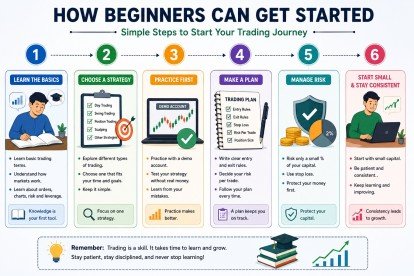
Before choosing from the types of trading, learn the basics first.
You should know how financial markets work.
You should also understand prices, orders, fees, risk, and leverage.
A simple learning plan is:
- Learn basic trading words.
- Learn how financial markets work.
- Study simple charts.
- Learn basic company information.
- Choose one trading method.
- Make simple entry and exit rules.
- Practice with a demo account.
- Keep a trading journal.
- Check your results often.
- Start small if you later use real money.
- Learn from your mistakes.
- Never think trading gives guaranteed income.
Final Thoughts
Choosing between the types of trading depends on your time, goals, knowledge, and risk level. Day trading and scalping need more time and focus. Swing and position trading are usually slower. Algorithmic trading uses computer programs and needs technical skills.
There is no trading method that always makes money. Markets can change at any time. Beginners should learn first and start slowly. Good planning, patience, and risk control are very important. Never trade money you cannot afford to lose.
Frequently Asked Questions
1. What are the main types of trading?
The main types are day trading, swing trading, position trading, scalping, and algorithmic trading. Each one has a different time and method.
2. Which trading type is best for beginners?
There is no single best choice. Swing or position trading may be easier for beginners who cannot watch the market all day.
3. Is day trading riskier than swing trading?
Both can be risky. Day trading is fast, while swing trading has overnight risk. Good risk control is important for both.
4. How much money do I need to start trading?
The amount depends on the market, broker, and method. Beginners should start with money they can afford to lose.
5. Can trading guarantee regular profits?
No. Trading cannot guarantee profits. Prices can move in any direction, so traders should learn, plan, and manage risk.
Meta Description:
Learn the types of trading with simple examples, key features, risks, and beginner tips for day, swing, position, scalping, and more.
- What Is Trading?
- Why Understanding Different Trading Types Matters
- Main Types of Trading
- Other Common Trading Approaches
- Trading vs. Investing
- How to Choose the Right Trading Type
- Risk Management in Trading
- Common Mistakes Beginners Should Avoid
- Simple Example: Comparing Trading Styles
- Trading Tools Beginners May Need
- How Beginners Can Get Started
- Final Thoughts
- Frequently Asked Questions
- Meta Description: