

Do you spend too much time doing the same tasks in Excel? Do you want to finish your work faster without making mistakes? The good news is that you do not need to learn difficult tricks. You only need to understand the right Advanced Formulas that professionals use every day. These formulas help you work with data, build reports, analyze numbers, and complete tasks more quickly.
Whether you are a student, accountant, office worker, financial analyst, or business owner, learning Advanced Formulas can improve your productivity. Instead of spending hours editing spreadsheets manually, Excel can do the hard work for you. In this guide, you will discover the most useful formulas that make calculations easier, improve accuracy, and save valuable time. By the end of this article, you will know how to use these formulas confidently and become more efficient with Excel.
Why Learning Advanced Formulas Matters
Excel is much more than a simple spreadsheet program. It is a powerful tool used by millions of professionals worldwide. The difference between a beginner and an expert is often the ability to use Advanced Formulas effectively.
These formulas help you:
- Save time on daily tasks.
- Reduce manual errors.
- Analyze large datasets quickly.
- Build professional reports.
- Improve decision-making.
- Increase workplace productivity.
Instead of repeating the same calculations, Excel automatically performs the work for you.
1. INDEX and MATCH
Many Excel users rely on VLOOKUP. While it is useful, INDEX and MATCH offer greater flexibility. These Advanced Formulas allow you to search for values in any direction and return accurate results.
Benefits
- Searches both left and right.
- Works with large datasets.
- Faster than traditional lookup methods.
- Easy to update.
For professionals working with reports, INDEX and MATCH are essential skills.
2. IF with AND and OR
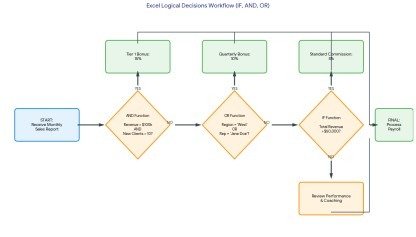
The IF function becomes much more powerful when combined with AND or OR.
For example, instead of checking one condition, you can test multiple conditions at once.
This combination of Advanced Formulas helps automate logical decisions and reduces manual checking.
Common uses include:
- Employee attendance
- Student grading
- Sales targets
- Budget approval
- Inventory management
3. OFFSET with SUM
Sometimes your data changes every month. Instead of editing formulas again and again, OFFSET creates flexible ranges.
When combined with SUM, these Advanced Formulas automatically update totals as new data is added.
Advantages include:
- Dynamic reports
- Automatic calculations
- Less manual work
- Better dashboard performance
4. CHOOSE Function
Businesses often compare different situations.
For example:
- Low sales
- Average sales
- High sales
The CHOOSE function lets you quickly display the correct result without creating multiple formulas.
Professionals use these Advanced Formulas for forecasting and business planning.
5. XNPV and XIRR
Finance professionals frequently deal with cash flows that occur on different dates.
Standard NPV and IRR assume equal time periods. XNPV and XIRR remove this limitation.
These Advanced Formulas provide more accurate financial calculations for:
- Investment analysis
- Loan evaluation
- Business valuation
- Financial modeling
If you work with money, these formulas are extremely valuable.
6. SUMIF and COUNTIF
Filtering data manually wastes time.
SUMIF and COUNTIF help you calculate totals or count values that meet specific conditions.
Examples include:
- Total sales above a target
- Number of employees in one department
- Orders completed this month
- Products below minimum stock
These Advanced Formulas are perfect for business reports and dashboards.
7. PMT and IPMT
Banks, accountants, and financial analysts regularly calculate loan repayments.
PMT calculates the total payment.
IPMT calculates only the interest amount.
These Advanced Formulas make financial planning much easier and reduce calculation errors.
8. LEN and TRIM
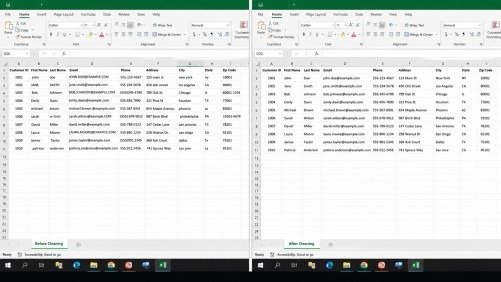
Messy data causes reporting problems.
LEN counts characters.
TRIM removes extra spaces.
Using these Advanced Formulas ensures your spreadsheets remain clean and professional.
Benefits include:
- Better data quality
- Accurate reports
- Cleaner databases
- Improved search results
9. CONCAT
Instead of typing information repeatedly, CONCAT joins text from multiple cells into one.
Examples include:
- First and last names
- City and country
- Product codes
- Customer IDs
These Advanced Formulas save time when working with large databases.
10. LEFT, RIGHT, and MID
Sometimes you only need part of the text.
LEFT returns characters from the beginning.
RIGHT returns characters from the end.
MID extracts characters from the middle.
Professionals use these Advanced Formulas to separate product numbers, customer codes, invoice IDs, and employee records without editing data manually.
11. XLOOKUP
XLOOKUP is one of the newest Excel functions. It is easier to use than VLOOKUP because it searches in any direction. It also returns custom results if a value is not found.
You can use XLOOKUP for:
- Finding employee information
- Looking up product prices
- Matching customer records
- Creating dynamic reports
If your Excel version supports it, XLOOKUP is one of the most valuable Advanced Formulas you can learn.
12. FILTER Function
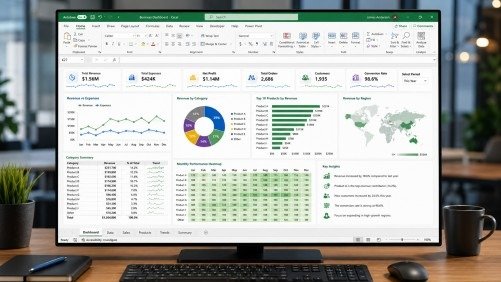
The FILTER function automatically shows only the records that meet your conditions.
Instead of sorting data manually, Excel instantly creates a filtered list.
This function is perfect for:
- Sales reports
- Employee lists
- Customer databases
- Inventory records
It saves time and keeps reports updated automatically.
13. UNIQUE Function
Large datasets often contain repeated information.
The UNIQUE function creates a clean list without duplicates.
You can use it to create:
- Customer lists
- Product categories
- Employee departments
- Sales regions
These Advanced Formulas improve data quality and make reports easier to read.
14. SORT Function
Instead of clicking the Sort button every time, use the SORT function.
It updates automatically whenever your data changes.
Professionals use it for:
- Alphabetical lists
- Highest sales first
- Lowest expenses
- Date-wise reports
15. TEXT Function
The TEXT function changes the appearance of numbers without changing their value.
Examples include:
- Currency
- Dates
- Percentages
- Custom invoice numbers
This is especially useful when creating reports that need a professional look.
16. IFS Function
The IFS function lets you test several conditions without creating long nested IF formulas. It makes your worksheets cleaner, easier to read, and simpler to manage. This function is ideal for grading systems, performance evaluations, and sales reports.
17. SWITCH Function
The SWITCH function compares one value against multiple options and returns the matching result. It is useful for assigning categories, order statuses, employee levels, and product types while keeping formulas short and organized.
18. TEXTJOIN Function
TEXTJOIN merges text from multiple cells using a separator like a comma or space. Unlike CONCAT, it can ignore empty cells, making it perfect for customer names, addresses, and data lists.
19. SUMPRODUCT Function
SUMPRODUCT multiplies corresponding values in different ranges and then adds the results together. It is widely used for weighted averages, sales analysis, budgeting, and financial reporting.
20. AGGREGATE Function
The AGGREGATE function performs calculations such as SUM, AVERAGE, and COUNT while ignoring hidden rows and errors. It is especially useful when working with filtered reports and large datasets.
21. INDIRECT Function
INDIRECT converts text into a cell reference, allowing you to build flexible spreadsheets. It is commonly used in dashboards, dynamic reports, and interactive worksheets where references change automatically.
22. TRANSPOSE Function
The TRANSPOSE function changes rows into columns and columns into rows without manually copying data. It helps reorganize large tables quickly while keeping the original information intact.
23. NETWORKDAYS Function
NETWORKDAYS returns the number of working days between two dates while excluding weekends and optional holidays. It is ideal for project planning, payroll calculations, and employee attendance tracking.
24. EOMONTH Function
The EOMONTH function returns the final date of a specified month. Businesses use it for financial reporting, monthly budgeting, invoice management, and payroll processing.
25. RANDARRAY Function
RANDARRAY creates a list of random numbers in multiple cells at once. It is useful for sample data, testing formulas, simulations, and creating random selections without manual input.
Common Mistakes to Avoid
Even experienced Excel users make mistakes. Avoid these common errors to improve your spreadsheets.
- Using the wrong cell references.
- Forgetting to lock cells with $.
- Copying formulas without checking results.
- Mixing text with numbers.
- Ignoring error messages like #N/A or #VALUE!.
- Making formulas longer than necessary.
Keeping formulas simple makes them easier to understand and maintain.
Tips to Master Excel Faster
If you want to improve quickly, practice a little every day.
Here are a few habits that help:
- Learn one new formula each week.
- Practice with real business data.
- Use keyboard shortcuts.
- Review your formulas before sharing reports.
- Combine multiple functions to solve complex problems.
- Keep your spreadsheets clean and organized.
With regular practice, these Advanced Formulas will become part of your daily workflow.
Frequently Asked Questions
Which Excel formula is most useful for professionals?
INDEX and MATCH, XLOOKUP, SUMIF, IF, and FILTER are among the most useful formulas because they solve real business problems quickly.
Are Advanced Formulas difficult to learn?
No. Most Advanced Formulas are easy to understand when you practice them with simple examples.
Can beginners learn these formulas?
Yes. Beginners can start with IF, SUMIF, COUNTIF, and CONCAT before moving to more advanced functions like INDEX, MATCH, and XLOOKUP.
Do these formulas work in Microsoft 365?
Most formulas work in modern versions of Excel. However, newer functions like FILTER, UNIQUE, SORT, and XLOOKUP require Microsoft 365 or Excel 2021 and later.
Conclusion
Learning Excel is not about memorizing hundreds of functions. It is about knowing which formulas solve real problems. The Advanced Formulas covered in this guide help you work faster, reduce mistakes, and create professional spreadsheets with confidence.
Whether you manage financial reports, analyze sales data, organize employee records, or build business dashboards, these formulas can transform the way you work. Start by mastering one formula at a time, then combine them to create powerful solutions. As your skills grow, you will complete tasks more efficiently and stand out as a confident Excel professional.
The more you practice these Advanced Formulas, the more productive you become. Investing time in learning them today will save countless hours in the future and help you achieve better results in every Excel project.
META DISCRIPTION
Master Excel Faster with 25 Advanced Formulas every professional must know. Learn practical Excel functions to save time, improve accuracy, and boost productivity.
- Why Learning Advanced Formulas Matters
- 1. INDEX and MATCH
- 2. IF with AND and OR
- 3. OFFSET with SUM
- 4. CHOOSE Function
- 5. XNPV and XIRR
- 6. SUMIF and COUNTIF
- 7. PMT and IPMT
- 8. LEN and TRIM
- 9. CONCAT
- 10. LEFT, RIGHT, and MID
- 11. XLOOKUP
- 12. FILTER Function
- 13. UNIQUE Function
- 14. SORT Function
- 15. TEXT Function
- 16. IFS Function
- 17. SWITCH Function
- 18. TEXTJOIN Function
- 19. SUMPRODUCT Function
- 20. AGGREGATE Function
- 21. INDIRECT Function
- 22. TRANSPOSE Function
- 23. NETWORKDAYS Function
- 24. EOMONTH Function
- 25. RANDARRAY Function
- Common Mistakes to Avoid
- Tips to Master Excel Faster
- Frequently Asked Questions
- Conclusion
- META DISCRIPTION