

Have you ever looked at a trading chart and felt completely confused about where the market might move next? Many traders spend years jumping from one indicator to another, searching for a perfect strategy that never truly works. The reality is simple: the market already tells a story through price itself. Once you learn how to read that story, trading becomes clearer, smarter, and far less stressful. That is why understanding a Price Action Trading Guide is one of the most important skills for every trader today.
Whether you are a complete beginner or an experienced trader wanting better consistency, this Price Action Trading Guide will help you understand how professional traders analyze the market without depending heavily on lagging indicators. Price action trading focuses on real market movement, buyer and seller behavior, trends, candlestick patterns, and key levels. In this guide, you will learn practical techniques, market psychology, and powerful strategies that can improve your decision-making and help you trade with more confidence.
What Is Price Action Trading?
A Price Action Trading Guide teaches traders how to read raw market movement without relying too much on indicators. Instead of waiting for signals from technical tools, traders focus directly on price behavior shown on the chart.
Price action trading studies:
- Candlestick formations
- Support and resistance levels
- Market trends
- Breakouts and reversals
- Buyer and seller momentum
The main purpose is to understand what the market is doing in real time. Professional traders often prefer this approach because it provides a cleaner and clearer view of the market.
Why Price Action Trading Is Important
Many indicators react slowly because they are based on past data. Price action, however, shows current market behavior immediately. A strong Price Action Trading Guide helps traders make faster and smarter decisions.
Here are some major benefits:
- Helps traders understand real market psychology
- Works in forex, stocks, crypto, and commodities
- Removes unnecessary chart clutter
- Improves trading discipline
- Helps identify high-probability setups
Price action trading also teaches patience. Instead of entering random trades, traders wait for strong confirmations before taking positions.
Understanding Market Structure
Market structure is the foundation of every Price Action Trading Guide. Before entering any trade, traders must identify whether the market is trending upward, downward, or moving sideways.
Uptrend Structure
An uptrend forms when the market creates:
- Higher highs
- Higher lows
This shows buyers are controlling the market.
Downtrend Structure
A downtrend forms when price creates:
- Lower highs
- Lower lows
This indicates sellers are stronger.
Sideways Market
Sometimes the market moves within a range without a clear trend. During these conditions, traders usually wait for a breakout before entering trades.
Understanding market structure helps traders avoid trading against momentum.
Candlestick Patterns Every Trader Should Know
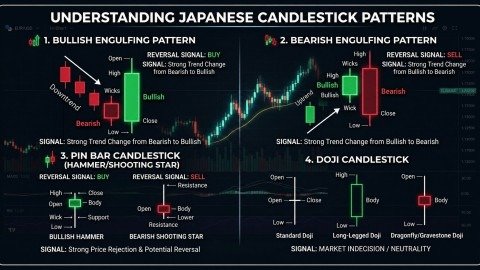
Candlestick patterns are a major part of every Price Action Trading Guide because they reveal market emotions and possible reversals. These patterns help traders understand buyer and seller strength more clearly.
Bullish Engulfing Pattern
This pattern appears when buyers suddenly gain strong control after a bearish candle. It often signals a possible upward movement.
This pattern mostly appears near support levels. Traders use it as a sign of increasing buying momentum.
Bearish Engulfing Pattern
This pattern shows sellers overpowering buyers and may indicate a market reversal downward.
It usually forms near resistance areas. A strong bearish candle often shows selling pressure in the market.
Pin Bar Candle
A pin bar has a long wick and small body. It often signals rejection from important support or resistance levels.
Pin bars help traders identify possible reversals. They are widely used in price action trading strategies.
Doji Candle
A doji candle represents market indecision. Buyers and sellers are almost equal during that period.
This candle often appears before strong market moves. Traders wait for confirmation after a doji pattern.
Learning candlestick psychology helps traders understand market pressure more effectively.
Support and Resistance Levels
Support and resistance are key concepts in a successful Price Action Trading Guide. These levels help traders identify important market zones.
Support Level
Support is an area where buyers usually enter the market and prevent price from falling further.
Strong support levels can create buying opportunities. Price often bounces upward from these zones.
Resistance Level
Resistance is an area where sellers often push the market downward.
These levels can stop the price from moving higher. Traders often look for selling opportunities near resistance.
Traders use these levels to:
- Find trade entries
- Set stop losses
- Identify take profit zones
- Spot possible reversals
Strong support and resistance levels can improve trading accuracy significantly.
Trend Trading Using Price Action
Trend trading is one of the simplest methods explained in a Price Action Trading Guide. The goal is to trade in the direction of the market trend.
How to Trade an Uptrend
- Identify higher highs and higher lows
- Wait for price pullbacks
- Look for bullish candlestick confirmation
- Enter in the trend direction
How to Trade a Downtrend
- Identify lower highs and lower lows
- Wait for temporary upward retracement
- Look for bearish confirmation
- Sell with the trend direction
Trading with the trend usually increases the probability of success.
Breakout Trading Strategy
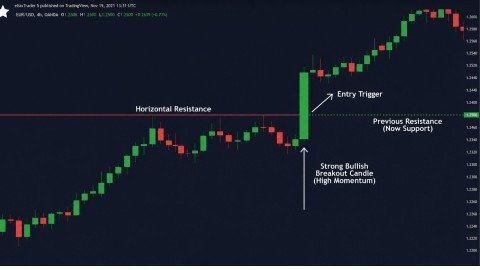
Breakout trading is another powerful concept in a Price Action Trading Guide. A breakout happens when price moves strongly above resistance or below support.
Signs of a Strong Breakout
- Increased momentum
- Strong candlestick closes
- High market volatility
- Clear break of key levels
Many traders wait for a retest after the breakout before entering the trade. This method often reduces false entries.
Price Action and Market Psychology
Every movement in the market reflects human emotions such as fear, greed, confidence, and panic. A complete Price Action Trading Guide teaches traders how to read these emotions directly from the chart.
For example:
- Strong bullish candles show buyer confidence
- Long rejection wicks show market hesitation
- Sudden reversals may indicate panic selling
Understanding psychology helps traders avoid emotional trading decisions.
Risk Management in Price Action Trading
Even the best strategy can fail without proper risk management. That is why every professional Price Action Trading Guide strongly focuses on protecting capital.
Important Risk Management Rules
- Never risk more than 1–2% per trade
- Always use stop losses
- Avoid revenge trading
- Maintain a proper risk-to-reward ratio
- Trade only high-quality setups
Risk management helps traders survive losing streaks and stay consistent over time.
Common Mistakes Beginners Make
Many beginners fail because they ignore important trading principles. A smart Price Action Trading Guide helps traders avoid mistakes like overtrading, ignoring market structure, using too many indicators, and lacking patience. These mistakes often lead to emotional decisions and poor trade entries. Successful traders stay disciplined and wait for strong setups before entering the market.
Daily Routine for Price Action Traders
Consistency is extremely important in trading success. Following a structured routine can improve focus and discipline.
Simple Daily Trading Routine
- Analyze major trends
- Mark support and resistance levels
- Wait for clean setups
- Record trades in a journal
- Review mistakes regularly
A disciplined routine helps traders improve steadily over time.
How Long Does It Take to Learn Price Action?
Learning price action is a journey, not a quick shortcut. Some traders understand the basics within a few months, while mastery may take years of practice.
The fastest way to improve is:
- Study charts daily
- Backtest strategies
- Practice on demo accounts
- Review winning and losing trades
Patience and consistency are the real keys to trading growth.
Final Thoughts
This Price Action Trading Guide shows that successful trading does not require complicated systems or endless indicators. The market itself already provides valuable information through price movement, trends, candlestick behavior, and support or resistance zones. Traders who learn to read these signals gain a deeper understanding of how financial markets truly work.
Whether you are just starting or already experienced, mastering price action can completely transform your trading approach. Focus on discipline, risk management, and consistent practice rather than searching for shortcuts. Over time, your ability to read charts and react calmly to market conditions will improve naturally. The more you study price behavior, the more confidence and clarity you will develop as a trader.
FAQs
What is price action trading?
Price action trading is a method of analyzing market movement through candlestick patterns, trends, and support or resistance levels without depending heavily on indicators.
Why is price action important in trading?
Price action helps traders understand real market behavior, identify trends, and make better trading decisions with clearer chart analysis.
Which market is best for price action trading?
Forex, stocks, cryptocurrencies, and commodities are all popular markets where price action trading strategies work effectively.
What are the most common price action patterns?
Bullish engulfing, bearish engulfing, pin bar, and doji candles are some of the most common price action patterns traders use.
How can traders improve price action skills?
Traders can improve by studying charts daily, practicing on demo accounts, and reviewing previous trades regularly.
Meta Description
Learn the best Price Action Trading Guide for beginners and experts. Discover candlestick patterns, support and resistance, breakout strategies, trend trading, and risk management tips.