
David’s organic traffic dropped 40% overnight. His rankings stayed exactly the same. His content quality never changed. What happened?
He discovered his perfect customers no longer visited his website—they were getting answers from ChatGPT instead. When someone searched for the best project management software for remote teams, ChatGPT recommended three competitors. David’s company never appeared once, even though it ranked #2 on Google for that exact SEO keyword.
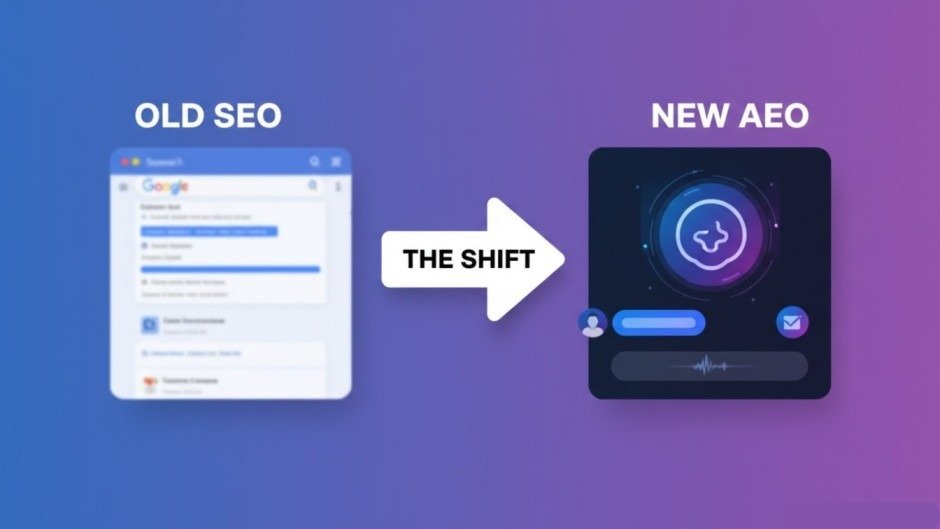
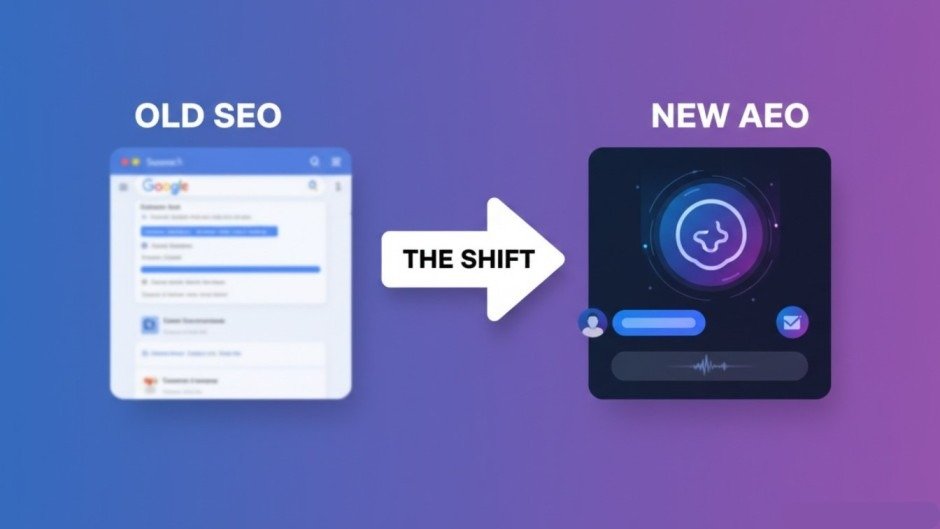
This is the reality facing businesses in 2026. Traditional search is not dead, but the game has fundamentally changed. People do not scroll through ten blue links anymore. They ask questions and expect instant, complete answers—from AI assistants, voice devices, and chatbots.
Your customers are talking to machines before they ever reach your website. If AI systems do not mention your brand when answering questions, you essentially do not exist for a massive and growing segment of searchers.
Welcome to the age of Answer Engine Optimization—where being cited by AI matters more than being clicked on Google.
This guide shows you exactly how to adapt your strategy for this new reality. You will learn what AEO actually means, why it matters, and the specific steps to make AI systems recommend your brand. The shift is happening now. Let’s get you prepared.
What is Answer Engine Optimization (AEO)?
Answer Engine Optimization is the practice of structuring your content so AI platforms can easily discover, understand, and cite it as authoritative answers.
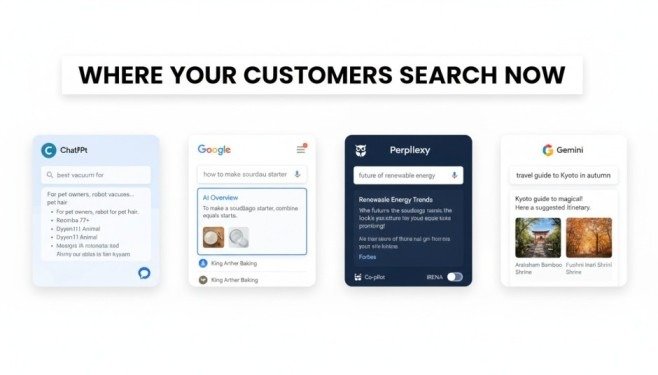
Traditional search engines show you a list of links. Answer engines like ChatGPT, Perplexity, Google AI Overviews, and Gemini deliver direct responses synthesized from multiple sources. They act as intelligent intermediaries between users and information.
When someone asks “What CRM works best for small businesses,” these AI systems analyze relevant content across the web, extract key information, and compose a comprehensive answer—often citing specific sources they trust.
The fundamental difference:
Search Engine Optimization (SEO) aims to rank your pages high in results lists. Success means clicks and traffic.
Answer Engine Optimization (AEO) aims to become the source AI platforms cite when answering questions. Success means brand mentions, authority building, and influence—even without direct website visits.
Think of it this way: SEO gets you on the menu. AEO gets you recommended by the waiter.
Why Traditional SEO Alone is Not Enough Anymore
The numbers tell a striking story. Recent data shows that approximately 65% of desktop searches and 75% of mobile searches now end on the results page itself—users never click through to any website.
This “zero-click” trend accelerates as AI-powered features expand across search platforms. When Google displays an AI Overview directly answering someone’s question, many users get what they need without visiting your carefully optimized page.
What this means for your business:
Your website might rank first on Google, but if the AI Overview above it answers the question completely, your traffic disappears anyway.
Conversational AI platforms like ChatGPT do not link to Google rankings at all. They reference sources they consider most authoritative based entirely on content quality and structure.
Voice searches through Alexa, Siri, or Google Assistant typically read a single answer aloud. Being the second-best result means nothing when only one response gets spoken.
The playing field has expanded beyond Google. Users now discover information through multiple AI-powered channels, each with its own logic for selecting sources.
Brands that master both SEO and AEO capture visibility across all these channels. Those focusing only on traditional rankings miss opportunities where their customers actually search.
How Answer Engines Select Sources
Understanding how AI systems choose which content to cite is crucial for AEO success.
Trust and Authority Signals
AI platforms prioritize sources with strong credibility indicators. This includes authoritative backlinks, consistent citations from reputable sources, and content that demonstrates real expertise.
E-E-A-T principles—Experience, Expertise, Authoritativeness, Trustworthiness—matter even more for AEO than traditional SEO. AI systems look for content written by qualified experts, not generic keyword-stuffed articles.
Content Structure and Clarity
Answer engines favor content that clearly and directly addresses specific questions. They scan for:
- Question-based headings that match how people actually search
- Concise, factual answers in the first paragraph of each section
- Logical organization with clear hierarchies
- Lists, tables, and structured data that extract easily
Freshness and Regular Updates
Outdated information gets deprioritized. Leading brands in AEO update their content quarterly to maintain relevance. AI systems notice when content reflects current best practices versus outdated approaches.
Entity Recognition
AI understands the web through entities—people, places, brands, concepts—and relationships between them. Strong entity-first content demonstrates deep subject expertise rather than shallow keyword targeting.
Core AEO Strategies That Actually Work
Ready to optimize for answer engines? Here are proven strategies delivering results in 2026.
Structure Content Around Direct Questions
People ask AI systems actual questions: “How do I reduce employee turnover?” or “Which email marketing platform integrates with Shopify?”
Transform your content to match this conversational pattern:
- Use question-format H2 and H3 headings
- Provide clear, direct answers in 40-60 words immediately under each heading
- Follow with supporting details and examples
This structure serves both human readers and AI extraction algorithms perfectly.
Create Deep Topic Clusters
Build comprehensive content hubs that establish your authority on specific subjects.
Instead of five separate articles covering related topics, create one pillar page linking to 15-20 related subtopics. This interconnected structure signals to AI systems that your site offers complete expertise on the subject.
When AI crawls your content, it should discover a logical web answering every possible question someone might ask about your topic.
Implement Structured Data Markup
Schema markup helps AI systems understand exactly what your content covers.
Add appropriate schema types for:
- Articles and blog posts
- FAQs and Q&A content
- How-to guides and recipes
- Products and reviews
- Local businesses and services
This technical foundation helps answer engines extract accurate information and attribute it correctly.
Focus on Entity Optimization
Strengthen your brand’s entity profile across the web:
- Maintain consistent NAP (Name, Address, Phone) information everywhere
- Build Wikipedia presence when appropriate
- Earn mentions on authoritative industry sites
- Create comprehensive About and Team pages
- Publish regular thought leadership content
The stronger your entity recognition, the more likely AI systems will reference your brand authoritatively.

Optimize for Voice Search Success
Voice search represents a critical AEO channel because voice assistants typically read only one answer aloud.
Use Natural Conversational Language
Write how people actually speak, not how they type keywords. Voice queries are longer and more conversational than text searches.
Instead of optimizing for “best running shoes,” optimize for “what are the best running shoes for people with flat feet?”
Target Featured Snippet Positions
Voice assistants frequently read featured snippet content. Structure your content to capture these positions:
- Answer the question directly in the first sentence
- Keep answers between 40-60 words for optimal length
- Use definitive language rather than hedging
- Include relevant keywords naturally in the answer
Create FAQ Sections
Dedicated FAQ pages align perfectly with voice search queries. Each question-answer pair should stand alone as a complete response.
Platform-Specific Considerations
Different AI platforms have different preferences. Optimizing for all requires understanding their unique characteristics.
Chatgpt and GPT-based Systems
These platforms value comprehensive, well-researched content demonstrating real expertise. They favor sources that provide nuanced answers over simplistic responses.
Google AI Overviews
Google’s AI features still incorporate traditional ranking signals but emphasize clear, direct answers. Strong SEO fundamentals remain essential here.
Perplexity AI
This platform particularly values recent, current content. Regular updates signal relevance and authority.
Voice Assistants (Alexa, Siri, Google Assistant)
These prioritize local results and featured snippets. Local businesses should especially optimize Google Business Profiles and create voice-friendly FAQ content.
Measuring AEO Success
Traditional analytics do not capture AEO performance. You need different metrics.
Brand Mention Tracking
Monitor how often AI platforms mention your brand when answering relevant questions. Specialized tools can track citations across Chatgpt, Perplexity, Gemini, and others.
Citation Quality Assessment
Track not just mentions but how you are described. Does the AI position you as the leading authority or just another option?
Sentiment Analysis
Evaluate whether AI mentions are positive, neutral, or negative. Strong AEO means consistently positive positioning.
Indirect Traffic Attribution
People who discover your brand through AI often visit your website later through direct searches or branded queries. Track increases in branded traffic alongside AEO efforts.
Common AEO Mistakes to Avoid
Even smart marketers make these errors when starting with AEO.
Creating Generic AI Content
AI systems penalize content that reads like it was written by AI for AI. Your content must demonstrate genuine insight and original thinking.
Ignoring Technical SEO Foundations
AEO builds on strong technical fundamentals. Slow sites, poor mobile experiences, and broken structures will never succeed regardless of content quality.
Treating AEO as Separate from SEO
These strategies complement each other. The best approach integrates both into a unified visibility strategy.
One-Time Optimization Efforts
AEO requires ongoing maintenance. Content that ranked well in AI results six months ago may not perform today without updates.
The Future of Search: What to Expect
The AEO landscape continues evolving rapidly. Here are trends shaping the next phase.
Agentic AI Systems
Advanced AI agents do not just answer questions—they perform multi-step tasks autonomously. Your content must be structured for these automated workflows.
Multi-Modal Search
AI increasingly processes images, videos, and audio alongside text. Optimizing visual and multimedia content becomes crucial.
Hyper-Personalized Results
AI systems will customize answers based on user context, history, and preferences. Content that serves multiple contexts and use cases wins.
Direct AI Commerce
Soon, AI assistants will not just recommend products—they will complete purchases. Brands must prepare for this transition.
Getting Started with AEO Today
Do not wait for perfect understanding. Start implementing AEO strategies now while competition remains relatively low.
Immediate Action Steps:
- Audit your top-performing content for question-answer structure
- Add clear, concise answers at the top of key pages
- Implement FAQ schema markup on relevant content
- Test your brand visibility in ChatGPT and Perplexity
- Create a content cluster around your core expertise area
Start with your most important pages. Implement these changes systematically across your site over coming months.
Conclusion
The shift from SEO to AEO is a major change in digital visibility. Traditional SEO still matters, but it’s no longer enough. Today, customers find solutions through AI conversations. If AI doesn’t mention your brand, you lose valuable exposure.
The advantage? Most businesses haven’t adapted yet. Early adopters gain authority faster. Start optimizing for answer engines now—your future visibility depends on it.
Frequently Asked Questions
Does AEO replace traditional SEO?
No. AEO complements SEO. You need both strategies working together for maximum visibility across traditional search and AI platforms.
How quickly can I see AEO results?
Faster than traditional SEO. Once AI systems crawl your optimized content, you can appear in AI answers within days rather than months.
Do I need special tools for AEO?
Helpful but not required to start. Begin by manually testing your brand mentions in ChatGPT and Perplexity before investing in specialized tracking tools.
Will AEO work for local businesses?
Absolutely. Voice search and AI assistants frequently recommend local businesses. Optimize your Google Business Profile and create voice-friendly FAQ content.
What content types work best for AEO?
Question-answer content, comprehensive guides, FAQ pages, and well-structured how-to articles perform exceptionally well in AI results.
Meta Description:
SEO is evolving! Learn Answer Engine Optimization (AEO) and how to rank in Chatgpt, Perplexity & voice search in 2026 with actionable strategies.