
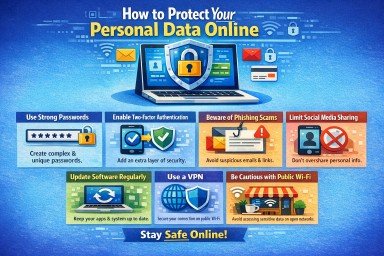
In today’s fast-moving digital world, almost everything we do happens online. From shopping and banking to social media and work communication, our personal data is constantly being collected, stored, and shared. Yet, many people still ignore one critical question: How to Protect Your Personal Data Online?
Every click, login, and download adds to your digital footprint. Cybercriminals, data brokers, advertisers, and hackers are always searching for new ways to collect and misuse personal information. If you do not take control, your private data can easily fall into the wrong hands.
Understanding how to Protect Your Personal Data Online is no longer optional—it is essential. The good news is that protecting your privacy does not require advanced technical skills. You only need smart habits, basic awareness, and the right tools. This complete guide explains how to Protect Your Personal Data Online using 7 powerful and proven tips for 2026. Each tip is easy to follow, highly effective, and suitable for everyone.
Why Protecting Personal Data Is Important in 2026
The internet has made life easier, but it has also increased privacy risks. Today, personal data is a valuable digital asset. Companies collect it for marketing, while hackers target it for financial gain.
Here are some reasons why learning how to Protect Your Personal Data Online is more important than ever:
- Data breaches happen daily.
- Phishing scams are more advanced, using AI.
- Social media collects detailed behavioral data.
- Identity theft is rising globally.
- Financial fraud is becoming more common.
Even small mistakes can lead to serious problems, including financial loss, identity theft, account hijacking, and emotional stress.
What Is Personal Data
Personal data includes any information that identifies you directly or indirectly. It can be your name, phone number, email address, home address, or even your IP address. Personal data also includes photos, videos, biometric data, and online activity that can be linked back to you. Protecting this information helps keep your identity safe and prevents misuse. This includes:
- Full name
- Email address
- Phone number
- Home address
- Passwords
- Bank details
- Location data
- Social media activity
- Device information
Knowing how to Protect Your Personal Data Online means keeping all this information safe from misuse.
7 Powerful & Proven Tips: How to Protect Your Personal Data Online
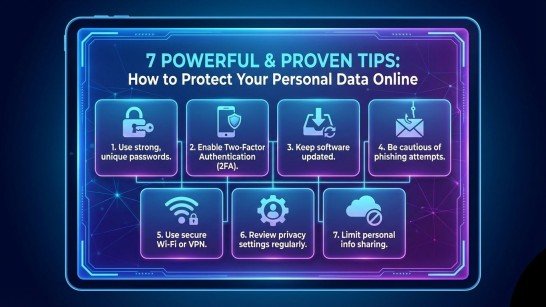
Below are 7 highly effective strategies that help you stay safe online in 2026.
1. Use Strong and Unique Passwords
Passwords are the first defense line. Weak passwords allow hackers easy access. Strong passwords make it harder for attackers to break into your accounts. Always use a mix of uppercase and lowercase letters, numbers, and special characters, and avoid using the same password on multiple platforms.
Why It Matters
Weak passwords are responsible for over 80% of online breaches. Using the same password across multiple sites increases risk.
Best Practices
- Use long passwords (12–16 characters).
- Mix uppercase, lowercase, numbers, and symbols.
- Never reuse passwords.
- Avoid birthdays, names, or easy patterns.
Use a Password Manager
Password managers store and generate strong passwords for you. This makes How to Protect Your Personal Data Online much easier.
Recommended Password Managers:
- LastPass
- Dashlane
- 1Password
- NordPass
- Keeper
2. Enable Two-Factor Authentication (2FA)
Two-factor authentication (2FA) provides an additional layer of protection beyond your password, making it much harder for cybercriminals to access your accounts.
How It Works
Once you enter your password, 2FA requires a second verification step—usually a temporary code sent to your phone, email, or generated by an authenticator app. This extra step ensures that even if someone steals your password, they still cannot log in without the second factor.
Why It Matters
- Blocks the majority of hacking attempts automatically.
- Protects your accounts even if your login credentials are compromised.
- Prevents unauthorized access, safeguarding sensitive personal or business data.
Recommended 2FA Methods
- Authenticator Apps – Apps like Google Authenticator or Authy generate time-based codes for each login.
- Hardware Security Keys – Physical devices like YubiKey provide the strongest protection.
- Push Notifications – Some services send approval requests directly to your trusted device.
Tip: Avoid SMS-based 2FA whenever possible, as text messages can be intercepted by hackers.
Implementing 2FA is one of the most effective ways to strengthen your digital security and take control of your online data privacy.
3. Keep Devices and Software Updated
Software updates fix security flaws. Ignoring updates leaves doors open for hackers.
Why Updates Are Important
- Patch security vulnerabilities
- Improve device protection
- Fix known bugs
Best Practices
- Enable automatic updates
- Update operating systems
- Keep apps current
- Update browsers regularly
Staying updated is a simple yet powerful way to learn how to Protect Your Personal Data Online.
4. Be Smart With Emails, Links, and Attachments
Phishing attacks are now powered by AI, making scams more realistic and harder to detect. Cybercriminals can mimic trusted contacts, brands, or even colleagues with near-perfect accuracy. These attacks often use urgent messages or fake websites to trick you into revealing passwords or personal information. Staying vigilant, verifying links, and double-checking sender details are essential to avoid falling victim.
Warning Signs of Phishing
- Urgent messages
- Grammar mistakes
- Unknown sender
- Strange links
- Unexpected attachments
Safety Tips
- Never click suspicious links
- Check sender email addresses
- Avoid unknown attachments
- Verify requests before responding
Being cautious helps prevent data theft and teaches how to Protect Your Personal Data Online effectively.
5. Control Social Media Privacy Settings
Social media platforms gather enormous amounts of personal information, often far beyond what you might expect. Every like, comment, or post can be tracked, stored, and even shared with advertisers or third-party apps. Understanding what’s collected and how to control it is essential for protecting your digital footprint.
What Social Media Tracks
- Location – many apps constantly track where you are.
- Browsing habits – the sites you visit and content you engage with.
- Likes & comments – your interests and preferences.
- Contacts – your friends, family, and professional connections.
- Device information – device type, operating system, and app usage.
Privacy Control Tips
- Set accounts to private – only approved followers can see your posts.
- Limit post visibility – use friend lists or groups to restrict who sees what.
- Disable location tracking – stop apps from recording your whereabouts.
- Review app permissions – check what access each app has and remove unnecessary ones.
- Restrict third-party apps – disconnect apps that don’t need your data or that you no longer use.
Reducing social media exposure and taking control of these settings is a highly effective way to strengthen your personal data protection. Small adjustments can dramatically lower the amount of information available to marketers, hackers, and unwanted trackers, giving you more control over your online life.
6. Encrypt Sensitive Data and Files
Encryption turns your personal and business data into a secure code, making it unreadable to anyone without the correct decryption key. This adds a critical layer of protection against hackers and unauthorized access.
Why Encryption Matters
- Protects data if the device is stolen
- Prevents unauthorized access
- Secures external drives
Best Encryption Tools
- Windows BitLocker
- macOS FileVault
- Encrypted USB drives
Encrypting files ensures complete control over sensitive data and supports How to Protect Your Personal Data Online.
7. Use Secure Networks and Trusted VPNs
Avoid using open Wi‑Fi networks for sensitive activities, as they can be easily intercepted. A trusted VPN encrypts your connection, keeping your online activity private and secure.
Public Wi-Fi Risks
- Data interception
- Password theft
- Malware injection
Protection Tips
- Avoid public Wi-Fi for banking
- Use mobile data instead
- Install trusted VPN services
Recommended VPN Services
- Proton VPN
- Nord VPN
- Surf shark
- Mullvad
VPNs encrypt your traffic and strengthen how to Protect Your Personal Data Online.
Extra Tips to Strengthen Online Data Protection
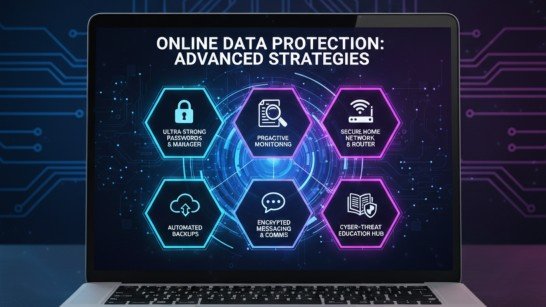
- Use email aliases
- Minimize form data
- Avoid oversharing
- Disable unnecessary app permissions
- Monitor accounts regularly
Each of these habits improves your understanding of how to Protect Your Personal Data Online.
Common Online Threats in 2026
Understanding threats helps prevent attacks.
Major Digital Threats
- Phishing scams
- Malware
- Identity theft
- Data breaches
- AI-driven fraud
Knowing these risks improves your strategy for how to Protect Your Personal Data Online.
Best Daily Habits for Online Safety
- Review app permissions weekly
- Change passwords every 6 months
- Backup data regularly
- Monitor login alerts
- Secure home Wi-Fi
Strong habits make protecting your personal data online part of your daily routine.
FAQs
1. Why is protecting personal data important?
Protecting personal data prevents identity theft, financial loss, and privacy violations. It keeps your online life safe and secure.
2. What is the easiest way to protect data online?
Using strong passwords, enabling 2FA, and avoiding suspicious links are the easiest steps.
3. Are password managers safe?
Yes, trusted password managers use strong encryption and offer secure storage for your login details.
4. Is public Wi-Fi dangerous?
Yes, public Wi-Fi can expose your data to hackers. Use VPN or mobile data for safety.
5. How often should I update my passwords?
You should update your important passwords at least every six months. Change them immediately if you suspect any account has been compromised.
Conclusion
In the past, online safety was considered optional. Today, it is a necessity. As cyber threats grow more advanced, learning how to Protect Your Personal Data Online has become a vital life skill. Simple habits, combined with smart tools, can dramatically reduce your risk.
Previously, people shared information freely. Now, awareness, caution, and proactive protection define digital responsibility. With strong passwords, smart browsing, encryption, and privacy settings, you can take full control of your digital life.
The future of online safety belongs to those who stay informed, alert, and prepared. Start implementing these strategies today and make How to Protect Your Personal Data Online a permanent part of your daily routine.
Meta Description
How to Protect Your Personal Data Online in 2026 using 7 powerful tips. Learn smart habits to stay safe, secure, and private online.
- Why Protecting Personal Data Is Important in 2026
- What Is Personal Data
- 7 Powerful & Proven Tips: How to Protect Your Personal Data Online
- Extra Tips to Strengthen Online Data Protection
- Common Online Threats in 2026
- FAQs
- Conclusion
- Meta Description