
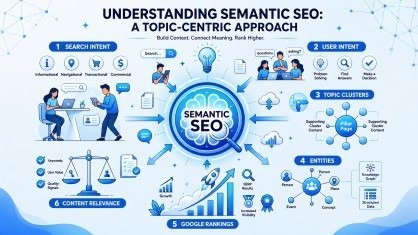
Google ranking is no longer about repeating the same keyword again and again. Search engines have become smarter. Today, they try to understand meaning, context, and what users truly want. That is why many websites with strong keyword usage still fail to rank, while websites with clear and useful content continue to grow.
This is where Semantic SEO changes everything.
Instead of writing content only for search engines, semantic optimization helps you build pages around complete topics and user intent. When your content answers questions clearly and connects related ideas naturally, Google understands it better and users trust it more. In this guide, you will learn practical ways to master Semantic SEO and improve your Google rankings with a strategy designed for long-term growth.
What Is Semantic SEO?
Semantic SEO is the process of creating content that focuses on meaning rather than exact keyword repetition.
Traditional SEO was mostly based on matching search phrases. Modern search systems go much further. They analyze context, relationships between topics, and the complete meaning behind a query.
For example, when someone searches for improving website rankings, Google does not only search for exact words. It tries to understand whether the user needs strategies, examples, technical guidance, or content recommendations.
Because of this change, successful content now explains a subject fully instead of targeting one phrase repeatedly.
That is the foundation of Semantic SEO.
Why Semantic SEO Matters More Than Ever
Search engines want to deliver the best answer, not simply the page with the highest keyword count.
When your article covers a topic in depth, users stay longer, interact more, and often explore additional pages on your website. These signals help search engines understand that your content provides value.
Modern ranking systems reward pages that:
- solve the user’s problem
- explain ideas clearly
- connect related information naturally
This is why websites using Semantic SEO often create stronger authority over time.
Instead of chasing rankings page by page, they build trust topic by topic.
Start With Search Intent Before Writing
One of the biggest SEO mistakes is creating content before understanding why people search.
Search intent explains the goal behind a query.
Someone searching “what is semantic SEO” wants learning content.
Someone searching “best semantic SEO tools” wants comparisons.
Someone searching “semantic SEO agency” may already be ready to buy.
Your content should match that expectation.
If intent and content do not align, rankings become difficult even if the article is optimized.
Before writing, ask:
What question is the reader trying to solve?
What result would satisfy them?
What information should appear first?
Answering these questions improves content quality immediately.
Build Topical Authority Instead of Chasing Keywords
Many websites still create multiple small articles targeting slightly different keywords.
This approach often creates thin content.
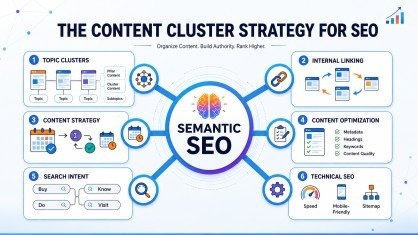
A stronger strategy is building topical authority.
Topical authority means becoming a reliable source around one subject area.
For example, if your website focuses on SEO, related articles may include:
- semantic search
- content optimization
- internal linking
- keyword clustering
- technical SEO
Together, these pages strengthen the entire website.
This approach works exceptionally well with Semantic SEO because search engines understand relationships between content pieces.
Write Content That Sounds Human
Search engines understand natural language better than ever.
That means writing should feel simple and helpful.
Avoid robotic sentences.
Avoid repeating phrases unnaturally.
Instead, explain ideas as if you are helping someone understand the topic for the first time.
Good writing creates:
Better engagement
Users remain on the page longer.
Stronger readability
Information becomes easier to absorb.
Higher trust
People are more likely to return.
Simple language does not reduce authority.
It increases understanding.
Structure Your Content Properly
Content structure helps both users and search engines.
Every article should guide readers naturally from one section to another.
Start with the answer.
Then explain details.
Then provide examples.
Use headings to separate ideas.
Good structure creates smoother reading and stronger topic understanding.
Do not add headings only for SEO.
Each heading should move the discussion forward.
Use Internal Links to Strengthen Relevance
Internal linking helps search engines understand which pages belong together.
When related pages connect naturally, authority spreads across the website.
For example, an article about semantic optimization can connect to pages discussing:
content strategy, topic clusters, or technical improvements.
This creates stronger topical signals.
At the same time, users discover more content without leaving the site.
That improves engagement and supports long-term growth.
Optimize Content for AI Search Results

Search is changing quickly.
AI-generated answers are becoming more common.
To increase visibility, content should become easier to extract and understand.
Write direct answers early.
Keep sections focused.
Use descriptive headings.
Add examples when needed.
Well-structured content gives search systems clearer signals.
This also increases opportunities for featured snippets and AI visibility.
Build Content Around Topic Relationships
Search engines no longer rank pages only because they contain keywords. They try to understand whether the content explains the topic completely and helps users reach their goal. That is why modern SEO focuses more on topic coverage and user understanding than simple optimization.
A stronger content strategy is connecting related ideas naturally. When writing about semantic optimization, include supporting concepts such as search intent, content relevance, internal linking, and user experience. These relationships create deeper context and make the article stronger.
At the same time, maintain a smooth reading experience. Keep paragraphs short, move logically between sections, and avoid adding information only to increase word count. Clear and connected content creates better engagement and improves long-term rankings through Semantic SEO.
Measure and Improve Content Performance
Publishing content is only the first step. To improve rankings, you must review how users interact with your pages over time.
Look at indicators such as impressions, clicks, engagement, and time spent on the page. These signals help you understand whether readers are finding value.
If visitors leave quickly, review your introduction, headings, and content structure. Sometimes small improvements create stronger results than publishing new pages.
Content updates are also important. Refresh examples, improve explanations, and expand sections that no longer answer user expectations.
Over time, consistent improvements help build stronger authority and support long-term growth through Semantic SEO.
Another useful habit is reviewing pages that already perform well.
Instead of creating more content, strengthen successful pages first.
This approach improves efficiency and helps maintain steady ranking growth.
Improve Content Quality Consistently
Strong content is built through improvement, not publishing alone. Review your pages regularly, update outdated information, improve clarity, and strengthen sections that add value to readers.
User behavior also helps identify opportunities for growth. When content becomes easier to read and more useful, search engines respond positively and support long-term visibility through Semantic SEO.
Good optimization focuses on helping users first. Clear structure, natural writing, and connected ideas build stronger authority and improve ranking potential over time.
Focus on User Experience Signals
Search engines pay attention to how users interact with content. Pages that are easy to read and simple to navigate often perform better over time.
Keep paragraphs short, make headings clear, and guide readers naturally from one section to the next. A better reading experience increases engagement and strengthens results through Semantic SEO.
Helpful content creates trust. When users find answers quickly and continue exploring your website, search engines receive stronger quality signals and rankings become more stable.
Common Semantic SEO Mistakes
Avoid these common issues:
- repeating keywords excessively
- writing without search intent
- publishing shallow content
- ignoring internal linking
- creating duplicate pages
Better SEO usually comes from improving quality, not adding more keywords.
Final Thoughts
Ranking higher in Google today requires more than basic optimization techniques. Search engines now prioritize content that explains topics clearly, satisfies user intent, and creates a better experience for readers. This is where Semantic SEO delivers long-term value.
Instead of focusing only on keywords, build content that covers topics deeply and answers related questions naturally. Create logical content structure, maintain readability, and connect ideas in a meaningful way. As your content becomes more useful and complete, search engines gain greater confidence in your website.
Apply Semantic SEO consistently, and your website can build stronger authority, attract sustainable traffic, and improve rankings over time.
Frequently Asked Questions
1. What is Semantic SEO?
Semantic SEO is the process of optimizing content around meaning, user intent, and related topics instead of focusing only on keyword repetition.
2. How does Semantic SEO improve Google rankings?
It helps search engines understand content better by creating stronger topic relevance, improved user experience, and deeper content coverage.
3. What is the difference between traditional SEO and Semantic SEO?
Traditional SEO targets exact keywords, while Semantic SEO focuses on context, relationships between topics, and complete user satisfaction.
4. How long does Semantic SEO take to show results?
Results depend on competition and content quality, but consistent optimization can improve visibility and authority over time.
5. What are the most important elements of Semantic SEO?
Search intent, topical authority, internal linking, natural language, and structured content are key factors for stronger performance.
Meta Description
Learn how to master Semantic SEO and improve Google rankings with proven strategies for search intent, topical authority, content structure, and long-term organic growth.
- What Is Semantic SEO?
- Why Semantic SEO Matters More Than Ever
- Start With Search Intent Before Writing
- Build Topical Authority Instead of Chasing Keywords
- Write Content That Sounds Human
- Structure Your Content Properly
- Use Internal Links to Strengthen Relevance
- Optimize Content for AI Search Results
- Build Content Around Topic Relationships
- Measure and Improve Content Performance
- Focus on User Experience Signals
- Common Semantic SEO Mistakes
- Final Thoughts
- Frequently Asked Questions
- Meta Description