
What if your website could become the first place people trust when they search on Google? Many websites publish content every day, yet only a few earn lasting visibility. The difference is not always more content. Often, the difference is building trust around one clear topic. That trust is known as Topical Authority.
When your website covers a subject in depth and helps users solve problems, search engines begin to see your site as reliable. As a result, your pages can rank faster and stay visible longer. You do not need a huge brand or thousands of backlinks to compete. A focused strategy can help smaller websites win rankings too.
Whether you run a blog, business website, affiliate platform, or niche content site, building authority around a specific topic can create long-term SEO growth. In this guide, you will learn how to build strong Topical Authority, improve content quality, create a smarter content structure, and develop a strategy that supports sustainable rankings and organic traffic.
What Is Topical Authority?
Topical Authority means becoming a trusted source on a specific subject.
Search engines look at how well your website explains a topic. If your content answers many related questions and helps users completely, your authority grows.
For example, imagine a website about home workouts. Instead of publishing random articles, it creates content about:
- Beginner workouts
- Home exercise plans
- Workout equipment
- Fat loss routines
- Exercise mistakes
Over time, search engines understand that this website knows the topic well.
That is how Topical Authority works.
Why Topical Authority Matters for SEO
Many people focus only on keywords. However, search engines now care more about topic depth, content quality, and user value. Ranking well is no longer about publishing more pages than competitors. Instead, websites that fully answer user questions and provide connected information are more likely to earn visibility.
When your website builds Topical Authority, several positive things start happening:
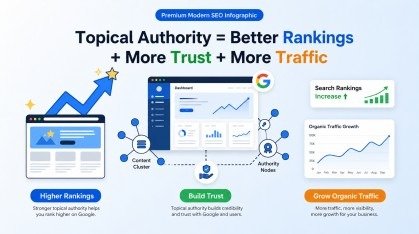
Better Search Rankings
Google prefers websites that demonstrate complete understanding of a topic instead of covering subjects at a surface level. When your content explains related concepts clearly and consistently, search engines gain more confidence in your website and may reward it with stronger rankings.
Higher User Trust
Visitors spend more time on websites that provide useful and complete information. When users repeatedly find answers on your site, they begin to trust your content and are more likely to return in the future.
More Organic Traffic
Strong authority allows multiple pages to rank together instead of depending on a single article. As more related pages perform well, your website can attract a steady flow of organic traffic.
Easier Content Growth
Publishing new content becomes easier because your website already has established trust in that topic area. New articles may gain visibility faster compared to websites with weak topical coverage.
Instead of chasing random traffic and isolated keywords, building Topical Authority creates long-term SEO growth and stronger results.
How Search Engines Evaluate Content
Search engines do much more than simply count how many times a keyword appears on a page. Modern SEO focuses on delivering useful information and creating a better user experience. To decide which pages deserve higher rankings, search engines evaluate several important factors.
They evaluate:
Relevance
Search engines analyze whether your content matches the user’s search intent. If someone searches for a guide, they expect complete and helpful information instead of a short or unrelated answer.
Experience
Content that shows practical understanding and real knowledge often performs better. Websites that provide examples, clear explanations, and actionable advice create a stronger experience for readers.
Authority
Search engines look for signals that indicate trust and expertise. When users engage with your content and other websites reference or link to it, your website becomes more authoritative.
Quality
High-quality content should be original, easy to understand, and genuinely useful. Content created only to target keywords without helping users may struggle to rank.
Because of this, publishing many short articles is no longer enough to compete. Instead, websites should build connected content that covers topics deeply and creates a stronger experience for both users and search engines.
Step 1: Choose One Clear Topic
The first step is focus.
Do not try to rank for everything.
Choose one topic area and grow from there.
Weak Example
Fitness
Strong Example
Beginner Home Workouts
A focused niche helps build Topical Authority faster.
Ask:
- What problems does my audience have?
- What questions do they search?
- What solutions can I provide?
Your answers become your content plan.
Step 2: Do Topic-Based Keyword Research
Keyword research should support topics, not control them.
Start with one broad keyword.
Example:
Home Workouts
Then expand.
Related ideas:
- Easy home exercise
- Workout schedule
- Equipment guide
- Weight loss exercises
- Workout for beginners
Group keywords together.
Do not create ten articles that say the same thing.
Instead, organize them into topic clusters.
This approach strengthens Topical Authority naturally.
Step 3: Build Content Clusters
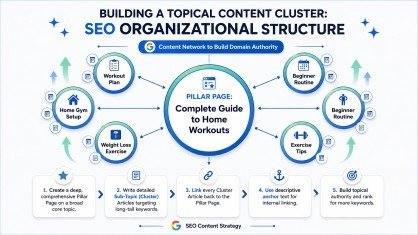
A content cluster is a group of connected articles.
It includes:
Pillar Content
One detailed guide.
Example:
Complete Guide to Home Workouts
Supporting Content
Articles connected to the pillar.
Example:
Best Morning Workout Routine
Exercises Without Equipment
Beginner Weekly Workout Plan
Each article should link back to the main guide.
This structure helps search engines understand your website.
Building content clusters is one of the fastest ways to increase Topical Authority.
People do not search for articles.
They search for solutions.
Good content should:
- Answer questions quickly
- Explain clearly
- Give practical examples
- Avoid unnecessary words
For example:
Weak:
Exercise improves health.
Better:
Exercise improves energy, supports weight goals, and strengthens daily movement.
Useful content earns trust.
That trust increases Topical Authority over time.
Step 5: Use Smart Internal Linking
Internal links connect pages.
They help users move through your website.
They also help search engines discover content.
Example:
Main guide → Supporting article
Supporting article → Related article
Avoid linking unrelated pages.
Instead:
Use clear anchor text.
Good:
Complete Home Workout Guide
Bad:
Click Here
A strong internal structure supports Topical Authority growth.
Step 6: Improve Content Depth
Short content is not always weak.
But incomplete content struggles.
Your pages should include:
Definitions
Explain important concepts.
Examples
Show practical use.
Common Mistakes
Help users avoid problems.
Action Steps
Tell readers what to do next.
This makes content more useful and improves engagement.
Step 7: Build Trust Signals
Trust matters.
Visitors and search engines both notice credibility.
Add:
Author Information
Show expertise.
Updated Content
Refresh articles regularly.
Reliable Sources
Support important claims.
Clear Design
Make reading easy.
Trust supports stronger Topical Authority.
Step 8: Earn Relevant Backlinks
Backlinks remain important.
However, quality matters more than quantity.
Ways to earn links:
- Publish useful guides
- Create original research
- Guest posting
- Share insights on communities
Do not buy low-quality links.
One relevant backlink can help more than many weak links.
Backlinks strengthen Topical Authority when they come from related websites.
Step 9: Keep Updating Existing Articles
Many websites publish and forget.
Strong websites improve old content.
Update:
- Statistics
- Examples
- Images
- Internal links
- Missing sections
Fresh content sends positive signals.
This also protects rankings.
Step 10: Measure Your Results
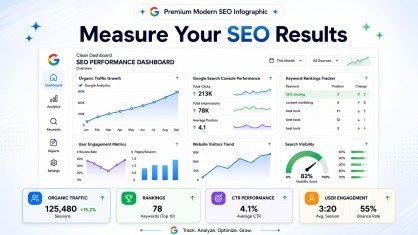
SEO improves when you measure results and understand what is working. Tracking performance helps you make better decisions and improve your content over time. Instead of guessing, use data to find opportunities and strengthen your strategy.
Track these key areas:
Organic Traffic
Check whether more people are visiting your website through search engines. If traffic grows after publishing content, it may show that your SEO efforts are moving in the right direction.
Rankings
Monitor the keywords you want to rank for and see how their positions change over time. Better rankings often mean your content is becoming more useful and trusted.
Click Rate
Look at how often users choose your page after seeing it in search results. A higher click rate may show that your titles and descriptions attract attention.
User Behavior
Measure how users interact with your content. See how long they stay, which pages they visit, and whether they continue exploring your website.
Small improvements in these areas can create stronger results over time. Regular tracking helps you build better content and support long-term SEO growth.
Common Mistakes That Hurt Topical Authority
Avoid these problems:
- Publishing unrelated topics
- Keyword stuffing
- Thin content
- Duplicate articles
- Weak internal linking
- Ignoring user intent
These mistakes reduce trust.
Simple Example of a Topical Authority Structure
Main Topic:
Digital Marketing
Pillar Page:
Complete Digital Marketing Guide
Supporting Articles:
- SEO Basics
- Content Marketing
- Email Marketing
- Social Media Strategy
- Analytics Guide
Each page connects naturally.
This creates strong Topical Authority.
Final Thoughts
Building rankings is no longer about publishing endless pages.
Today, success comes from focus, quality, and structure.
Choose one topic. Cover it deeply. Connect related content. Improve user experience. Keep updating.
Over time, search engines will recognize your expertise.
Strong Topical Authority does not happen overnight. Yet when done correctly, it creates lasting growth, better rankings, and consistent organic traffic.
Start small, stay consistent, and build authority one helpful article at a time.
FAQs
What Is Topical Authority in SEO?
Topical Authority is the process of building trust and expertise around one subject by creating useful, connected, and in-depth content.
Why Is Topical Authority Important for Rankings?
It helps search engines understand your expertise, which can improve visibility, increase trust, and support higher rankings.
How Long Does It Take to Build Topical Authority?
The timeline depends on competition, content quality, and consistency, but steady publishing can show results over time.
Does Topical Authority Matter More Than Backlinks?
Backlinks still matter, but strong Topical Authority can help websites compete by improving content relevance and trust.
How Many Articles Are Needed to Build Topical Authority?
There is no fixed number because success depends on content depth, topic coverage, and how well pages connect.
META DESCRIPTION
Learn how to create strong Topical Authority and win higher rankings with proven SEO strategies. Discover content clusters, internal linking, keyword research, and practical steps to build trust, increase organic traffic, and grow long-term search visibility.
- What Is Topical Authority?
- Why Topical Authority Matters for SEO
- How Search Engines Evaluate Content
- Step 1: Choose One Clear Topic
- Step 2: Do Topic-Based Keyword Research
- Step 3: Build Content Clusters
- Step 5: Use Smart Internal Linking
- Step 6: Improve Content Depth
- Step 7: Build Trust Signals
- Step 8: Earn Relevant Backlinks
- Step 9: Keep Updating Existing Articles
- Step 10: Measure Your Results
- Common Mistakes That Hurt Topical Authority
- Simple Example of a Topical Authority Structure
- Final Thoughts
- FAQs
- META DESCRIPTION