
Here is a number that should stop you in your tracks — the first result on Google gets 28.5% of all clicks. The second gets 15.7%. By position ten, you are lucky to get 2.5%. That means if your content is not sitting on page one — preferably in the top three positions — you are essentially invisible. All that time spent writing, editing, and publishing goes completely unrewarded. Your competitors collect traffic, leads, and revenue while your content sits unread in the dark corners of Google’s index.
The difference between content that ranks and content that disappears is not talent. It is not luck. It is knowing exactly how to write SEO-friendly content that ranks — and executing that process consistently every single time you publish.
This guide gives you 8 battle-tested, step-by-step methods used by professional SEO writers and content marketers to land on page one of Google and stay there. Follow every step and your content will not just be good — it will be built to rank.
Why SEO-Friendly Content Is Non-Negotiable in 2026
Before the steps, understand what is at stake. Organic search is the most powerful, most sustainable traffic source available to any website. Unlike paid ads — which stop the moment your budget runs out — and social media — where algorithm changes can destroy your reach overnight — SEO compounds over time.
One well-optimized article can drive consistent traffic for years without a single dollar of ad spend. That is why learning to write SEO-friendly content that ranks is one of the highest-value skills any blogger, marketer, or business owner can develop in 2026.
Step 1 — Start with Deep Keyword and Topic Research
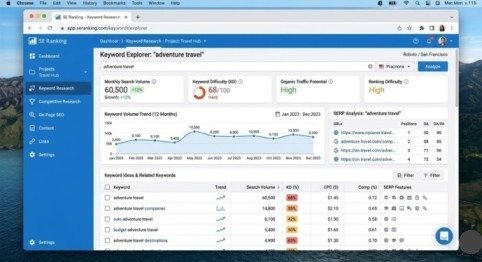
You cannot write content that ranks if you do not know what people are actually searching for. Keyword research is not optional — it is the foundation everything else is built on.
How to do keyword research correctly:
- Use tools like Google Keyword Planner, Ahrefs, Semrush, or Ubersuggest to find keywords with real search volume
- Focus on long-tail keywords — phrases of 3 to 5 words with lower competition and clearer search intent (example: “how to write SEO content for beginners” instead of just “SEO content”)
- Check Google’s People Also Ask section and autocomplete suggestions — these reveal exactly what your audience wants to know
- Analyze search intent — is the searcher looking for information, a comparison, or ready to buy? Your content must match that intent precisely
One critical rule: every piece of content should target one primary keyword and a handful of semantically related secondary keywords. Trying to rank for too many keywords in one article dilutes your focus and confuses Google.
Step 2 — Analyze Your Top-Ranking Competitors
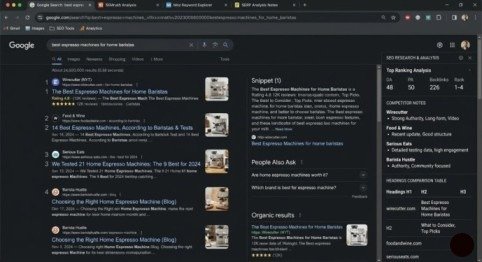
Before writing a single word, study the pages currently ranking in positions 1 to 5 for your target keyword. This is how you understand what Google already considers excellent for this topic.
What to analyze in competitor content:
- Word count — How long is the average top-ranking article? Match or exceed it
- Content structure — What headings and subheadings do they use?
- Questions answered — What specific questions does their content address?
- Content gaps — What important information are they missing that you can cover?
- Content format — Is the top result a listicle, a how-to guide, a comparison, or a definition post?
Your goal is not to copy competitors — it is to understand the standard and then create something more comprehensive, more useful, and more original. Google rewards content that genuinely outperforms what already exists.
Step 3 — Create a Detailed Content Outline
Professional SEO writers never start writing without an outline. A detailed outline is the fastest path to clear, well-structured content that satisfies both readers and search engines.
Your outline should include:
- Target keyword and 5 to 8 related secondary keywords
- H2 and H3 headings mapped out in logical order
- Key points to cover under each section
- Questions to answer gathered from your keyword research
- Unique angle — what makes your article different from everything else ranking for this keyword?
The unique angle is what separates forgettable content from content people share, link to, and return to. Do not just cover what everyone else covers. Add original insights, fresh data, or a perspective your competitors have not touched.
Step 4 — Write a Powerful First Draft
With your outline ready, write your first draft without stopping to self-edit. Get every idea out of your head and onto the page. Speed and flow matter more than perfection at this stage.
Critical elements to include in your draft:
- Strong opening hook — Your introduction must grab attention immediately. State a surprising statistic, a bold claim, or a relatable problem in the first three sentences
- Keyword in the first 100 words — Naturally include your focus keyword early in the introduction
- Expert insights and data — Include relevant statistics, studies, and real-world examples that add credibility
- Practical value — Every section must give the reader something actionable they can apply immediately
- Conversational tone — Write the way you speak. Avoid jargon-heavy, overly academic language that pushes readers away
Remember — your first draft is not your final article. Write freely, then refine later. Trying to write and edit simultaneously is the fastest way to kill your momentum.
Step 5 — Optimize On-Page SEO Elements
Once your draft is complete, it is time to optimize every on-page element that influences your ranking. This is where you technically signal to Google exactly what your content is about.
Essential on-page SEO checklist:
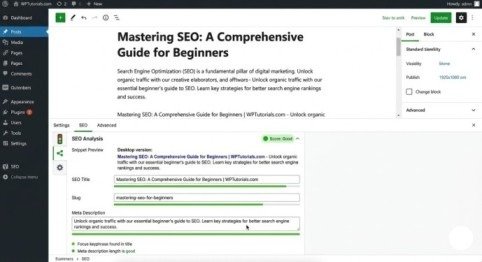
- Title Tag (H1) — Include your focus keyword naturally. Keep it under 60 characters. Make it compelling enough to earn the click
- Meta Description — Write 140 to 155 characters summarizing the article. Include your keyword and a clear reason to click
- URL Slug — Keep it short and keyword-focused. Remove filler words. Example: /write-seo-friendly-content-ranks (not /how-to-write-seo-friendly-content-that-ranks-higher-on-google-in-2026)
- H2 and H3 Headings — Include your focus keyword in at least one H2 heading naturally
- Image Alt Text — Describe every image using relevant keywords where appropriate
- First Paragraph — Your focus keyword must appear naturally within the first 100 words
- Keyword Density — Use your focus keyword naturally throughout the article. Aim for 1 to 1.5% density — never force it
Use a plugin like Yoast SEO or Rank Math on WordPress to check all these elements before publishing and ensure nothing is missed.
Step 6 — Build Strong Internal and External Links
Links are one of Google’s most powerful ranking signals — and most content creators underuse them dramatically.
Internal linking strategy:
Link to 3 to 5 relevant pages already on your website within every article. Internal links help Google discover and index your content faster, distribute ranking authority across your site, and keep readers engaged longer by guiding them to related content.
Always use descriptive anchor text that tells both readers and Google exactly what the linked page is about. Never use “click here” or “read more” as anchor text — these are wasted opportunities.
External linking strategy:
Link to 2 to 3 high-authority external sources — research studies, government websites, or respected industry publications — to support your key claims. External links to credible sources signal to Google that your content is well-researched and trustworthy.
Step 7 — Format for Readability and Engagement
Google measures user engagement signals — time on page, bounce rate, scroll depth — and uses them as indirect ranking factors. If readers leave your page immediately, Google interprets that as a sign your content did not satisfy their search intent.
Formatting rules that keep readers on your page:
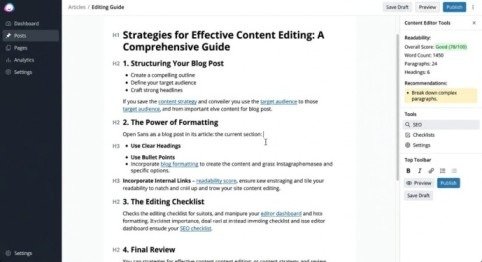
- Short paragraphs — Keep paragraphs to 2 to 3 sentences maximum. Large walls of text drive readers away instantly
- Subheadings every 200 to 300 words — Break content into scannable sections so readers can find what they need quickly
- Bullet points and numbered lists — Use them for steps, features, comparisons, and any list of 3 or more items
- Bold key phrases — Draw the eye to critical information within paragraphs
- Images and visuals — Add a relevant image, chart, or infographic every 300 to 400 words to break up text and illustrate key points
- Short sentences — Mix long and short sentences for rhythm. Aim for an average sentence length of 15 to 20 words
The easier your content is to read and navigate, the longer people stay — and the more Google rewards you with higher rankings.
Step 8 — Publish, Promote, and Update Regularly
Publishing is not the finish line — it is the starting line. Even the best SEO-optimized content needs promotion and ongoing maintenance to reach its full ranking potential.
After publishing — do this immediately:
- Submit the URL to Google Search Console using the URL Inspection Tool and click Request Indexing — this speeds up Google’s crawling process significantly
- Share the article across all your social media platforms to generate initial traffic signals
- Send it to your email list if you have one — early traffic and engagement help Google evaluate your content faster
- Build backlinks by reaching out to relevant websites, sharing in niche communities, and repurposing the content into PDFs, slides, or videos for document and video sharing platforms
Ongoing content maintenance:
SEO is never truly finished. Revisit your published articles every 6 to 12 months and update them with fresh statistics, new information, and improved sections. Google actively favors recently updated content — especially for topics where information changes frequently.
Articles that are refreshed and republished consistently outperform static content that was written once and never touched again.
Final Thoughts:
Learning to write SEO-friendly content that ranks is not about tricking Google with keyword stuffing or technical hacks. In 2026, Google is smarter than ever — it rewards content that genuinely helps people, answers their questions completely, and delivers an excellent reading experience. The 8-step process in this guide gives you exactly that framework. Research what your audience needs. Understand what Google already rewards.
Create something more valuable than what already ranks. Optimize every technical element. Promote strategically. Update consistently. Every time you write SEO-friendly content that ranks through this process, you build a co ongoing cost. That is the real power of SEO content done right. Start with step one today.
Frequently Asked Questions (FAQs)
Q1: How long should SEO-friendly content be in 2026?
There is no universal perfect length — but longer, more comprehensive content consistently outranks thin content for competitive keywords. Aim for at least 1,000 to 1,500 words for informational articles and match or exceed the average word count of your top-ranking competitors for each specific keyword.
Q2: How many times should I use my keyword in an article?
Use your focus keyword naturally at a density of 1 to 1.5% — roughly once every 100 to 150 words. Never force it. Google’s algorithm is sophisticated enough to understand context and penalizes obvious keyword stuffing with lower rankings.
Q3: Does content quality matter more than backlinks for ranking?
Both matter — but content quality is the foundation. Without high-quality, well-optimized content, backlinks alone will not sustain strong rankings. Focus on creating exceptional content first, then build backlinks to amplify its authority.
Q4: How long does it take for SEO content to rank on Google?
New content typically takes 3 to 6 months to reach its full ranking potential. Factors like your website’s domain authority, the competitiveness of the keyword, and the quality of your backlinks all influence how quickly rankings improve.
Q5: Should I update old content or create new content?
Both. Update your top-performing old articles every 6 to 12 months to keep them fresh and competitive. Simultaneously, create new content to target additional keywords and expand your website’s topical authority.
Meta Description:
Learn how to write SEO-friendly content that ranks higher on Google in 2026. Follow these 8 proven steps to drive organic traffic and dominate search results.
- Why SEO-Friendly Content Is Non-Negotiable in 2026
- Step 1 — Start with Deep Keyword and Topic Research
- Step 2 — Analyze Your Top-Ranking Competitors
- Step 3 — Create a Detailed Content Outline
- Step 4 — Write a Powerful First Draft
- Step 5 — Optimize On-Page SEO Elements
- Step 6 — Build Strong Internal and External Links
- Step 7 — Format for Readability and Engagement
- Step 8 — Publish, Promote, and Update Regularly
- Final Thoughts:
- Frequently Asked Questions (FAQs)
- Meta Description: