
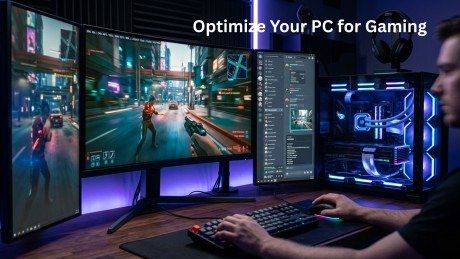
Gaming on a PC can be an immersive and thrilling experience—but only if your computer is running at its best. Optimize Your PC for Gaming to unlock maximum performance and smoother gameplay. Many gamers overlook the fact that even high-end hardware can underperform if Windows and system settings are not optimized for gaming. Fortunately, with some careful tweaks and adjustments, you can dramatically boost your PC’s performance. By following this guide, you will learn how to optimize your PC forgaming efficiently, reduce lag, and enjoy smoother gameplay across all types of games.
Even small improvements in system optimization can lead to noticeable gains in FPS (frames per second), faster load times, and reduced stuttering. Additionally, ensuring your hardware and software work together allows you to get the most out of your investment in your gaming rig. This guide covers everything from software tweaks to hardware adjustments, so whether you are playing competitive esports titles or expansive open-world games, your PC can perform like a pro-level gaming machine.
Moreover, optimizing your system isn’t just about immediate gains. Proper configuration helps extend the life of your hardware, ensures a stable gaming experience, and prevents unnecessary strain on your PC. By the end of this article, you will have a comprehensive roadmap to optimize your PC for gaming, making it responsive, fast, and ready for any challenge.
Why Optimizing Your PC Matters for Gaming
Windows is a versatile operating system, designed to handle a wide variety of tasks simultaneously. However, this versatility can sometimes interfere with gaming performance. While your PC might have a strong GPU, plenty of RAM, and a fast CPU, Windows often runs background processes, updates, and notifications that consume precious system resources.
When you optimize your PC for gaming, you essentially give your system a “focus mode” where resources are prioritized for gaming. This results in:
- Higher and more stable FPS
- Reduced input lag
- Fewer system interruptions
- Better overall responsiveness
Without optimization, even a top-of-the-line gaming setup can feel sluggish, especially in graphics-intensive games or during multiplayer sessions where every millisecond counts.
Enable Game Mode in Windows
One of the easiest ways to boost performance is to enable Windows’ built-in Game Mode. Many gamers dismiss this feature, but it can help mid-range PCs run more smoothly.
Benefits of Game Mode:
- Prioritizes CPU and GPU resources for your game
- Suspends automatic updates and restarts
- Reduces background notifications
How to enable it:
- Press Win + I to open Settings
- Navigate to Gaming → Game Mode
- Toggle Game Mode ON
Once enabled, Game Mode works in the background to ensure your games receive maximum system attention. While the improvement may not always be massive alone, when combined with other tweaks, it can noticeably smooth gameplay.
Disable Background Apps and Startup Programs
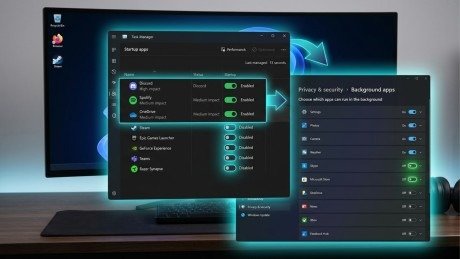
Background applications can significantly reduce your PC’s performance. Some PCs have dozens of apps running unnoticed, consuming RAM and CPU cycles. To free up resources:
Disable unnecessary background apps:
- Open Settings → Privacy → Background Apps
- Turn off apps you do not need
Manage startup programs:
- Open Task Manager → Startup tab
- Disable programs such as Discord, Spotify, OneDrive, or launchers that aren’t essential
By reducing unnecessary programs, you can increase CPU availability by 5–10% and speed up boot times, which contributes to smoother gaming.
Update Graphics Drivers
Keeping your GPU drivers current is one of the most effective ways to optimize your PC for gaming. Modern games often receive driver-specific optimizations, bug fixes, and performance improvements.
Recommended tools:
- NVIDIA GeForce Experience
- AMD Adrenalin
- Intel Arc Control
Updating your drivers ensures that your GPU can handle the latest titles efficiently, reduce crashes, and improve frame rates, particularly in fast-paced games like Fortnite or Valorant.
Adjust In-Game Graphics Settings
Even with Windows and hardware optimized, in-game settings have the most direct impact on FPS. Balancing visuals with performance is key.
Suggested adjustments:
- Motion Blur: OFF
- V-Sync: OFF (unless tearing is an issue)
- Texture Quality: Medium/High depending on VRAM
- Shadows: Low
- Anti-Aliasing: TAA, FSR, DLSS
Lowering shadows or resolution scaling can instantly boost FPS, often without a noticeable loss in visual quality.
Choose the Right Power Plan
Windows may limit performance to conserve energy, especially on laptops. To ensure full CPU and GPU potential:
- Open Control Panel → Power Options
- Select High Performance or Ultimate Performance
This guarantees that your hardware consistently runs at maximum speed during gaming sessions, particularly in CPU-heavy titles.
Enable Hardware-Accelerated GPU Scheduling
Hardware-accelerated GPU scheduling (HAGS) can help reduce latency and improve smoothness in modern games.
Steps to enable:
- Go to Settings → System → Display → Graphics → Default Graphics Settings
- Toggle Hardware-accelerated GPU scheduling ON
- Restart your PC
Even a small boost of 1–4 FPS can make a difference in competitive scenarios, and it often reduces stuttering during gameplay.
Optimize Storage and File Management
Efficient storage directly impacts game load times and streaming of in-game textures.
Tips for storage optimization:
- Install frequently played games on an SSD
- Enable TRIM for SSDs to maintain performance
- Regularly clear temporary files (Win + R → temp, %temp%, Prefetch)
- Uninstall unused programs and old Windows update files
Maintaining at least 10–15% free space on your system drive helps ensure consistent performance and prevents slowdowns.
Improve Network Performance
For online multiplayer games, network performance can affect your overall experience more than FPS alone.
Network optimization tips:
- Use a wired Ethernet connection for lower ping
- Disable bandwidth-heavy apps while gaming
- Enable QoS (Quality of Service) in your router
- Choose the nearest game server region
A stable connection ensures smoother gameplay, faster response times, and reduces lag spikes.
Optimize Gaming Peripherals
Your mouse, keyboard, and controller also impact your gaming performance.
Recommendations:
- Adjust mouse DPI and sensitivity for precise control
- Enable polling rate adjustments (up to 1000Hz)
- Program keyboard macros for complex actions
- Use low-latency controllers for competitive gameplay
Optimizing peripherals reduces input lag and allows for more responsive controls during intense gaming sessions.
Maintain Thermal Efficiency
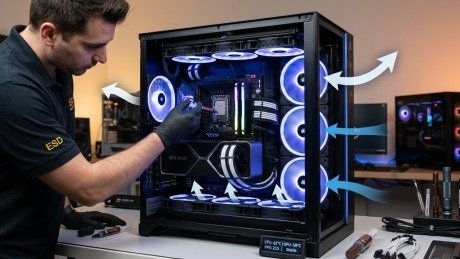
Overheating can throttle your CPU or GPU, drastically reducing FPS. Proper cooling ensures consistent performance.
Thermal optimization tips:
- Clean dust from fans and vents regularly
- Apply fresh thermal paste when needed
- Install additional case fans or upgrade to liquid cooling
- Organize internal cables for better airflow
Keeping your components cool improves longevity and prevents sudden FPS drops caused by thermal throttling.
Experiment with Cloud Gaming
If your PC cannot handle the latest titles, cloud gaming services are an alternative. Platforms like NVIDIA GeForce NOW, Xbox Cloud Gaming, or Google Stadia allow you to stream demanding games without heavy local processing.
Cloud gaming tips:
- Ensure a stable internet connection (15 Mbps minimum)
- Adjust streaming resolution and frame rate based on bandwidth
- Prefer wired or 5GHz Wi-Fi for minimal latency
Cloud gaming provides a convenient way to play high-end games while your hardware remains light on load.
Test, Benchmark, and Iterate
After applying optimizations, monitoring performance ensures that changes are effective.
Testing methods:
- Use benchmarking tools like 3DMark or Heaven Benchmark
- Monitor in-game FPS, CPU/GPU usage, and temperatures
- Adjust and fine-tune settings iteratively for the best results
Regular testing ensures that your PC continues to perform at its peak and allows you to tweak any new games for maximum enjoyment.
Final Thoughts
To optimize your PC for gaming effectively, it’s essential to address both software and hardware components. From enabling Game Mode and updating drivers to adjusting in-game settings, each step contributes to smoother gameplay, faster load times, and enhanced visuals.
By maintaining a clean system, managing resources, and optimizing peripherals, you can truly optimize your PC for gaming for consistent high performance across all types of games. Remember, optimization is ongoing—periodic updates, driver checks, and performance tweaks will keep your gaming experience top-notch. With these strategies, your PC can finally operate as a true gaming powerhouse, ready to handle the most demanding titles today and tomorrow.
FAQs
Q1: How can I improve FPS without new hardware?
Adjust in-game settings, enable Game Mode, and close unnecessary background apps to optimize your PC for gaming.
Q2: Are SSDs important for faster game loading?
Installing games on SSDs significantly reduces load times and improves responsiveness, helping optimize your PC for gaming.
Q3: What power settings maximize gaming performance?
Use High Performance or Ultimate Performance to ensure CPU and GPU run at full speed and optimize your PC for gaming.
Q4: How often should GPU drivers be updated?
Update drivers monthly or with each new game release to maintain smooth gameplay and optimize your PC for gaming.
Q5: Does disabling visual effects in Windows help performance?
Turning off animations and transparency frees system resources, making it easier to optimize your PC for gaming.
SEO Meta Description:
Optimize Your PC for Gaming with proven tips to boost FPS, reduce lag, and enhance overall performance. Learn software tweaks, hardware upgrades, and settings adjustments.
- Why Optimizing Your PC Matters for Gaming
- Enable Game Mode in Windows
- Disable Background Apps and Startup Programs
- Update Graphics Drivers
- Adjust In-Game Graphics Settings
- Choose the Right Power Plan
- Enable Hardware-Accelerated GPU Scheduling
- Optimize Storage and File Management
- Improve Network Performance
- Optimize Gaming Peripherals
- Maintain Thermal Efficiency
- Experiment with Cloud Gaming
- Test, Benchmark, and Iterate
- Final Thoughts
- FAQs
- SEO Meta Description: