
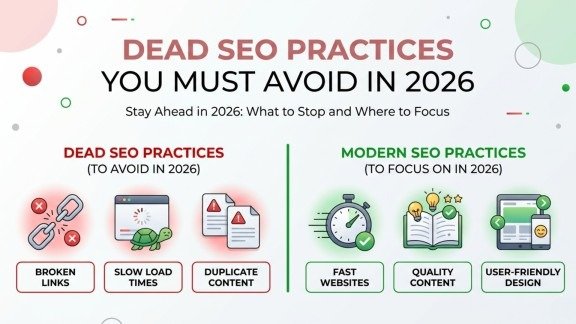
SEO is not the same anymore. What worked a few years ago may not work today. In fact, some old methods can now harm your website. That is why understanding Dead SEO Practices is very important in 2026.
Many people still use outdated tricks to rank faster. However, search engines are now smarter than ever. They can easily detect spammy behavior. As a result, websites using these methods often lose rankings or get penalties.
In this article, you will learn which Dead SEO Practices you must avoid. You will also understand what to do instead so your website can grow safely and rank better over time.
Why Outdated SEO Methods Can Hurt Your Website
Using old SEO techniques is not just useless—it can damage your website. Search engines focus on user experience, so any method that tricks the system is considered harmful.
When you use Dead SEO Practices, your content may look spammy. Because of this, users leave your site quickly. This increases bounce rate and sends negative signals to search engines.
In the long run, avoiding these mistakes helps you build trust, improve rankings, and grow your traffic in a natural way.
Black Hat SEO Techniques You Should Avoid
Black hat SEO refers to unethical methods used to manipulate search engine rankings. These techniques may give quick results, but they are very risky and can lead to penalties or even removal from search results. That is why these methods are considered Dead SEO Practices and should always be avoided.
Keyword Stuffing
Keyword stuffing means adding the same keyword again and again in your content. This makes your writing unnatural and hard to read.
For example, repeating a keyword too many times in one paragraph reduces quality. That is why it is one of the most common Dead SEO Practices.
Instead, you should write naturally and use related words. This improves readability and helps search engines understand your content better.

Cloaking
Cloaking is when you show different content to search engines and users. This is a serious violation of SEO guidelines.
Search engines see this as cheating. As a result, your site can be removed from search results. This makes it one of the most dangerous Dead SEO Practices.
Always make sure both users and search engines see the same content.
Hidden Text and Links
Some people hide keywords by matching text color with the background or placing it off-screen. This trick was used in the past, but it no longer works.
Today, search engines can easily detect it. That is why it is included in Dead SEO Practices.
Your content should always be clear, visible, and easy to read.
Manipulative Link Building
Building links in an unnatural way can harm your website. Buying links or using link farms may give short-term results, but they damage your authority over time.
Search engines now focus on link quality, not quantity. That is why this method is part of Dead SEO Practices.
Instead, focus on creating valuable content that earns links naturally.
Content Mistakes That Affect Rankings
Content is the main part of SEO, but if it is low quality or not helpful, it can hurt your rankings. Search engines prefer content that is clear, useful, and original. That is why avoiding these mistakes is important to stay away from Dead SEO Practices and improve performance.
Duplicate Content
Duplicate content means using the same content on multiple pages. This confuses search engines about which page to rank.
Because of this confusion, your rankings may drop. That is why it is considered one of the key Dead SEO Practices.
You should always create original and unique content for each page.
Thin Content
Thin content provides little or no value to users. It does not fully answer questions or solve problems.
When users do not find helpful information, they leave quickly. This is why thin content is part of Dead SEO Practices.
Instead, write detailed and useful content that gives complete answers.
Auto-Generated Content
AI tools are helpful, but publishing content without editing can be risky. Such content often lacks clarity and accuracy.
This is why unedited AI content is also included in Dead SEO Practices. You should always review and improve content before publishing.
Content Spinning
Content spinning means rewriting existing content with slight changes. Although it looks different, the meaning stays the same.
Search engines can detect this easily. Therefore, it is another example of Dead SEO Practices.
Creating fresh and original content is always the better choice.
Technical SEO Mistakes You Must Fix
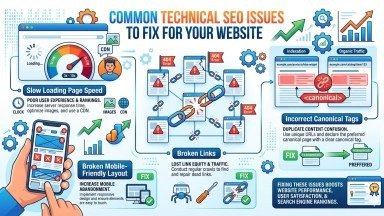
Technical SEO helps search engines crawl, understand, and index your website properly. If there are technical issues, your site may not perform well even if your content is strong. That is why fixing these problems is important for better rankings and user experience
Slow Website Speed
A slow website creates a bad user experience. People do not like to wait, so they leave quickly.
This increases bounce rate and affects rankings. That is why slow speed is considered part of Dead SEO Practices.
Improving speed helps both users and search engines.
Poor Mobile Optimization
Most users now browse on mobile devices. If your site is not mobile-friendly, you lose a large audience.
This issue directly affects rankings, making it one of the common Dead SEO Practices.
Your website should be responsive and easy to use on all devices.
Broken Links
Broken links lead users to error pages. This creates frustration and reduces trust.
Regularly checking and fixing links is very important for SEO.
Incorrect Canonical Tags
Using canonical tags incorrectly can confuse search engines. It may cause the wrong page to rank or reduce visibility.
Proper implementation is necessary to avoid SEO issues.
On-Page SEO Mistakes to Avoid
On-page SEO is about optimizing the elements inside your website, like content, titles, and images. If these elements are not handled properly, your page may not rank well even if your content is good. That is why avoiding common mistakes is very important for better visibility and user experience.
Weak Meta Titles and Descriptions
Meta tags play a big role in attracting clicks. If they are missing or poorly written, users may ignore your page.
Well-written meta titles and descriptions improve click-through rate and visibility.
Over-Optimized Anchor Text
Using the same anchor text repeatedly looks unnatural. Search engines may see it as manipulation.
That is why it is included in Dead SEO Practices.
Using natural and varied anchor text is a better approach.
Ignoring Image SEO
Images also need optimization. Without proper alt text and compression, they can slow down your website.
Optimized images improve both speed and accessibility.
Harmful Link Building Habits
Some link-building methods may look easy, but they are risky. These include:
- Buying backlinks
- Posting spam comments
- Excessive link exchanges
All these are Dead SEO Practices and can damage your website’s authority.
User Experience Mistakes
User experience is a major ranking factor. If your website is difficult to use, visitors will leave quickly.
Too many pop-ups, poor navigation, and confusing layouts create a bad experience. Because of this, your rankings may drop.
A simple, clean, and user-friendly design always performs better.
Ignoring Search Intent
Search intent means understanding what the user wants. If your content does not match their need, it will not rank well.
This mistake is very common and is also part of Dead SEO Practices.
You should always create content that answers the user’s question clearly.
Depending on Outdated SEO Trends
Some old SEO techniques are no longer effective. These include keyword density rules and meta tag stuffing.
Search engines now focus on quality, relevance, and user satisfaction. Following old trends can harm your progress.
How to Audit Your Website for SEO Issues
Regular audits help you find and fix problems before they affect your rankings.
You should review your content, technical performance, and backlinks. This helps you remove Dead SEO Practices and improve your site.

Better SEO Strategy for 2026
Modern SEO is simple and focused on users. Instead of tricks, you should follow a clean and effective approach.
Focus on creating helpful content, improving user experience, and keeping your website updated. These steps will help you grow in a sustainable way.
Conclusion
SEO success in 2026 depends on avoiding mistakes as much as following best practices. If you continue using Dead SEO Practices, your website will struggle to rank.
Instead, focus on quality, clarity, and user value. Build trust with your audience and follow modern SEO strategies.
When you stay consistent and avoid outdated methods, your website will grow naturally and achieve better rankings over time.
FAQs
1. What are Dead SEO Practices and why should you avoid them?
Dead SEO Practices are outdated or harmful techniques that reduce rankings and can lead to penalties, so avoiding them helps maintain long-term SEO success.
2. How do outdated SEO techniques affect website rankings?
Old SEO methods confuse search engines and reduce user trust, which leads to lower visibility and poor performance in search results.
3. Why is low-quality content bad for SEO performance?
Low-quality content fails to satisfy user intent, causing high bounce rates and weak engagement signals that negatively impact rankings.
4. What technical SEO issues can harm your website?
Problems like slow speed, broken links, and poor mobile design make it hard for search engines to crawl and rank your website properly.
5. How can you replace Dead SEO Practices with better strategies?
You can improve SEO by focusing on user intent, creating high-quality content, and using modern optimization techniques for sustainable growth.
Meta Description
Avoid Dead SEO Practices in 2026 to improve rankings, boost traffic, and grow your website with modern, user-focused SEO strategies.
- Why Outdated SEO Methods Can Hurt Your Website
- Black Hat SEO Techniques You Should Avoid
- Content Mistakes That Affect Rankings
- Technical SEO Mistakes You Must Fix
- On-Page SEO Mistakes to Avoid
- Harmful Link Building Habits
- User Experience Mistakes
- Ignoring Search Intent
- Depending on Outdated SEO Trends
- How to Audit Your Website for SEO Issues
- Better SEO Strategy for 2026
- Conclusion
- FAQs
- Meta Description