
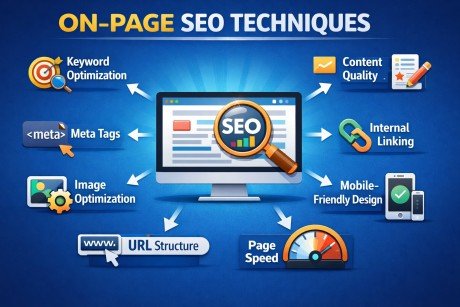
Ranking high on Google in 2025 requires more than just publishing content. Search engines now prioritize user experience, fast-loading websites, and high-quality, valuable content. Even the best-written articles may fail if the website is poorly optimized.
On-page SEO focuses on optimizing individual web pages to make them understandable and valuable for both search engines and users. Elements like title tags, meta descriptions, headers, page speed, images, internal links, and mobile responsiveness all play a key role.
Implementing effective on-page SEO techniques can help your website gain higher visibility, attract relevant organic traffic, and improve overall user experience. In this article, we will explore 10 powerful on-page SEO techniques that can significantly boost your Google rankings in 2025.
1. Write Compelling Title Tags
Title tags are one of the most important on-page SEO elements. They appear as the main clickable headline in Google search results. A clear, descriptive, and engaging title encourages clicks and helps search engines understand your page.
Tips for effective title tags:
- Keep it under 60 characters.
- Include your focus keyword naturally.
- Make it clear what users will learn.
- Avoid keyword stuffing; one or two mentions are enough.
Example:
“10 Powerful On-Page SEO Techniques to Improve Google Rankings”
A strong title tag not only attracts clicks but also sends positive ranking signals to Google. Using numbers, action words, or benefits can make your title more clickable. A compelling title is always the first step in effective on-page SEO.
2. Optimize Meta Descriptions
Meta descriptions are short snippets that summarize the content of a webpage. They appear beneath the page title in search results and are often the first impression users have of your page. Although meta descriptions do not directly impact Google rankings, they play a significant role in click-through rate (CTR), which, in turn, affects SEO performance.
A well-written meta description should clearly explain the value of the page and entice users to click. Including your focus keyword naturally helps search engines understand the topic while maintaining readability for humans.
Tips for creating effective meta descriptions:
- Keep it between 120–150 characters to ensure it displays fully in search results.
- Include the primary keyword naturally without forcing it.
- Clearly communicate the benefit or solution the user will get from the page.
- Use action-oriented words like “learn,” “discover,” “improve,” or “boost” to encourage clicks.
- Ensure every page has a unique meta description to avoid duplication issues.
Example:
“Learn simple on-page SEO techniques to boost Google rankings and attract more organic traffic naturally.”
A strong meta description improves user engagement by making it clear what the page offers. Users are more likely to click if they understand how the content will solve their problem. Writing compelling meta descriptions for each page is a small but crucial part of on-page SEO strategies, helping your website stand out in search results and attract the right audience.
3. Create SEO-Friendly URLs
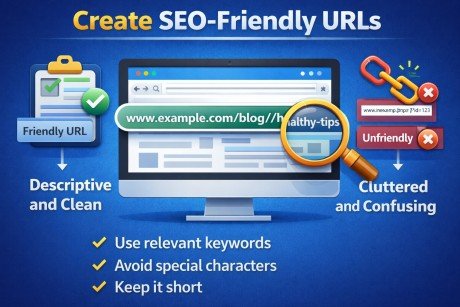
A well-structured URL helps search engines and users understand your content at a glance. Short, descriptive URLs containing your target keyword are preferred over long, random strings.
Tips for URLs:
- Use hyphens to separate words.
- Avoid numbers, special characters, or unnecessary words.
- Keep URLs simple and readable.
Example:
www.example.com/on-page-seo-techniques
SEO-friendly URLs are easy to share and look professional. They also make it easier for users to remember and recognize your page topic. Clean URLs improve website structure and help search engines crawl your content more efficiently. Using clear and keyword-focused URLs is an important step in improving overall on-page SEO performance.
4. Use Proper Header Tags (H1, H2, H3)
Header tags organize your content and improve readability. Google uses headers to understand the structure and main topics of your page.
Tips for headers:
- Only one H1 tag per page (usually the main title).
- Use H2 for section headings and H3 for subsections.
- Include keywords naturally in some headings.
Structured headers help readers scan content and find the information they need without reading the entire page. They also break long content into clear sections, which improves user experience. Well-organized headings make it easier for search engines to crawl and understand your content, which supports better on-page SEO performance.
5. Use Keywords Naturally
Keywords signal the topic of your content to search engines. Modern SEO focuses on natural keyword usage rather than overusing the same keyword.
Best practices:
- Include your main keyword in the title, first paragraph, headers, image alt text, and conclusion.
- Use related keywords and synonyms for context.
- Avoid forcing keywords where they don’t fit.
Natural keyword usage improves readability and strengthens your on-page SEO. It ensures your content flows smoothly while staying relevant to search queries. When keywords are used naturally, readers can understand the content easily and stay longer on the page. This also helps search engines more clearly identify the main topic of your article and improves overall SEO performance.
6. Create High-Quality Content
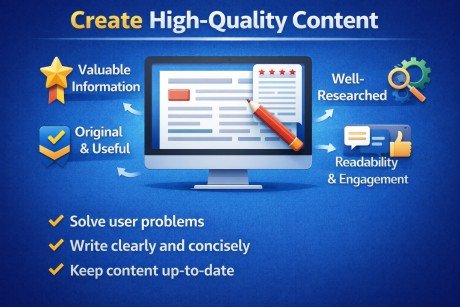
Content is the foundation of on-page SEO. High-quality content answers user questions clearly, provides value, and encourages engagement.
Tips for high-quality content:
- Be informative and actionable.
- Use short paragraphs and bullet points.
- Add examples, statistics, and practical tips.
- Solve specific problems for your audience.
Engaging content keeps users on your page longer, reduces bounce rates, and signals Google that your page is valuable. This is essential for achieving higher rankings. High-quality content also builds trust with your audience and encourages them to return to your website for more information. When your content is helpful and well-structured, it increases the chances of gaining more organic traffic and better search visibility.
7. Optimize Images with Alt Text
Images make your content visually appealing and easier to understand. Search engines rely on alt text to interpret images and understand what they represent.
Tips for image optimization:
- Use descriptive alt text that includes relevant keywords.
- Compress images to improve page load speed.
- Name image files clearly before uploading (e.g., seo-techniques.jpg).
Optimized images improve accessibility, increase engagement, and provide additional SEO opportunities through image search results. Well-optimized images also make your content more attractive and easier to scan for readers. Faster-loading images help improve overall page performance, which supports better user experience and stronger on-page SEO results.
8. Use Internal Linking
Internal links connect one page to another on your website. They help search engines discover more pages and guide visitors to related content.
Tips for internal linking:
- Link to relevant pages naturally.
- Use keyword-rich anchor text.
- Avoid excessive linking in one paragraph.
Internal linking improves website structure, distributes page authority, and keeps users engaged longer. It also helps visitors explore more useful content on your website. When users move easily between pages, they spend more time on your site. This improves user experience and supports better on-page SEO performance.
9. Improve Page Speed
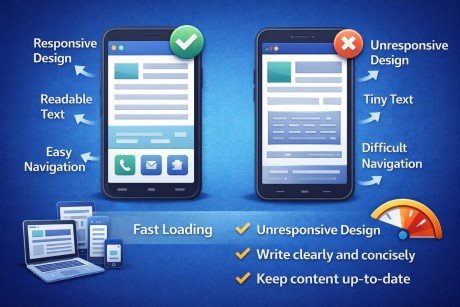
Website speed is a major ranking factor. Slow-loading pages increase bounce rates and negatively impact SEO. If a page takes too long to load, many users leave the website before viewing the content.
Ways to improve page speed:
- Compress images.
- Enable browser caching.
- Minify HTML, CSS, and JavaScript.
- Use a fast hosting service.
Tools like Google PageSpeed Insights and GTmetrix help measure and improve site performance. Fast pages enhance user experience and strengthen your on-page SEO. A faster website keeps visitors engaged and makes browsing smoother, which increases the chances of better rankings in search results.
10. Make Your Website Mobile-Friendly
Mobile usability is essential as most users browse websites on smartphones. Google uses mobile-first indexing to evaluate pages, which means the mobile version of your website plays a major role in ranking.
Tips for mobile optimization:
- Use a responsive design that adapts to all screen sizes.
- Ensure easy navigation and readable text.
- Test page speed on mobile devices.
A mobile-friendly website improves user experience, engagement, and search engine rankings. When visitors can easily read and navigate your site on their phones, they are more likely to stay longer and explore more pages. This on-page SEO technique is critical for 2025 and beyond, as mobile traffic continues to grow every year.
Conclusion
Optimizing your website with these 10 on-page SEO techniques can greatly improve your Google rankings and attract targeted traffic. Simple improvements like enhancing title tags, meta descriptions, page speed, headers, and content quality create a strong SEO foundation.
Remember, SEO is a long-term strategy. Keep updating your content, monitoring performance, and applying best practices consistently. With persistence, your website will gain visibility, authority, and sustained growth in search results.
FAQs
1. What are on-page SEO techniques?
On-page SEO techniques are strategies used to optimize elements within a webpage. They help improve search engine rankings and organic traffic.
2. Why is on-page SEO important?
It helps search engines understand your content better. This improves your chances of ranking higher on Google.
3. How many keywords should be used in an article?
Keywords should be used naturally throughout the content. Avoid keyword stuffing and focus on readability.
4. Does page speed affect SEO rankings?
Yes, page speed is a ranking factor. Faster websites provide better user experience and improved search visibility.
5. Is mobile optimization necessary for SEO?
Yes, mobile optimization is essential. Google uses mobile-first indexing to evaluate websites.
Meta Description:
Learn 10 proven on-page SEO techniques to boost Google rankings, increase traffic, and improve website visibility naturally.
- 1. Write Compelling Title Tags
- 2. Optimize Meta Descriptions
- 3. Create SEO-Friendly URLs
- 4. Use Proper Header Tags (H1, H2, H3)
- 5. Use Keywords Naturally
- 6. Create High-Quality Content
- 7. Optimize Images with Alt Text
- 8. Use Internal Linking
- 9. Improve Page Speed
- 10. Make Your Website Mobile-Friendly
- Conclusion
- FAQs
- Meta Description: