
Every day, millions of articles are published on the internet. However, only a small number of them manage to capture attention, build trust, and rank well on search engines. The difference often comes down to one important skill: effective content writing.
Good writing is not simply about placing words together. It is about presenting ideas clearly, helping readers solve problems, and guiding them toward useful solutions. When content is written with clarity and purpose, readers are more likely to engage with it and trust the information provided.
Many beginners believe that writing long articles filled with keywords is enough to succeed online. In reality, high-quality content requires proper research, a clear structure, and a deep understanding of the audience. Successful writers focus on clarity, usefulness, and smooth flow.
By learning practical content writing techniques, bloggers, marketers, and freelancers can create articles that inform readers, build credibility, and perform well in search engines.

Why Quality Writing Matters in the Digital World
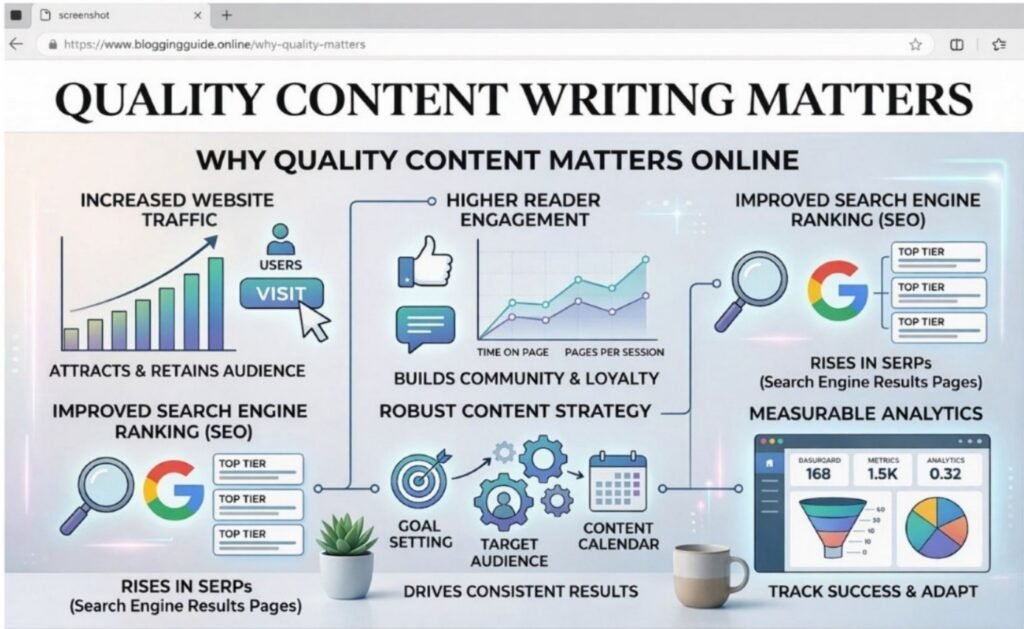
The internet contains an enormous amount of information. Because of this, readers expect content that is helpful, clear, and easy to understand. When an article provides real value, readers tend to stay longer on the page.
As a result, search engines recognize the content as useful and reward it with better rankings. Quality writing also helps build trust with readers. When visitors consistently find helpful answers on a website, they are more likely to return in the future.
Over time, this trust develops into brand authority. Businesses that invest in well-written content often experience growth in website traffic, audience engagement, and conversions.
In addition, well-structured writing improves the overall user experience. Short paragraphs, clear headings, and simple language make it easier for readers to understand the message quickly.
Understanding the Purpose of Your Content
Before starting any article, a writer must clearly understand its purpose. Without a clear objective, the content can become confusing or unfocused.
Some articles aim to educate readers, while others guide them toward making decisions. Identifying the goal helps writers organize their ideas more effectively.
For example, an educational article may explain concepts step by step. A comparison article, on the other hand, may analyze different tools or services to help readers choose the best option.
Writers should also consider the reader’s journey. Beginners may need basic explanations, while experienced readers may be looking for advanced insights. Understanding these needs helps writers produce more meaningful and relevant content.
Know Your Audience Before You Write
Understanding the audience is one of the most important elements of effective writing. Without knowing who the readers are, it becomes difficult to create relevant and valuable content.
Experienced writers always analyze their target audience before starting the writing process. For example, beginners usually prefer simple explanations and step-by-step guides, while professionals may look for deeper insights and industry knowledge.
Writers should also think about the reader’s challenges and goals. Asking the following questions can help:
- What problem does the reader want to solve?
- What information are they searching for?
- How can this article help them achieve their goal?
By answering these questions, writers can create content that truly connects with readers.
Create Headlines That Capture Attention
The headline is often the first thing readers notice. If it fails to capture attention, many people may ignore the article completely.
A strong headline clearly communicates what the reader will gain from the content. It may also spark curiosity or promise valuable insights. Using numbers, questions, or action-focused words can make headlines more engaging.
Including relevant keywords in the headline also helps search engines understand the topic of the article. In effective content writing, headlines serve as both attention-grabbers and SEO signals.
Structure Your Content for Easy Reading
Online readers often scan content instead of reading every word. For this reason, writers must structure their articles carefully.
Clear headings, short paragraphs, and organized sections make content easier to read and understand. Large blocks of text can overwhelm readers, while smaller sections improve readability.
Writers can also use lists, bullet points, and subheadings to guide readers through the article. A well-structured layout helps readers quickly find the information they are looking for.
When readers can easily navigate an article, they are more likely to stay on the page and continue reading.
Write Clearly and Simply
Simple and clear language is one of the most powerful tools in writing. Complicated words and long sentences often make content difficult to understand.
Readers generally prefer articles that explain ideas quickly and directly. Writers should avoid unnecessary jargon and focus on clarity.
Using short sentences, active voice, and straightforward explanations makes the message easier to follow. Clear communication improves the reader’s experience and increases engagement.
Research Before You Start Writing
Strong content always begins with proper research. Without research, the information in an article may be incomplete or unreliable.
Readers expect content that includes accurate facts, useful insights, and trustworthy explanations. Writers should explore multiple sources such as blogs, research papers, industry reports, and expert opinions.
Research also helps writers discover new ideas and understand current trends in their field. As a result, their content becomes more informative and valuable for readers.

Use Keywords Naturally
Keywords play an important role in helping search engines understand the topic of an article. However, they should always be used naturally.
Some beginners try to insert the same keyword repeatedly throughout the article. This practice, known as keyword stuffing, can negatively affect readability and search rankings.
A better approach is to write meaningful sentences first and then include keywords where they naturally fit. Balanced keyword usage improves both SEO performance and the reader’s experience.
Maintain a Consistent Writing Voice
Consistency in tone and style helps readers connect with the content. Whether the writing style is professional, friendly, or conversational, it should remain consistent throughout the article.
For example, if the content is written for beginners, the tone should be simple and supportive. If the target audience includes professionals, the explanations may include more technical insights.
A consistent voice also strengthens brand identity and helps readers recognize the writer’s style.
Use Smooth Transitions Between Ideas
Transitions help connect different sections of an article. Without them, the content may feel disorganized or difficult to follow.
Words and phrases such as “however,” “therefore,” “moreover,” “in addition,” and “as a result” help guide readers smoothly from one idea to the next.
These transitions improve the flow of the article and make it easier for readers to understand the overall message.
Edit and Proofread Your Content
Writing the first draft is only the beginning of the process. Editing and proofreading are essential steps that improve the quality of the article.
During editing, writers should review their work to improve clarity, sentence structure, and overall flow. Proofreading focuses on correcting grammar, spelling, and punctuation errors.
Even small mistakes can reduce the credibility of an article. Careful editing ensures that the final content appears professional and polished.
Focus on Value Instead of Word Count
Some writers believe that longer articles automatically perform better. However, the length of an article does not guarantee quality.
Readers are more interested in useful information than unnecessary words. Every paragraph should provide insights, explanations, or practical advice.
If a sentence does not add value, it should be removed or improved. The goal of good writing is to deliver meaningful information that truly benefits the reader.
Keep Learning and Improving Your Skills
Content writing is a skill that improves with practice. The digital world continues to evolve, and writers must stay updated with new trends and strategies.
Reading high-quality blogs, studying successful articles, and practicing regularly can help writers improve their abilities. Learning about SEO, storytelling techniques, and audience behavior also strengthens writing skills.
Successful writers understand that learning never stops. Continuous improvement allows them to create stronger and more effective content.
Conclusion
Effective content writing is not simply about writing long articles. Instead, it focuses on sharing useful ideas in a clear and organized way. When writers understand their audience, structure their content properly, and write with purpose, their articles become more engaging and valuable.
In addition, successful writing prioritizes readability and user experience. Clear headings, short paragraphs, and smooth transitions help readers follow the message easily. By practicing these guidelines and continuously improving their skills, writers can create content that informs readers, builds trust, and performs well in search engines
Frequently Asked Questions
What is content writing?
Content writing is the process of creating written material for digital platforms such as blogs, websites, social media, and email campaigns. Its main purpose is to inform, educate, or engage readers while supporting marketing and SEO goals.
Why is content writing important for websites?
Quality content helps websites attract visitors, improve search engine rankings, and build trust with readers. Informative content encourages users to spend more time on a website and return in the future.
How can beginners start content writing?
Beginners can start by practicing regularly, reading high-quality blogs, learning basic SEO concepts, and choosing a specific niche. Creating a small portfolio of articles can also help them gain writing opportunities.
What skills are needed for content writing?
Important skills include strong research ability, clear communication, creativity, and basic SEO knowledge. These skills help writers produce engaging and informative content.
How long should a blog article be?
The ideal length depends on the topic and search intent. However, many successful blog articles range between 1000 and 3000 words because they provide detailed and helpful information.
Meta Description
Learn practical content writing guidelines to create clear, engaging, and SEO-friendly articles. Discover effective techniques to improve readability and search rankings.