
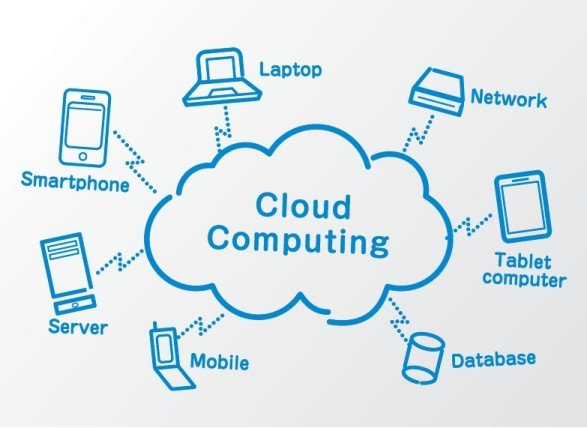
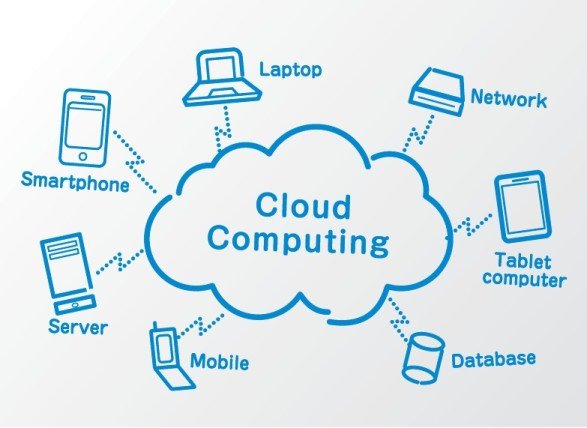
Have you ever wondered how companies like Netflix, Amazon, or Google run millions of applications without owning huge data centers? The secret is cloud computing. It delivers computing resources on demand over the internet, so whether it’s storage, servers, or software, you can access everything online without owning physical infrastructure. Today, cloud computing is widely used by businesses and individuals to save time, reduce costs, and improve efficiency. From startups to global enterprises, companies rely on cloud platforms to innovate faster, scale effortlessly, and stay ahead of the competition. In this article, we will explore cloud computing, its types, top platforms like AWS, Azure, and Google Cloud, and how it helps businesses grow in today’s digital world.
What Is Cloud Computing?
Cloud computing allows users to store data, run applications, and manage resources through the internet. Instead of buying physical servers, users can pay for only what they use. This makes technology accessible for everyone—from small businesses to large enterprises.
Key Features of Cloud Computing:
- On-demand access: Get resources when you need them.
- Scalability: Increase or decrease resources quickly.
- Cost-effective: Pay only for what you use.
- Global access: Work from anywhere in the world.
Types of Cloud Computing
Cloud computing comes in three main models:
- Public Cloud – Services are provided over the internet by companies like AWS, Azure, and Google Cloud.
- Private Cloud – Dedicated to a single organization with higher control and security.
- Hybrid Cloud – Combines public and private cloud benefits for flexibility and performance.
| PLATEFORM | BEST | FOR EXAMPLE |
| AWS | General use | EC2 |
| AZURE | Microsoft users | Azure VM |
| GCP | DATA &AI | BigQuery |
Service Models:
- IaaS (Infrastructure as a Service): Virtual machines and storage.
Example: AWS EC2 - PaaS (Platform as a Service): Tools to develop and deploy applications.
Example: Azure App Service - SaaS (Software as a Service):
- Software hosted online and accessed via internet
- No installation or maintenance required by user
Top Cloud Platforms: AWS, Azure, and GCP
Amazon Web Services (AWS)
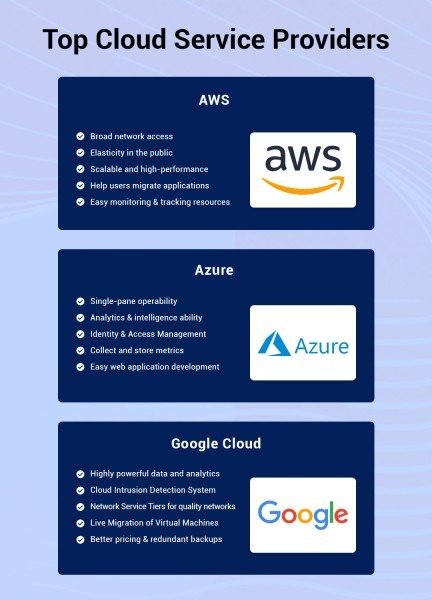
AWS is the largest cloud provider worldwide. It offers over 200 services for computing, storage, databases, AI, and networking.
Popular AWS Services:
- EC2 (Virtual servers)
- S3 (Storage)
- RDS (Databases)
- Lambda (Serverless computing)
Why choose AWS?
- Largest market share and global reach
- Reliable and secure platform
- Wide range of services for businesses of all sizes
Microsoft Azure
Azure is a powerful cloud platform that integrates well with Microsoft products like Office 365 and Windows Server.
Popular Azure Services:
- Azure Virtual Machines
- Azure Blob Storage
- Azure SQL Database
- Azure Functions
Why choose Azure?
- Seamless integration with Microsoft tools
- Strong security and compliance
- Ideal for hybrid cloud solutions
Google Cloud Platform (GCP)
GCP is known for AI, machine learning, and big data analytics. It also provides container management for developers.
Popular GCP Services:
- Compute Engine
- Cloud Storage
- BigQuery
- Cloud Functions
Why choose GCP?
- Best for data analytics and AI/ML projects
- Deep integration with Google products
- Flexible pricing for startups and enterprise
Real-World Use Cases of Cloud Computing
- Web Hosting: Host websites using AWS or GCP.
- Data Backup & Recovery: Automated backups on Azure or AWS.
- E-Commerce: Scalable infrastructure for online stores.
- Data Analytics: Process large data using GCP BigQuery or AWS Redshift.
- App Development: Rapid deployment using Azure App Service.
Challenges in Cloud Computing
Even though cloud computing is powerful, it comes with challenges:
- Security & Compliance: Data must be encrypted and follow regulations like GDPR or HIPAA.
- Downtime Risks: Outages can disrupt business operations.
- Vendor Lock-In: Moving from one platform to another can be difficult.
- Cost Management: Unmonitored usage can increase expenses.
How to Get Started
If you are new to cloud computing, here’s a simple way to start:
- Sign up for free tiers: AWS Free Tier, Azure Free Account, or GCP Free Tier.
- Learn basics: Virtual machines, storage, and networking.
- Launch your first instance: EC2 (AWS), Azure VM, or GCP Compute Engine.
- Follow online tutorials and consider certifications for career growth.
Cloud Certifications to Boost Your Career
- AWS Certified Solutions Architect
- Microsoft Certified: Azure Administrator
- Google Associate Cloud Engineer
These certifications help you gain practical skills and increase job opportunities in cloud computing.
Advantages of Cloud Computing
- Flexibility: Scale resources up or down easily.
- Cost Savings: Pay only for what you use.
- Remote Access: Work from anywhere in the world.
- Innovation: Build applications faster and experiment without large investments.
Conclusion
Cloud computing is transforming how businesses and individuals access and use technology every day. Platforms like AWS, Azure, and Google Cloud (GCP) offer scalable, secure, and cost-effective solutions for almost every business and personal need. By learning the basics, exploring services, and earning industry-recognized certifications, you can unlock a wide range of career opportunities in IT. Whether you are a beginner or an experienced professional, understanding cloud computing is essential for staying competitive, improving efficiency, and exploring advanced technology projects.
FAQS
How can I compare pricing models of major cloud service providers?
Compare features, usage, and pay-as-you-go vs reserved plans.
What is cloud computing accounting software?
Software that manages finances and bookkeeping on the cloud.
Which platform is best for cloud computing?
Depends on your needs: AWS, Azure, or Google Cloud.
How does cloud computing as a service work?
It delivers IT resources online without owning hardware.
What is cloud computing on Google Cloud?
Google Cloud offers storage, AI, and scalable computing services.
Meta Discription:
Explore cloud computing—learn how it works, key types, benefits, and real-world uses. Discover why businesses trust AWS, Azure & Google Cloud.